Adel Yasmin, Sadeq Yousra
Rheumatology, Rehabilitation and Physical Medicine, Mansoura University Hospital, Faculty of Medicine, Egypt.
Clinical Pathology Department, Mansoura University, Egypt.
Reumatologia. 2020;58(4):221-230. doi: 10.5114/reum.2020.98434. Epub 2020 Aug 31.
Systemic lupus erythematosus (SLE) is an autoimmune, multi-system inflammatory disease. Among cytokines involved in SLE pathogenesis, interferons (particularly IFN-α) and interleukin 34 play a pivotal role. Interestingly, the gene signatures of type III (IFN-λ1) and type I IFNs may overlap. Increased levels of IFN-λ also have been reported in SLE.Objectives: The aim of this study was to assess serum levels of IL-34, IFN-λ1, IFN-α and the relationship between these cytokines and clinical and laboratory parameters and response to treatment in a cohort of Egyptian SLE patients.
The study included 82 newly diagnosed SLE patients: male 17.1% ( = 14), female 82.9% ( = 68), mean age ±SD: 48.6 ±8.2 and 60 healthy subjects matched by age and gender as a control group. Medical history, physical examination and laboratory tests for confirming SLE diagnosis and assessment of disease activity were collected. The assessment of serum levels of studied cytokines were performed using the ELISA method.All studied patients after first cytokine evaluation were treated with a combination of antimalarial drugs, glucocorticosteroids and/or immunosuppressive drugs with follow-up after six months of treatment.
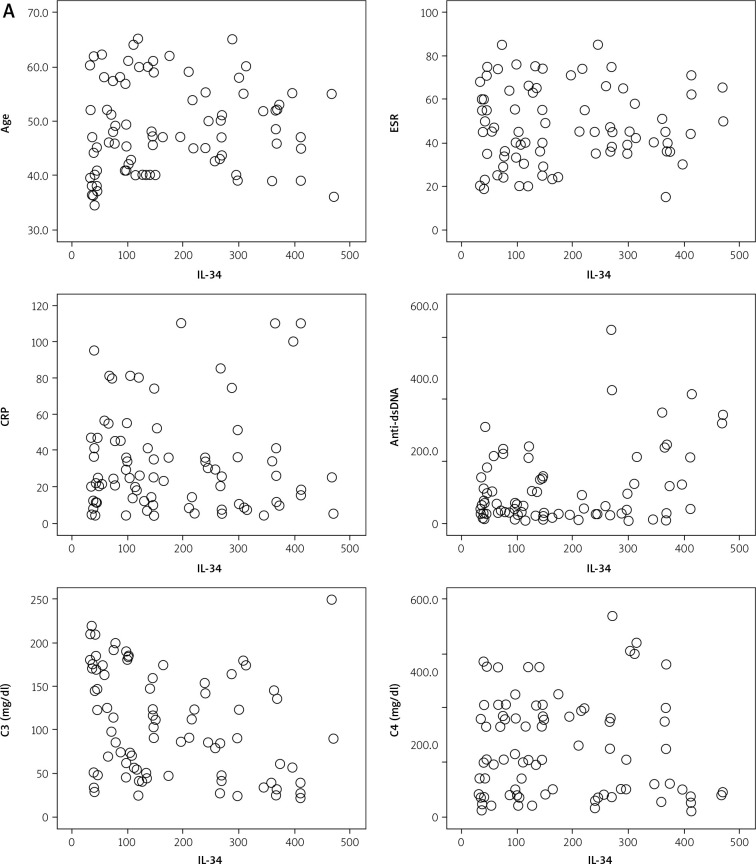
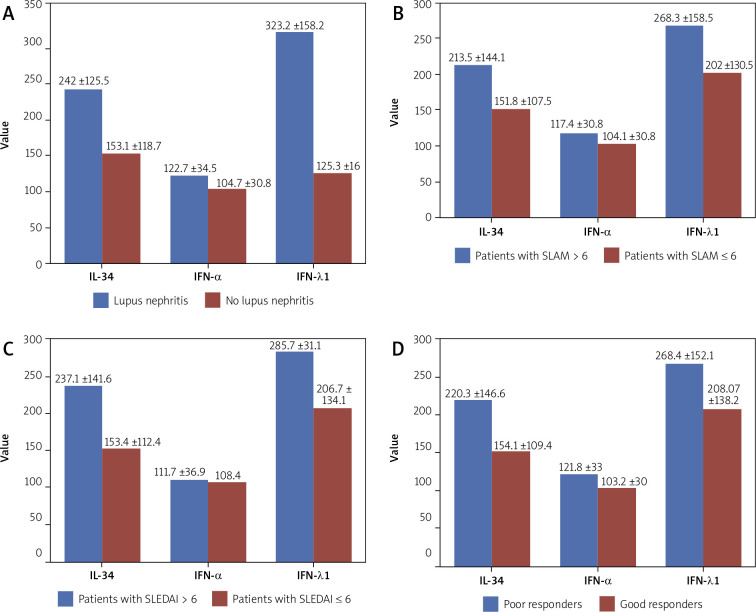
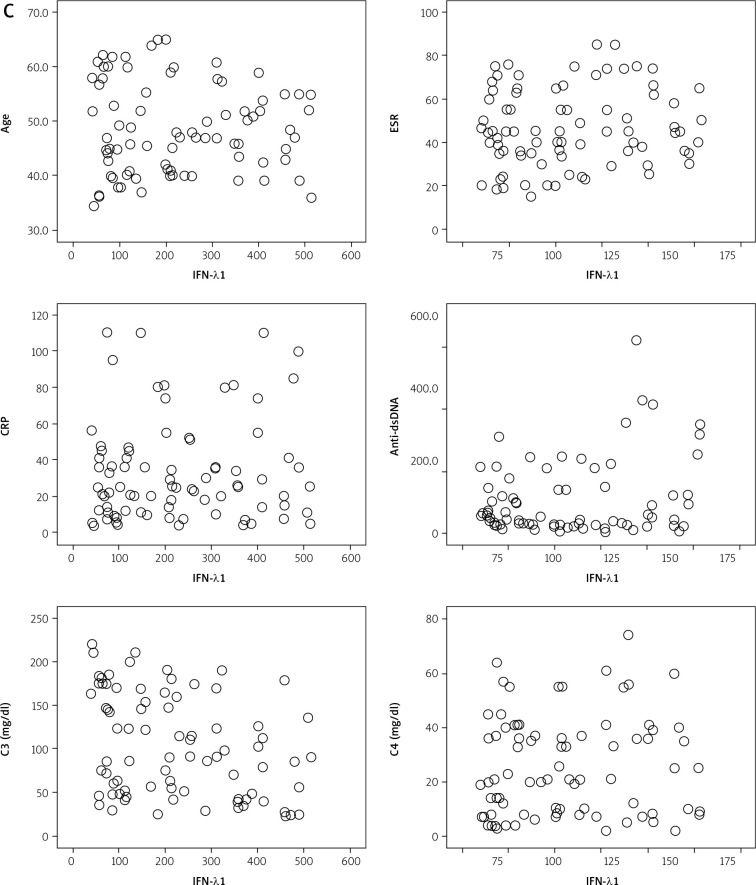
In the SLE group the mean serum levels of IL-34, IFN-α and IFN-λ1 were 175.9 ±125.9 pg/ml, 109.3 ±32.5 pg/ml and 227.9 ±144.8 pg/ml respectively. These cytokine levels were significantly higher in the SLE group than in healthy controls. 39% of SLE patients ( = 32) had SLAM > 6 and 26.8% ( = 22) had SLEDAI >6. There were 21 SLE patients (25.6%) with lupus nephritis.IL-34 and IFN-λ1 were positively correlated with anti-dsDNA antibodies but negatively correlated with C3 complement component ( ≤ 0.05). IL-34, INF-α and IFN-λ1 were significantly higher in lupus nephritis patients, and correlated with poorest response to treatment.IL-34 and IFN-λ1 were correlated with higher SLAM > 6 and SLEDAI > 6 results; there was no such correlation between IFN-α and disease activity.Accumulation of three or more clinical features during follow-up was significantly associated with high levels of studied cytokines. Triple high positivity was found in 17 patients (20.7%) and correlated with presence of anti-dsDNA antibodies, low levels of C3 component of complement and lupus nephritis.
SLE patients with high serum levels of IL-34, IFN-α and IFN-λ1 more often had lupus nephritis and poor response to immunosuppressive treatment.The triple cytokine elevation was strongly associated with higher disease activity. These results may indicate the need to distinguish this group of patients with such aggressive phenotype and consider targeted multi-therapy.
系统性红斑狼疮(SLE)是一种自身免疫性多系统炎症性疾病。在参与SLE发病机制的细胞因子中,干扰素(特别是IFN-α)和白细胞介素34起关键作用。有趣的是,III型(IFN-λ1)和I型干扰素的基因特征可能重叠。在SLE中也有报道称IFN-λ水平升高。
本研究旨在评估埃及SLE患者队列中白细胞介素34、IFN-λ1、IFN-α的血清水平,以及这些细胞因子与临床和实验室参数之间的关系,以及对治疗的反应。
该研究纳入82例新诊断的SLE患者:男性占17.1%(n = 14),女性占82.9%(n = 68),平均年龄±标准差:48.6±8.2岁,以及60名年龄和性别匹配的健康受试者作为对照组。收集了用于确诊SLE诊断和评估疾病活动的病史、体格检查和实验室检查结果。使用ELISA方法评估所研究细胞因子的血清水平。所有首次进行细胞因子评估后的研究患者均接受抗疟药、糖皮质激素和/或免疫抑制药物联合治疗,并在治疗6个月后进行随访。
在SLE组中,白细胞介素34、IFN-α和IFN-λ1的平均血清水平分别为175.9±125.9 pg/ml、109.3±32.5 pg/ml和227.9±144.8 pg/ml。这些细胞因子水平在SLE组中显著高于健康对照组。39%的SLE患者(n = 32)SLAM>6,26.8%(n = 22)SLEDAI>6。有21例SLE患者(25.6%)患有狼疮性肾炎。白细胞介素34和IFN-λ1与抗双链DNA抗体呈正相关,但与C3补体成分呈负相关(P≤0.05)。狼疮性肾炎患者的白细胞介素34、INF-α和IFN-λ1显著更高,且与对治疗的最差反应相关。白细胞介素34和IFN-λ1与更高的SLAM>6和SLEDAI>6结果相关;IFN-α与疾病活动之间无此类相关性。随访期间三种或更多临床特征的累积与所研究细胞因子的高水平显著相关。17例患者(20.7%)出现三联高阳性,且与抗双链DNA抗体的存在、补体C3成分水平低和狼疮性肾炎相关。
血清白细胞介素34、IFN-α和IFN-λ1水平高的SLE患者更常患有狼疮性肾炎,且对免疫抑制治疗反应不佳。三种细胞因子升高与更高的疾病活动密切相关。这些结果可能表明需要区分这一具有侵袭性表型的患者群体,并考虑进行针对性的多疗法治疗。