Tenreiro Machado J A, Lopes António M
Institute of Engineering, Polytechnic of Porto, Dept. of Electrical Engineering, Porto, Portugal.
UISPA-LAETA/INEGI, Faculty of Engineering, University of Porto, Porto, Portugal.
J Adv Res. 2020 Jan 20;25:147-157. doi: 10.1016/j.jare.2020.01.004. eCollection 2020 Sep.
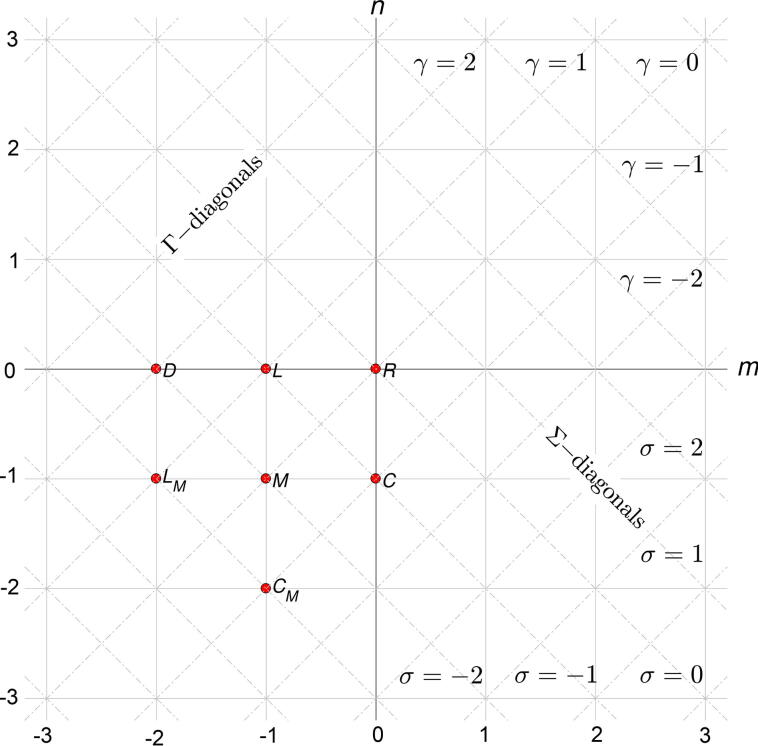
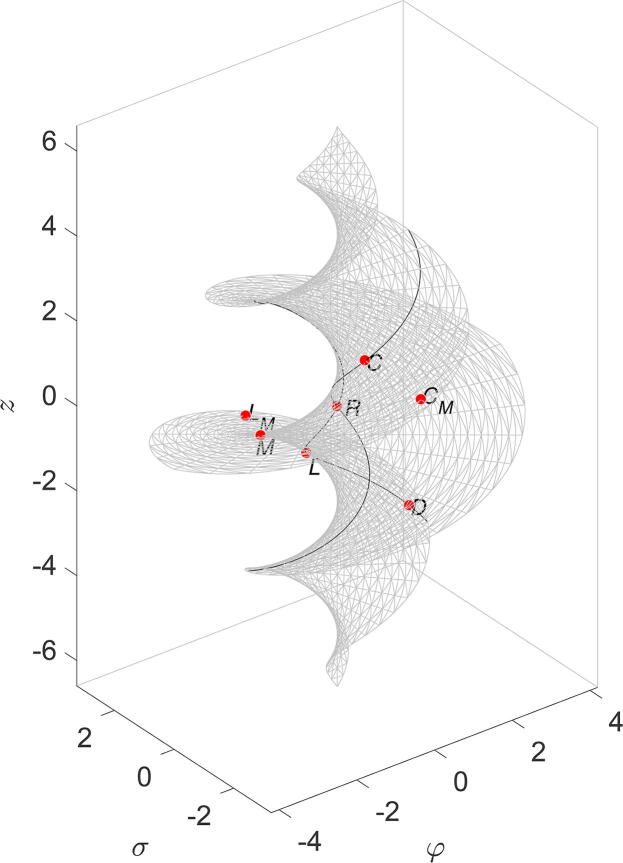
This paper combines the synergies of three mathematical and computational generalizations. The concepts of fractional calculus, memristor and information visualization extend the classical ideas of integro-differential calculus, electrical elements and data representation, respectively. The study embeds these notions in a common framework, with the objective of organizing and describing the "continuum" of fractional order elements (FOE). Each FOE is characterized by its behavior, either in the time or in the frequency domains, and the differences between the FOE are captured by a variety of distinct indices, such as the Arccosine, Canberra, Jaccard and Sørensen distances. The dissimilarity information is processed by the multidimensional scaling (MDS) computational algorithm to unravel possible clusters and to allow a direct pattern visualization. The MDS yields 3-dimensional loci organized according to the FOE characteristics both for linear and nonlinear elements. The new representation generalizes the standard Cartesian 2-dimensional periodic table of elements.
本文结合了三种数学和计算泛化方法的协同作用。分数阶微积分、忆阻器和信息可视化的概念分别扩展了积分微分学、电气元件和数据表示的经典概念。该研究将这些概念嵌入到一个通用框架中,目的是组织和描述分数阶元件(FOE)的“连续统”。每个FOE都由其在时域或频域中的行为来表征,并且FOE之间的差异通过各种不同的指标来体现,如反余弦、堪培拉、杰卡德和索伦森距离。通过多维缩放(MDS)计算算法处理相异信息,以揭示可能的聚类并实现直接的模式可视化。MDS针对线性和非线性元件,根据FOE特性生成三维轨迹。这种新的表示方法推广了标准的笛卡尔二维元素周期表。