Harvard T. H. Chan School of Public Health, Boston, Massachusetts, United States of America.
Boston College School of Social Work, Chestnut Hill, Massachusetts, United States of America.
PLoS Med. 2020 Sep 14;17(9):e1003254. doi: 10.1371/journal.pmed.1003254. eCollection 2020 Sep.
Appropriate clinical management of malaria in children is critical for preventing progression to severe disease and for reducing the continued high burden of malaria mortality. This study aimed to assess the quality of care provided to children under 5 diagnosed with malaria across 9 sub-Saharan African countries.
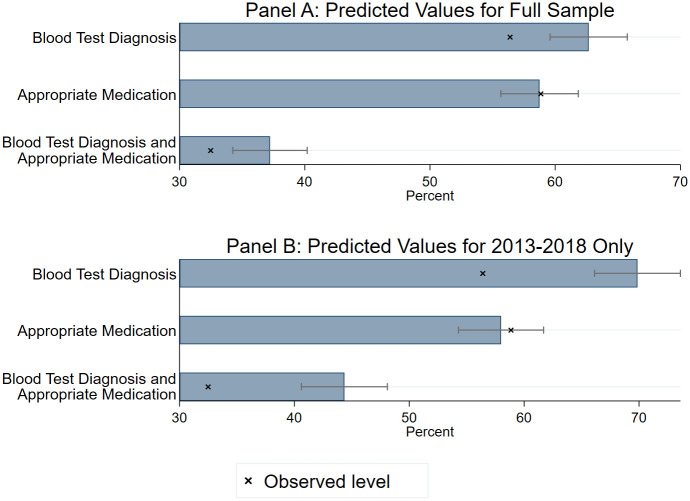
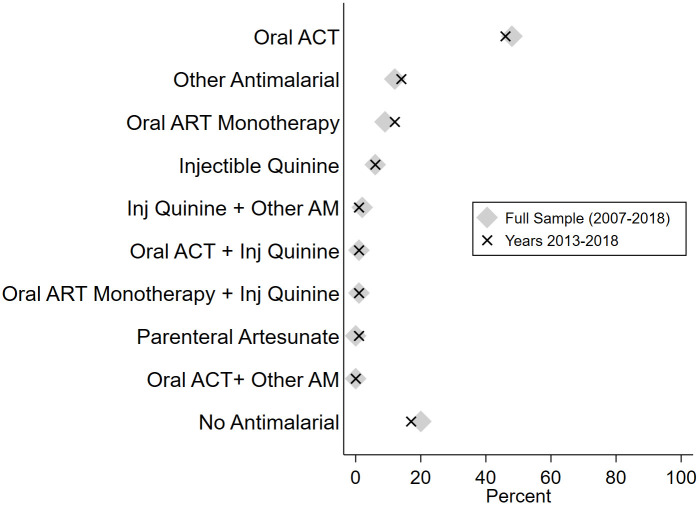
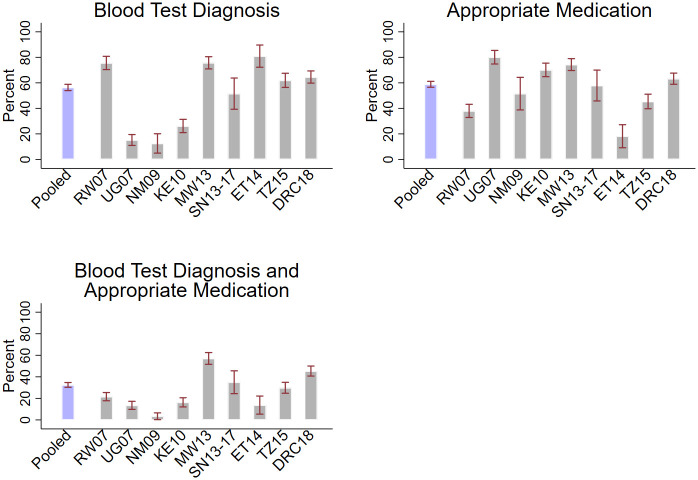
We used data from the Service Provision Assessment (SPA) survey. SPAs are nationally representative facility surveys capturing quality of sick-child care, facility readiness, and provider and patient characteristics. The data set contained 24,756 direct clinical observations of outpatient sick-child visits across 9 countries, including Uganda (2007), Rwanda (2007), Namibia (2009), Kenya (2010), Malawi (2013), Senegal (2013-2017), Ethiopia (2014), Tanzania (2015), and Democratic Republic of the Congo (2018). We assessed the proportion of children with a malaria diagnosis who received a blood test diagnosis and an appropriate antimalarial. We used multilevel logistic regression to assess facility and provider and patient characteristics associated with these outcomes. Subgroup analyses with the 2013-2018 country surveys only were conducted for all outcomes. Children observed were on average 20.5 months old and were most commonly diagnosed with respiratory infection (47.7%), malaria (29.7%), and/or gastrointestinal infection (19.7%). Among the 7,340 children with a malaria diagnosis, 32.5% (95% CI: 30.3%-34.7%) received both a blood-test-based diagnosis and an appropriate antimalarial. The proportion of children with a blood test diagnosis and an appropriate antimalarial ranged from 3.4% to 57.1% across countries. In the more recent surveys (2013-2018), 40.7% (95% CI: 37.7%-43.6%) of children with a malaria diagnosis received both a blood test diagnosis and appropriate antimalarial. Roughly 20% of children diagnosed with malaria received no antimalarial at all, and nearly 10% received oral artemisinin monotherapy, which is not recommended because of concerns regarding parasite resistance. Receipt of a blood test diagnosis and appropriate antimalarial was positively correlated with being seen at a facility with diagnostic equipment in stock (adjusted OR 3.67; 95% CI: 2.72-4.95) and, in the 2013-2018 subsample, with being seen at a facility with Artemisinin Combination Therapies (ACTs) in stock (adjusted OR 1.60; 95% CI:1.04-2.46). However, even if all children diagnosed with malaria were seen by a trained provider at a facility with diagnostics and medicines in stock, only a predicted 37.2% (95% CI: 34.2%-40.1%) would have received a blood test and appropriate antimalarial (44.4% for the 2013-2018 subsample). Study limitations include the lack of confirmed malaria test results for most survey years, the inability to distinguish between a diagnosis of uncomplicated or severe malaria, the absence of other relevant indicators of quality of care including dosing and examinations, and that only 9 countries were studied.
In this study, we found that a majority of children diagnosed with malaria across the 9 surveyed sub-Saharan African countries did not receive recommended care. Clinical management is positively correlated with the stocking of essential commodities and is somewhat improved in more recent years, but important quality gaps remain in the countries studied. Continued reductions in malaria mortality will require a bigger push toward quality improvements in clinical care.
在儿童中进行适当的疟疾临床管理对于防止疾病恶化和降低疟疾死亡率的持续高负担至关重要。本研究旨在评估撒哈拉以南非洲 9 个国家中诊断为疟疾的 5 岁以下儿童的护理质量。
我们使用了来自服务提供情况评估(SPA)调查的数据。SPA 是具有代表性的机构调查,涵盖了儿童就诊的医疗服务质量、机构准备情况以及医护人员和患者的特征。该数据集包含了 9 个国家 24756 名门诊就诊儿童的 24756 次直接临床观察,包括乌干达(2007 年)、卢旺达(2007 年)、纳米比亚(2009 年)、肯尼亚(2010 年)、马拉维(2013 年)、塞内加尔(2013-2017 年)、埃塞俄比亚(2014 年)、坦桑尼亚(2015 年)和刚果民主共和国(2018 年)。我们评估了被诊断为疟疾的儿童中有多少人接受了血液检测诊断和适当的抗疟药物治疗。我们使用多水平逻辑回归来评估与这些结果相关的机构和医护人员及患者特征。所有结果都进行了仅包括 2013-2018 年国家调查的亚组分析。观察到的儿童平均年龄为 20.5 个月,最常见的诊断为呼吸道感染(47.7%)、疟疾(29.7%)和/或胃肠道感染(19.7%)。在 7340 名被诊断为疟疾的儿童中,32.5%(95%CI:30.3%-34.7%)同时接受了基于血液检测的诊断和适当的抗疟药物治疗。在各国中,有血液检测诊断和适当抗疟药物治疗的儿童比例范围为 3.4%至 57.1%。在最近的调查(2013-2018 年)中,40.7%(95%CI:37.7%-43.6%)被诊断为疟疾的儿童同时接受了血液检测诊断和适当的抗疟药物治疗。大约 20%的疟疾患儿根本没有接受任何抗疟药物治疗,近 10%的患儿接受了口服青蒿素类药物单药治疗,因为担心寄生虫耐药性问题,这种治疗方法不被推荐。接受血液检测诊断和适当的抗疟药物治疗与在有诊断设备库存的机构就诊呈正相关(调整后的比值比 3.67;95%CI:2.72-4.95),并且在 2013-2018 年的子样本中,与在有青蒿素类药物复方疗法(ACTs)库存的机构就诊呈正相关(调整后的比值比 1.60;95%CI:1.04-2.46)。然而,即使所有被诊断为疟疾的儿童都在有诊断设备和药物库存的机构接受了经过培训的医护人员的治疗,预计只有 37.2%(95%CI:34.2%-40.1%)的儿童会接受血液检测和适当的抗疟药物治疗(2013-2018 年子样本中为 44.4%)。研究的局限性包括大多数调查年份缺乏确认的疟疾检测结果,无法区分无并发症疟疾和严重疟疾,缺乏其他相关的医疗服务质量指标,包括剂量和检查,以及仅研究了 9 个国家。
在这项研究中,我们发现撒哈拉以南非洲 9 个调查国家中,大多数被诊断为疟疾的儿童没有接受推荐的治疗。临床管理与基本商品的库存呈正相关,近年来有所改善,但在所研究的国家中仍存在重要的质量差距。要继续降低疟疾死亡率,就需要在临床护理质量改进方面加大力度。