Division of Applied Life Science (BK21Plus), Plant Molecular Biology and Biotechnology Research Center (PMBBRC), Research Institute of Life Sciences (RILS), Gyeongsang National University, Jinju, 52828, Republic of Korea.
Department of Agricultural Chemistry and Food Science & Technology, Institute of Agriculture and Life Science (IALS), Gyeongsang National University, Jinju, 52828, Republic of Korea.
Sci Rep. 2020 Sep 14;10(1):15042. doi: 10.1038/s41598-020-71701-8.
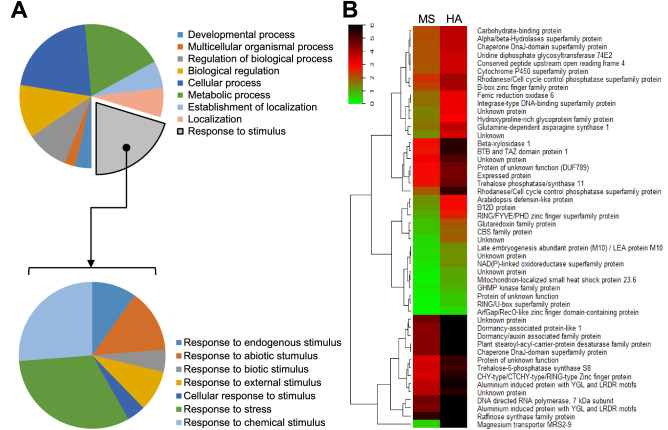
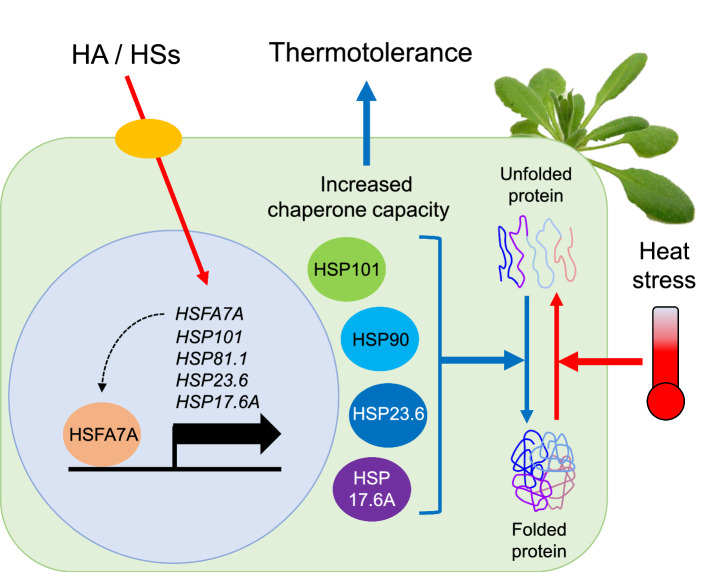
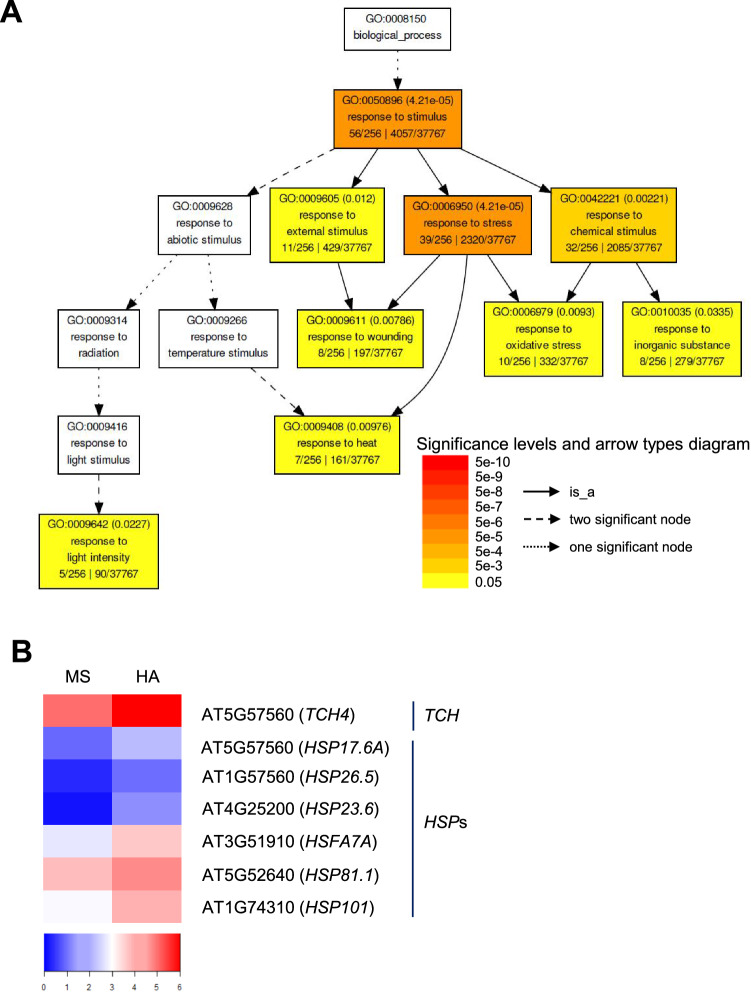
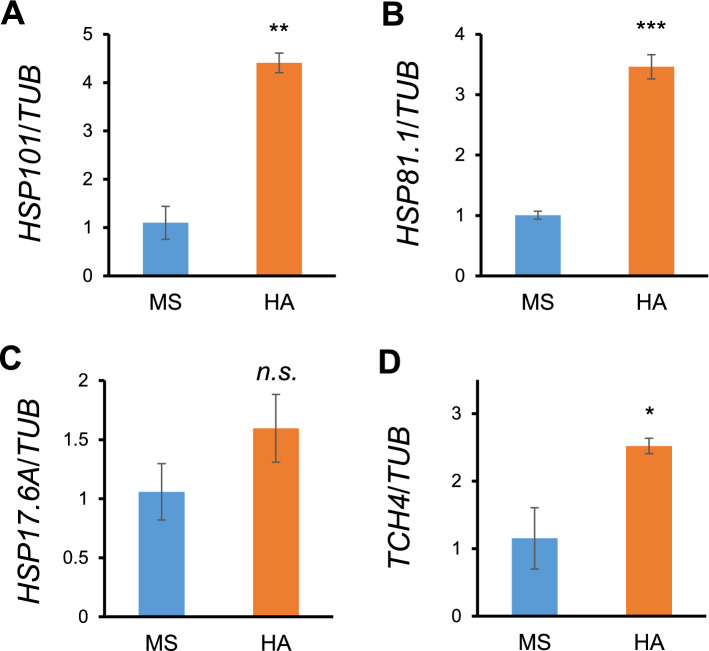
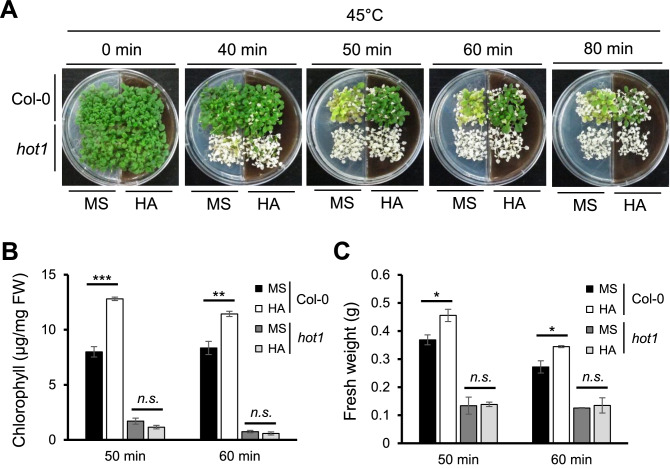
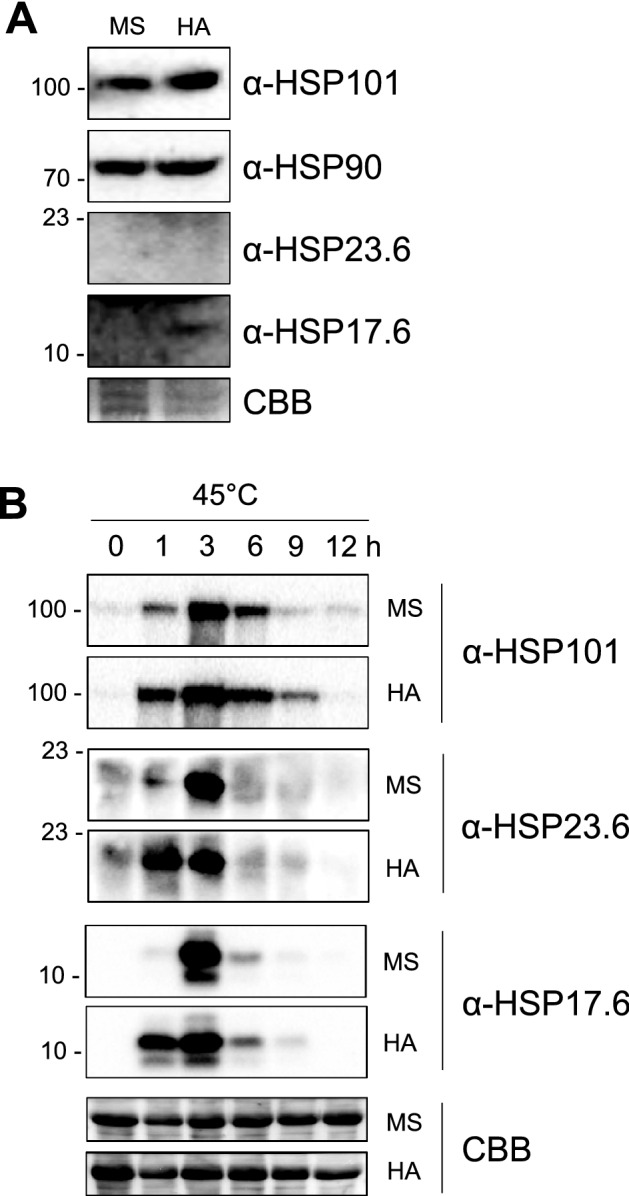
Humic acid (HA) is composed of a complex supramolecular association and is produced by humification of organic matters in soil environments. HA not only improves soil fertility, but also stimulates plant growth. Although numerous bioactivities of HA have been reported, the molecular evidences have not yet been elucidated. Here, we performed transcriptomic analysis to identify the HA-prompted molecular mechanisms in Arabidopsis. Gene ontology enrichment analysis revealed that HA up-regulates diverse genes involved in the response to stress, especially to heat. Heat stress causes dramatic induction in unique gene families such as Heat-Shock Protein (HSP) coding genes including HSP101, HSP81.1, HSP26.5, HSP23.6, and HSP17.6A. HSPs mainly function as molecular chaperones to protect against thermal denaturation of substrates and facilitate refolding of denatured substrates. Interestingly, wild-type plants grown in HA were heat-tolerant compared to those grown in the absence of HA, whereas Arabidopsis HSP101 null mutant (hot1) was insensitive to HA. We also validated that HA accelerates the transcriptional expression of HSPs. Overall, these results suggest that HSP101 is a molecular target of HA promoting heat-stress tolerance in Arabidopsis. Our transcriptome information contributes to understanding the acquired genetic and agronomic traits by HA conferring tolerance to environmental stresses in plants.
腐殖酸(HA)由复杂的超分子缔合而成,是土壤环境中有机物腐殖化的产物。HA 不仅能提高土壤肥力,还能刺激植物生长。尽管已经报道了 HA 的许多生物活性,但分子证据尚未阐明。在这里,我们进行了转录组分析,以确定拟南芥中 HA 引发的分子机制。基因本体富集分析显示,HA 上调了多种参与应激反应的基因,特别是对热的反应。热应激会引起 HSP 编码基因等独特基因家族的显著诱导,包括 HSP101、HSP81.1、HSP26.5、HSP23.6 和 HSP17.6A。HSP 主要作为分子伴侣,防止底物热变性,并促进变性底物的重折叠。有趣的是,与在没有 HA 的情况下生长的植物相比,在 HA 中生长的野生型植物对热更耐受,而拟南芥 HSP101 缺失突变体(hot1)对 HA 不敏感。我们还验证了 HA 加速了 HSPs 的转录表达。总的来说,这些结果表明 HSP101 是 HA 促进拟南芥耐热性的分子靶标。我们的转录组信息有助于理解 HA 通过赋予植物对环境胁迫的耐受性而获得的遗传和农艺性状。