Degenerative Disease Program, Sanford Burnham Prebys Medical Discovery Institute, La Jolla, CA, USA.
Molecular Biology Department, Dorris Neuroscience Center, The Scripps Research Institute, La Jolla, CA, USA.
FASEB J. 2020 Jul;34(7):8833-8842. doi: 10.1096/fj.202000317R. Epub 2020 Jun 17.
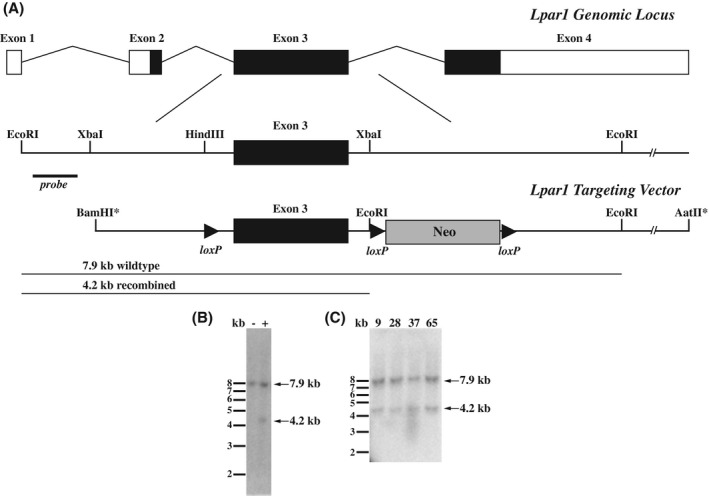
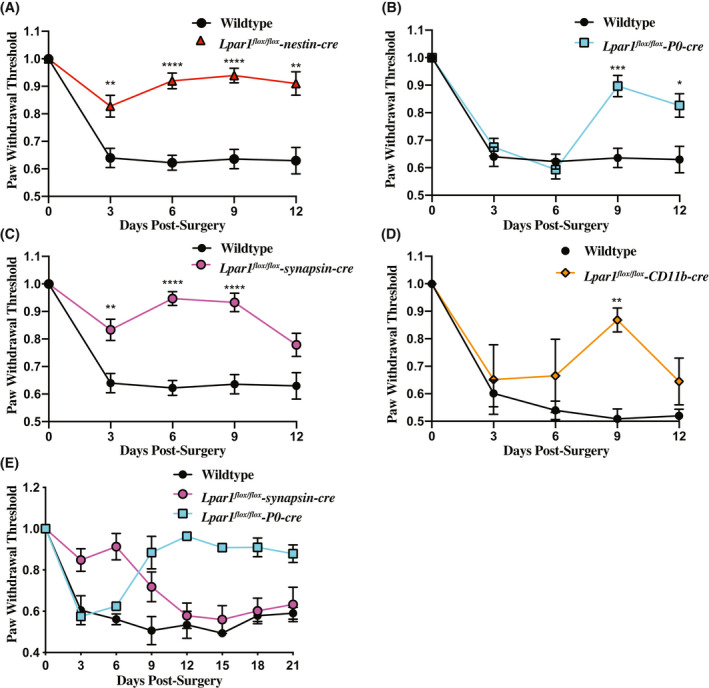
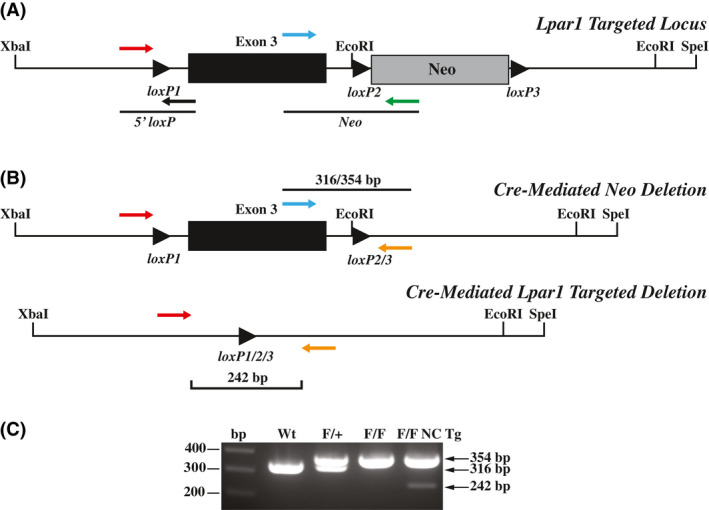
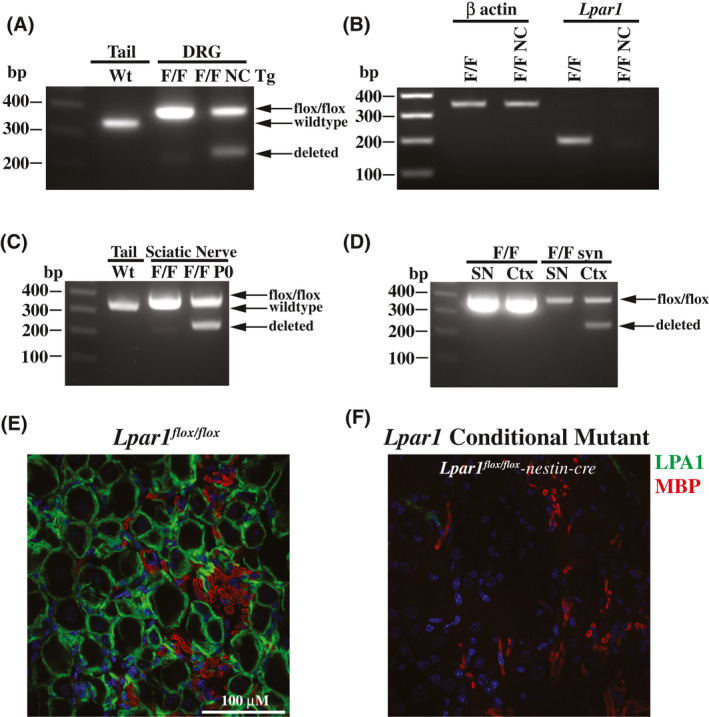
LPA is one of six known receptors (LPA) for lysophosphatidic acid (LPA). Constitutive Lpar1 null mutant mice have been instrumental in identifying roles for LPA-LPA signaling in neurobiological processes, brain development, and behavior, as well as modeling human neurological diseases like neuropathic pain. Constitutive Lpar1 null mutant mice are protected from partial sciatic nerve ligation (PSNL)-induced neuropathic pain, however, the cell types that are functionally responsible for mediating this protective effect are unknown. Here, we report the generation of an Lpar1 conditional null mutant mouse that allows for cre-mediated conditional deletion, combined with a PSNL pain model. Lpar1 mice were crossed with cre transgenic lines driven by neural gene promoters for nestin (all neural cells), synapsin (neurons), or P0 (Schwann cells). CD11b-cre transgenic mice were also used to delete Lpar1 in microglia. PSNL-initiated pain responses were reduced following cre-mediated Lpar1 deletion with all three neural promoters as well as the CD11b promoter, supporting involvement of Schwann cells, central and/or peripheral neurons, and microglia in mediating pain. Interestingly, rescue responses were nonidentical, implicating distinct roles for Lpar1-expressing cell types. Our results with a new Lpar1 conditional mouse mutant expand an understanding of LPA signaling in the PSNL model of neuropathic pain.
LPA 是六种已知溶脂酸(LPA)受体(LPA)之一。组成型 Lpar1 缺失突变小鼠在确定 LPA-LPA 信号在神经生物学过程、大脑发育和行为中的作用,以及模拟人类神经疾病(如神经病理性疼痛)方面发挥了重要作用。组成型 Lpar1 缺失突变小鼠对部分坐骨神经结扎(PSNL)诱导的神经病理性疼痛具有保护作用,然而,介导这种保护作用的细胞类型尚不清楚。在这里,我们报告了一种 Lpar1 条件性缺失突变小鼠的产生,该小鼠允许 Cre 介导的条件性缺失,并结合 PSNL 疼痛模型。将 Lpar1 小鼠与由神经基因启动子驱动的 Cre 转基因系(所有神经细胞)、突触素(神经元)或 P0(雪旺细胞)杂交。还使用 CD11b-cre 转基因小鼠在小胶质细胞中缺失 Lpar1。在用所有三种神经启动子和 CD11b 启动子介导的 Cre 介导的 Lpar1 缺失后,PSNL 引发的疼痛反应减少,这支持 Schwann 细胞、中枢和/或周围神经元以及小胶质细胞参与介导疼痛。有趣的是,挽救反应并不相同,暗示 Lpar1 表达细胞类型具有不同的作用。我们使用新的 Lpar1 条件性小鼠突变体的结果扩展了对 LPA 信号在神经病理性疼痛 PSNL 模型中的理解。