Al-Mamun Mohammad A, Brothers Todd, Newsome Andrea Sikora
University of Rhode Island, Kingston, RI, USA.
Roger Williams Medical Center, Providence, RI, USA.
Ann Pharmacother. 2021 Apr;55(4):421-429. doi: 10.1177/1060028020959042. Epub 2020 Sep 15.
The Medication Regimen Complexity -Intensive Care Unit (MRC-ICU) is the first tool for measuring medication regimen complexity in critically ill patients. This study tested machine learning (ML) models to investigate the relationship between medication regimen complexity and patient outcomes.
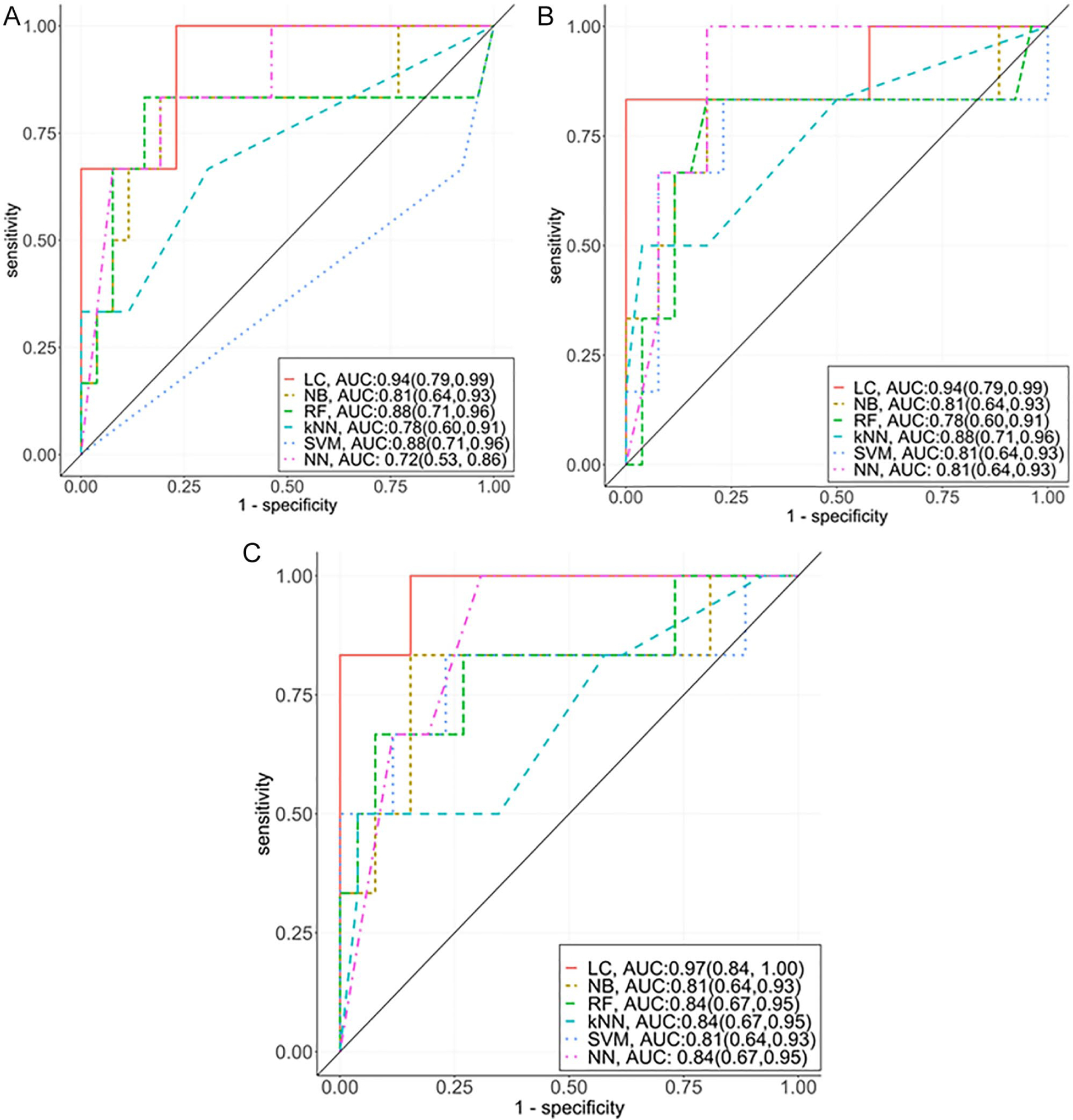
This study was a single-center, retrospective observational evaluation of 130 adults admitted to the medical ICU. The MRC-ICU score was utilized to improve the inpatient model's prediction accuracy. Three models were proposed: model I, demographic data without medication data; model II, demographic data and medication regimen complexity variables; and model III: demographic data and the MRC-ICU score. A total of 6 ML classifiers was developed: k-nearest neighbor (KNN), naïve Bayes (NB), random forest, support vector machine, neural network, and logistic classifier (LC). They were developed and tested using electronic health record data to predict inpatient mortality.
The results demonstrated that adding medication regimen complexity variables (model II) and the MRC-ICU score (model III) improved inpatient mortality prediction.. The LC outperformed the other classifiers (KNN and NB), with an overall accuracy of 83%, sensitivity (Se) of 87%, specificity of 67%, positive predictive value of 93%, and negative predictive value of 46%. The APACHE III score and the MRC-ICU score at the 24-hour interval were the 2 most important variables.
Inclusion of the MRC-ICU score improved the prediction of patient outcomes on the previously established APACHE III score. This novel, proof-of-concept methodology shows promise for future application of the MRC-ICU scoring tool for patient outcome predictions.
药物治疗方案复杂性-重症监护病房(MRC-ICU)是用于衡量重症患者药物治疗方案复杂性的首个工具。本研究测试了机器学习(ML)模型,以探究药物治疗方案复杂性与患者预后之间的关系。
本研究是对130名入住内科重症监护病房的成年患者进行的单中心回顾性观察评估。利用MRC-ICU评分来提高住院患者模型的预测准确性。提出了三个模型:模型I,无药物数据的人口统计学数据;模型II,人口统计学数据和药物治疗方案复杂性变量;模型III:人口统计学数据和MRC-ICU评分。共开发了6种ML分类器:k近邻(KNN)、朴素贝叶斯(NB)、随机森林、支持向量机、神经网络和逻辑分类器(LC)。使用电子健康记录数据开发并测试这些分类器,以预测住院患者死亡率。
结果表明,添加药物治疗方案复杂性变量(模型II)和MRC-ICU评分(模型III)可改善住院患者死亡率预测。LC的表现优于其他分类器(KNN和NB),总体准确率为83%,灵敏度(Se)为87%,特异性为67%,阳性预测值为93%,阴性预测值为46%。24小时间隔的APACHE III评分和MRC-ICU评分是两个最重要的变量。
纳入MRC-ICU评分可改善基于先前建立的APACHE III评分对患者预后的预测。这种新颖的概念验证方法显示了MRC-ICU评分工具在未来用于患者预后预测的应用前景。