Experimental Psychology I, Institute of Psychology, Osnabrück University, Seminarstraße 20, 49074, Osnabrück, Germany.
Psychol Res. 2021 Oct;85(7):2485-2501. doi: 10.1007/s00426-020-01417-x. Epub 2020 Sep 15.
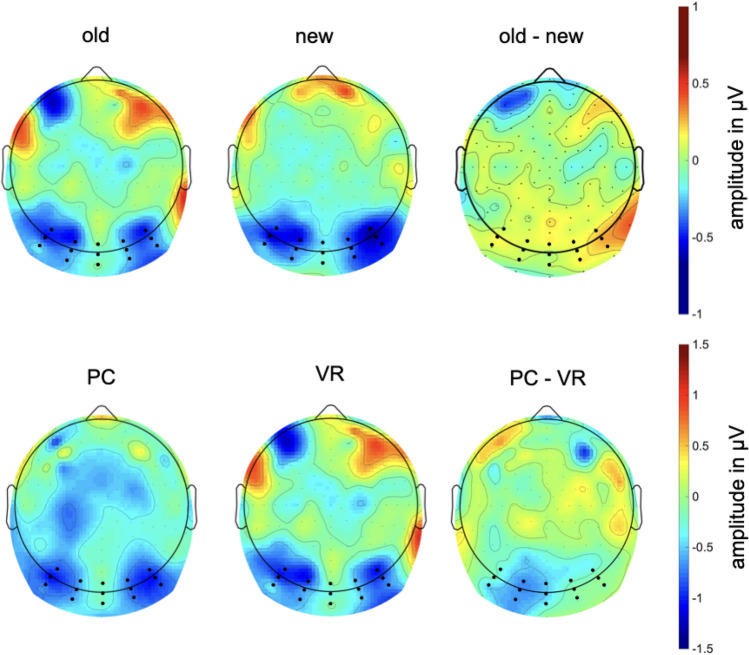
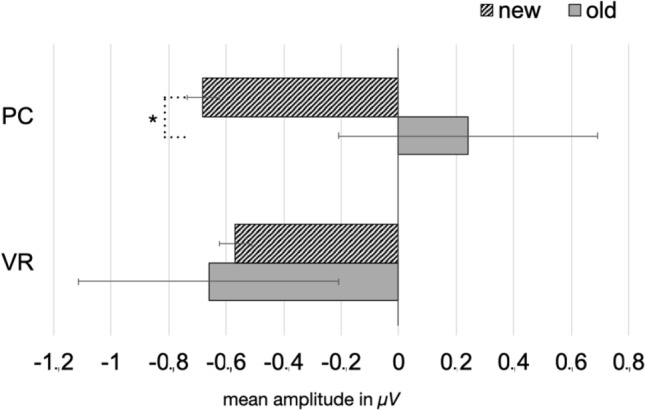
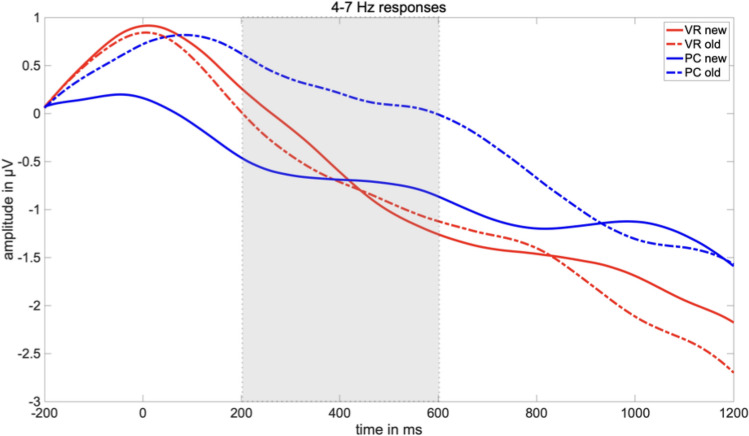
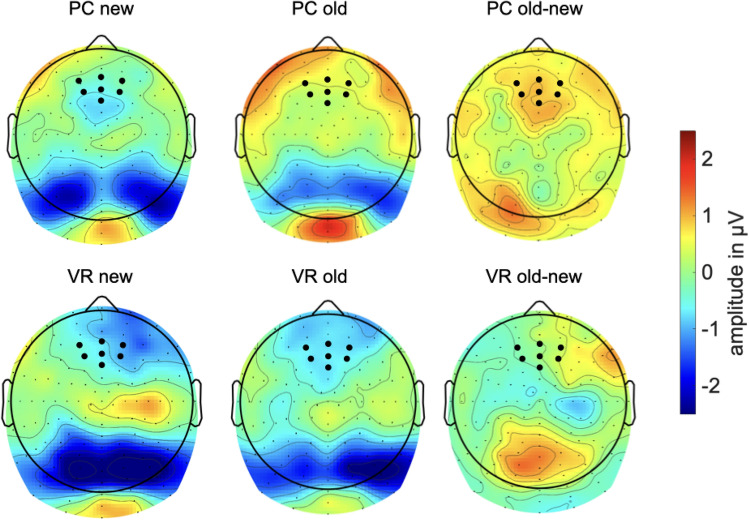
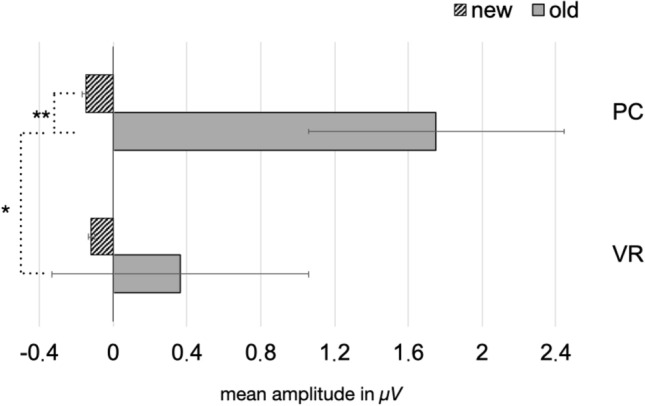
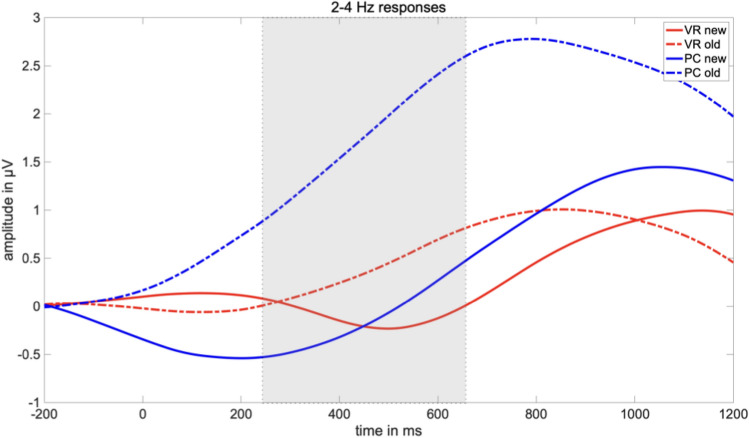
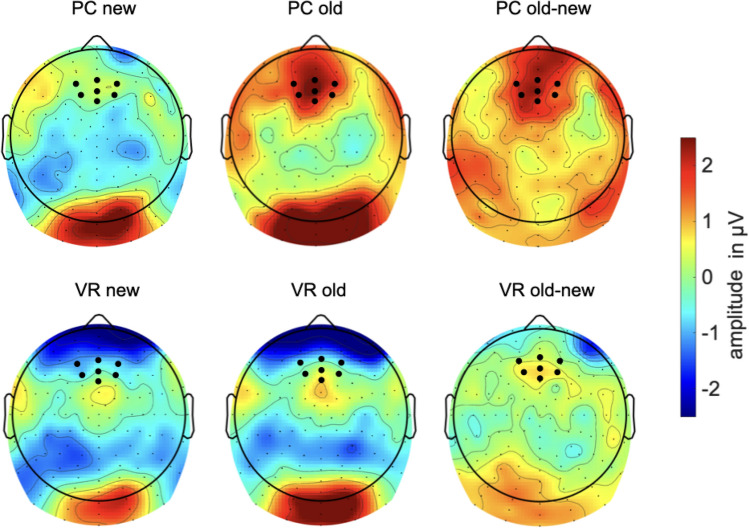
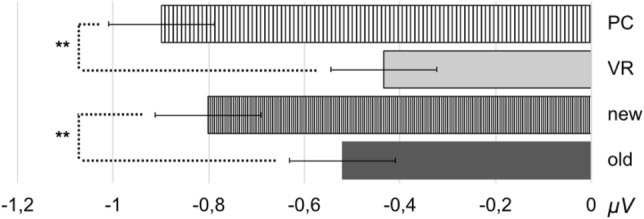
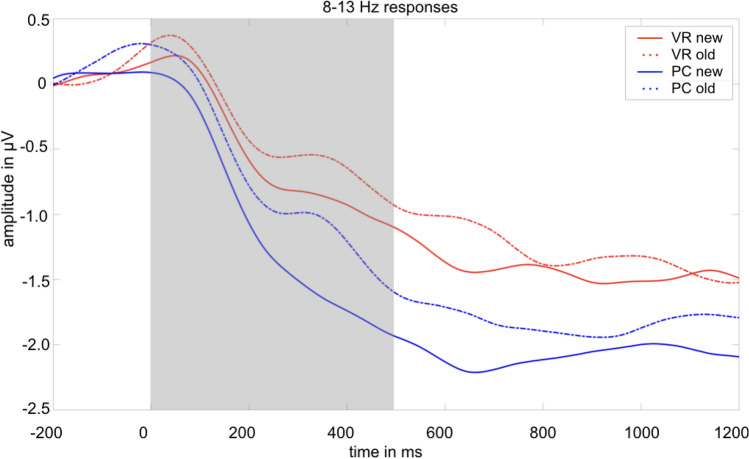
Recent advancements in memory research indicate that virtual reality (VR) experiences are more vividly memorized as compared to conventional laboratory events. In contrast to the latter, VR experiences are highly immersive, simulating the multimodality, vividness and inclusiveness of real-life experiences. Therefore, VR might enable researchers to identify memory processes underlying events which participants have actually experienced, in contrast to conventional on-screen experiences. To differentiate the electrophysiological correlates of memory processes underlying VR experiences as compared to conventional laboratory experiences, participants watched videos either in a PC condition or in a VR condition, followed by an unannounced recognition memory test. As hypothesized, we replicated the well-established theta old/new effect for the PC condition, but remarkably, this effect was absent in the VR condition. Additionally, the latter was accompanied by significantly lower alpha activity as compared to the PC condition. As increases in theta-band responses are related to top-down control on, and memory load during retrieval, the observed theta responses might rather relate to retrieval effort than to retrieval success per se. Congruently, higher alpha activity measured over occipital sensor areas in the PC condition reflect visually guided search processes within episodic memory. The VR condition comes in with lower alpha activity, reflecting immediate and effortless memory access. Hence, our findings indicate that the retrieval of VR experiences promotes autobiographical retrieval mechanisms, whereas recalling conventional laboratory events comes in with higher effort, which might not reflect the mechanisms of everyday memory.
最近的记忆研究进展表明,与传统的实验室事件相比,虚拟现实 (VR) 体验更容易被记住。与后者相比,VR 体验具有高度的沉浸感,模拟了现实生活体验的多模态、生动性和包容性。因此,VR 可能使研究人员能够识别参与者实际经历的事件背后的记忆过程,而不是传统的屏幕体验。为了区分 VR 体验与传统实验室体验背后的记忆过程的电生理相关性,参与者在 PC 条件或 VR 条件下观看视频,然后进行未经宣布的识别记忆测试。正如假设的那样,我们复制了 PC 条件下成熟的θ旧/新效应,但值得注意的是,这种效应在 VR 条件下不存在。此外,与 PC 条件相比,后者的α活动显著降低。由于θ频段反应的增加与检索过程中的自上而下的控制和记忆负荷有关,观察到的θ反应可能与检索努力有关,而不是与检索成功本身有关。一致地,在 PC 条件下测量的枕部传感器区域的较高α活动反映了情节记忆中的视觉引导搜索过程。VR 条件下的α活动较低,反映了即时和轻松的记忆访问。因此,我们的发现表明,VR 体验的检索促进了自传体检索机制,而回忆传统的实验室事件则需要更高的努力,这可能无法反映日常记忆的机制。