Singh Gurpreet, Ablyaz Timur Rizovich, Shlykov Evgeny Sergeevich, Muratov Karim Ravilevich, Bhui Amandeep Singh, Sidhu Sarabjeet Singh
Mechanical Engineering Department, Beant College of Engineering and Technology, Gurdaspur 143521, India.
Mechanical Engineering Faculty, Perm National Research Polytechnic University, 614000 Perm, Russia.
Micromachines (Basel). 2020 Sep 12;11(9):850. doi: 10.3390/mi11090850.
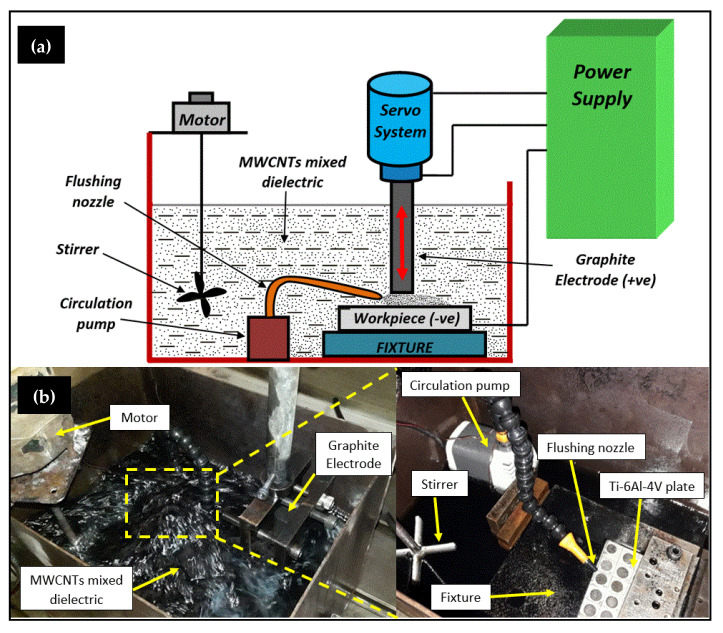
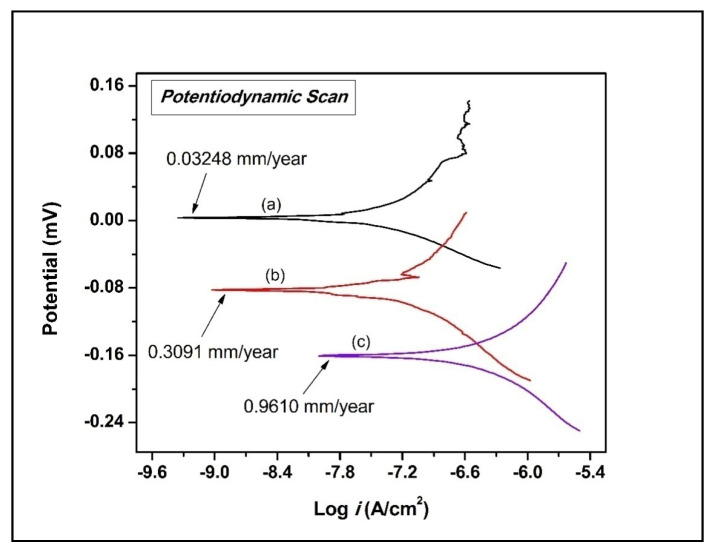
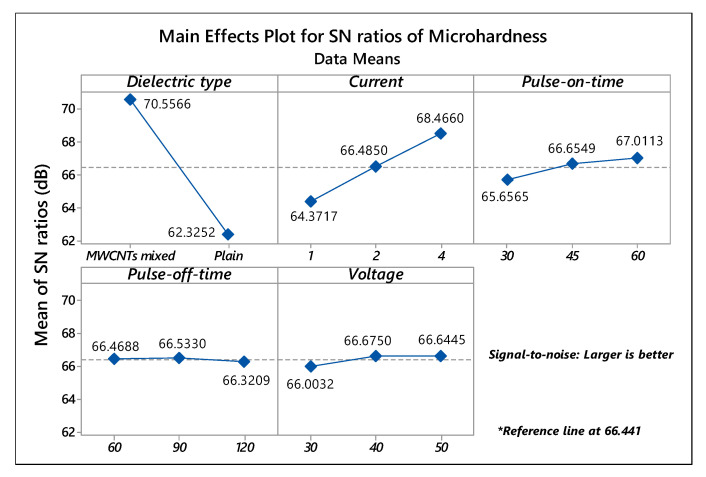
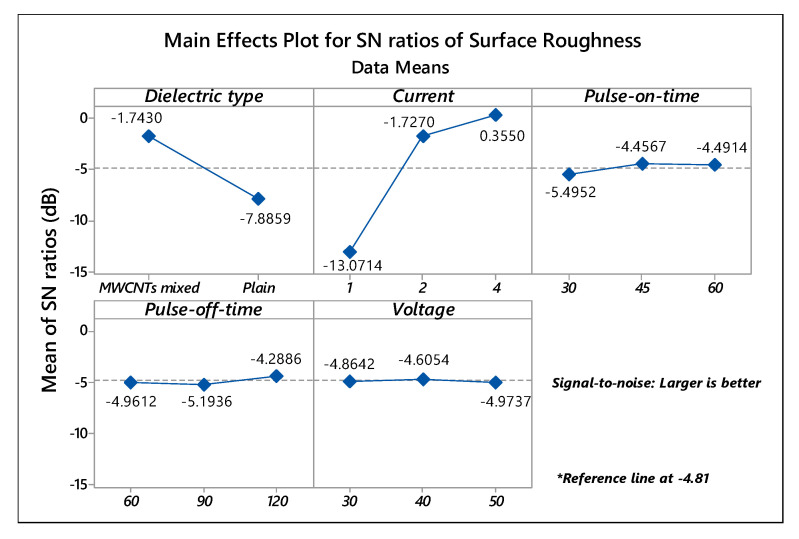
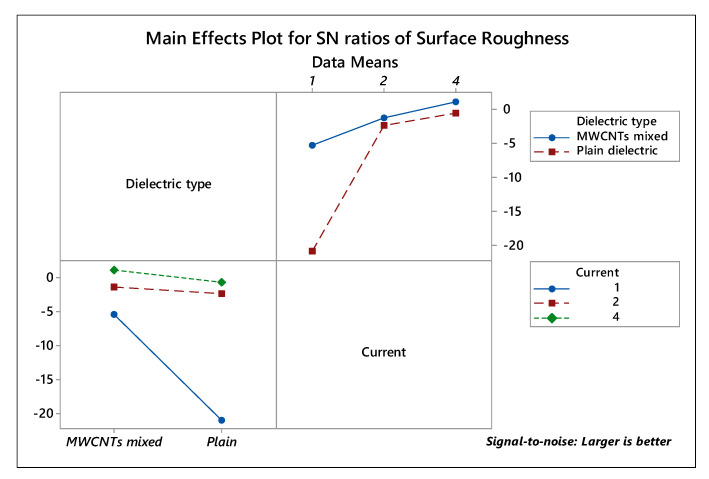
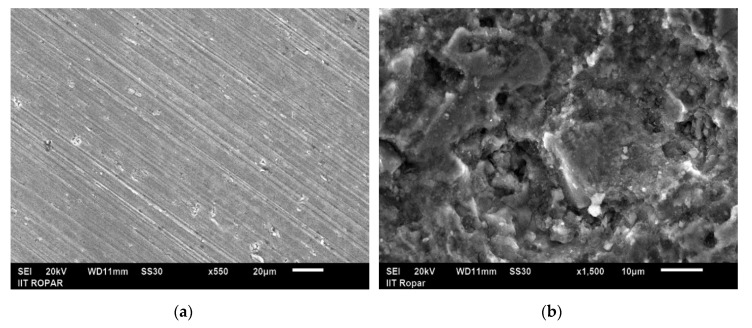
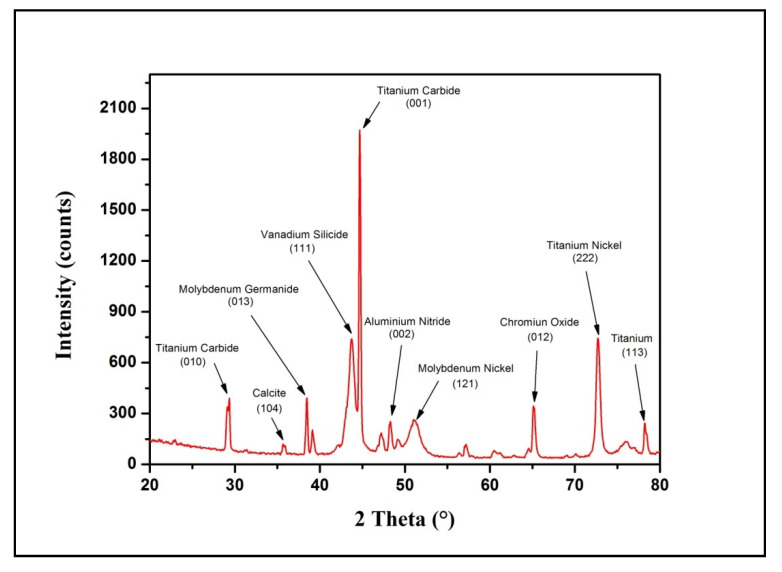
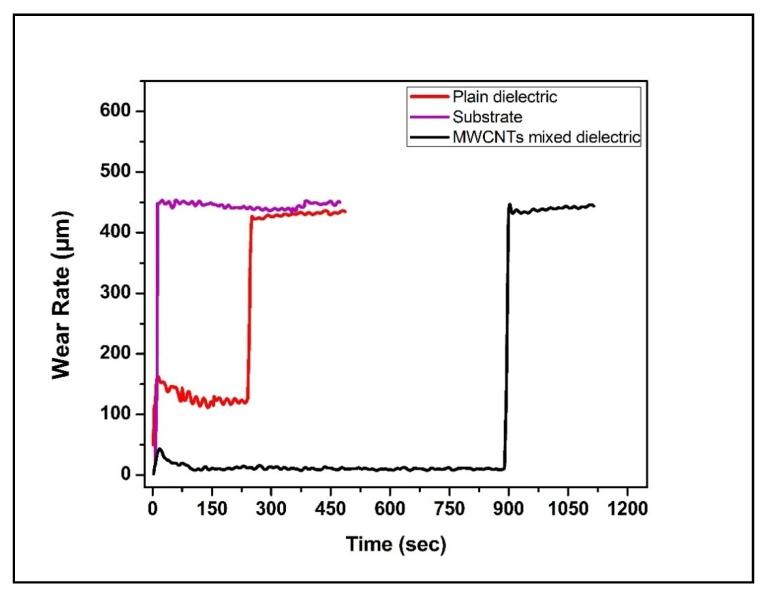
This paper presents wear and corrosion resistance analysis of carbon nanotubes coated with Ti-6Al-4V alloy processed by electro-discharge treatment. The reported work is carried out using Taguchi's L18 orthogonal array to design the experimental matrix by varying five input process parameters i.e., dielectric medium (plain dielectric, multi-walled carbon nanotubes (MWCNTs) mixed dielectric), current (1-4 A), pulse-on-time (30-60 µs), pulse-off-time (60-120 µs), and voltage (30-50 V). The output responses are assessed in terms of microhardness and surface roughness of the treated specimen. X-ray diffraction (XRD) spectra of the coated sample reveal the formation of intermetallic compounds, oxides, and carbides, whereas surface morphology is observed using scanning electron microscopy (SEM) analysis. For the purpose of the in-vitro wear behavior of treated samples, the surface with superior microhardness values in plain dielectric and MWCNTs mixed dielectric is compared using a pin-on-disc type wear test. Furthermore, electrochemical corrosion test is also conducted to portray the dominance of treated substrate of Ti-6Al-4V alloy for biomedical applications. It is concluded that the wear-resistant and the corrosion protection efficiency of the MWCNTs treated substrate enhanced to 95%, and 96.63%, respectively.
本文介绍了通过放电处理工艺在碳纳米管上涂覆Ti-6Al-4V合金后的耐磨性和耐腐蚀性分析。所报道的工作使用田口的L18正交阵列,通过改变五个输入工艺参数来设计实验矩阵,即介电介质(普通介电质、多壁碳纳米管(MWCNTs)混合介电质)、电流(1 - 4A)、脉冲导通时间(30 - 60μs)、脉冲关断时间(60 - 120μs)和电压(30 - 50V)。根据处理后试样的显微硬度和表面粗糙度来评估输出响应。涂覆样品的X射线衍射(XRD)光谱揭示了金属间化合物、氧化物和碳化物的形成,而使用扫描电子显微镜(SEM)分析观察表面形貌。为了研究处理后样品的体外磨损行为,使用销盘式磨损试验比较了在普通介电质和MWCNTs混合介电质中具有较高显微硬度值的表面。此外,还进行了电化学腐蚀试验,以描述Ti-6Al-4V合金处理后的基体在生物医学应用中的优势。结果表明,MWCNTs处理后的基体的耐磨性能和耐腐蚀效率分别提高到了95%和96.63%。