Roche Sequencing Solutions, 4300 Hacienda Dr, Pleasanton & Potsdam, California, 94588, USA.
Signature Diagnostics GmbH, Hermannswerder 20A, 14473, Potsdam, Germany.
BMC Cancer. 2020 Sep 15;20(1):885. doi: 10.1186/s12885-020-07340-z.
Identifying and tracking somatic mutations in cell-free DNA (cfDNA) by next-generation sequencing (NGS) has the potential to transform the clinical management of subjects with advanced non-small cell lung cancer (NSCLC).
Baseline tumor tissue (n = 47) and longitudinal plasma (n = 445) were collected from 71 NSCLC subjects treated with chemotherapy. cfDNA was enriched using a targeted-capture NGS kit containing 197 genes. Clinical responses to treatment were determined using RECIST v1.1 and correlations between changes in plasma somatic variant allele frequencies and disease progression were assessed.
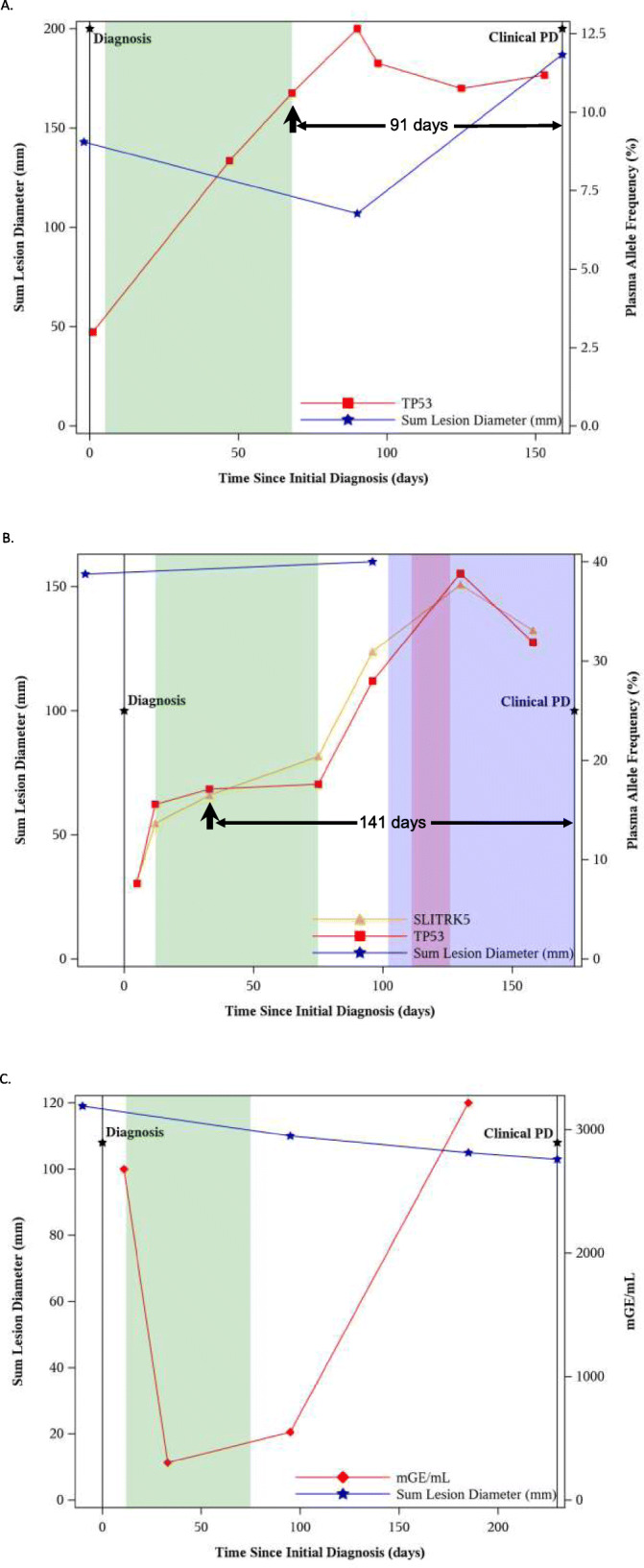
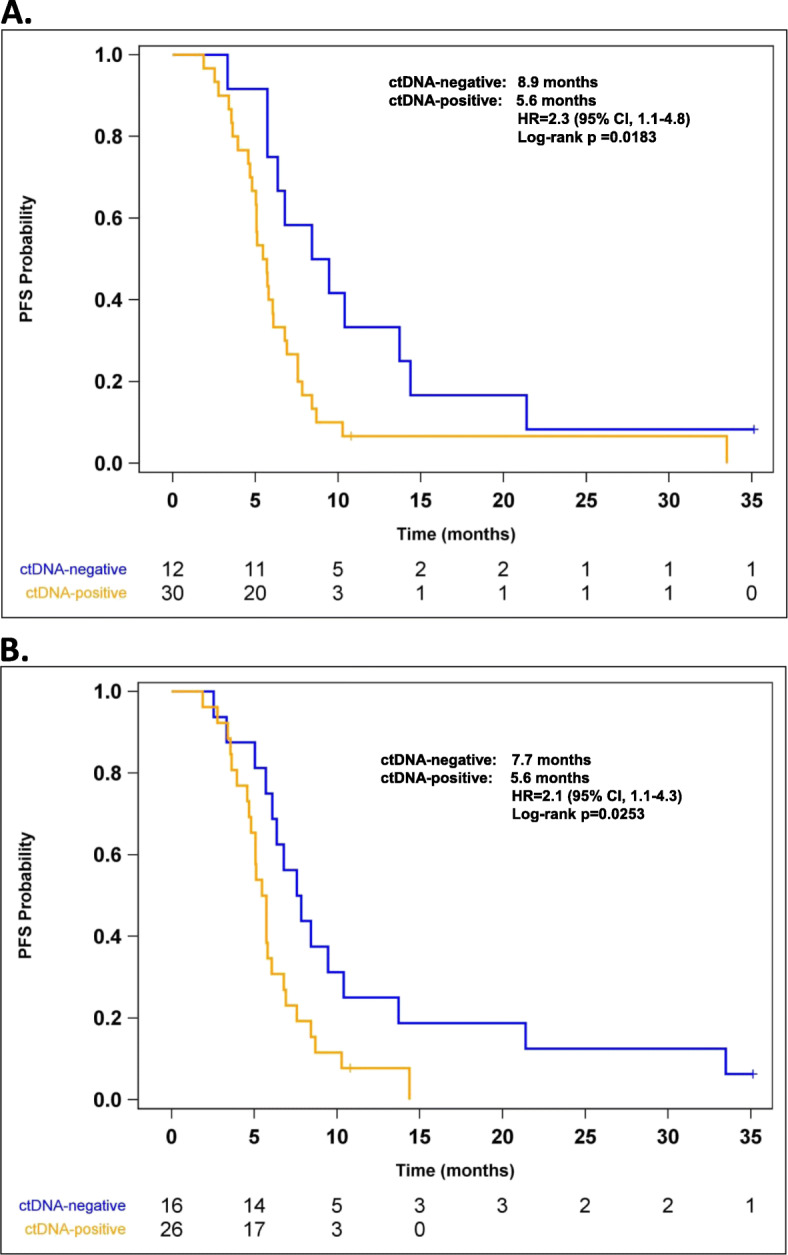
Somatic variants were detected in 89.4% (42/47) of tissue and 91.5% (407/445) of plasma samples. The most commonly mutated genes in tissue were TP53 (42.6%), KRAS (25.5%), and KEAP1 (19.1%). In some subjects, the allele frequencies of mutations detected in plasma increased 3-5 months prior to disease progression. In other cases, the allele frequencies of detected mutations declined or decreased to undetectable levels, indicating clinical response. Subjects with circulating tumor DNA (ctDNA) levels above background had significantly shorter progression-free survival (median: 5.6 vs 8.9 months, respectively; log-rank p = 0.0183).
Longitudinal monitoring of mutational changes in plasma has the potential to predict disease progression early. The presence of ctDNA mutations during first-line treatment is a risk factor for earlier disease progression in advanced NSCLC.
通过下一代测序(NGS)对游离体 DNA(cfDNA)中的体细胞突变进行识别和跟踪,有可能改变晚期非小细胞肺癌(NSCLC)患者的临床管理方式。
从 71 名接受化疗的 NSCLC 患者中采集了 47 份基线肿瘤组织(n=47)和 445 份纵向血浆(n=445)。使用包含 197 个基因的靶向捕获 NGS 试剂盒富集 cfDNA。使用 RECIST v1.1 确定治疗的临床反应,并评估血浆体细胞变异等位基因频率变化与疾病进展之间的相关性。
在 47 份组织样本和 445 份血浆样本中分别检测到 89.4%(42/47)和 91.5%(407/445)的体细胞变异。在组织中最常见的突变基因是 TP53(42.6%)、KRAS(25.5%)和 KEAP1(19.1%)。在一些患者中,在疾病进展前 3-5 个月,血浆中检测到的突变等位基因频率增加。在其他情况下,检测到的突变等位基因频率下降或降至无法检测水平,表明有临床反应。循环肿瘤 DNA(ctDNA)水平高于背景的患者无进展生存期显著缩短(中位数:分别为 5.6 和 8.9 个月;对数秩检验,p=0.0183)。
对血浆中突变变化的纵向监测有可能提前预测疾病进展。在一线治疗期间存在 ctDNA 突变是晚期 NSCLC 疾病早期进展的风险因素。