Department of Kidney Transplantation, The Third Affiliated Hospital of Sun Yat-sen University, Guangzhou, 510630, Guangdong, China.
Department of Kidney Transplantation, The Fifth Affiliated Hospital of Sun Yat-sen University, Zhuhai, 519000, Guangdong, China.
Signal Transduct Target Ther. 2020 Sep 16;5(1):194. doi: 10.1038/s41392-020-00232-5.
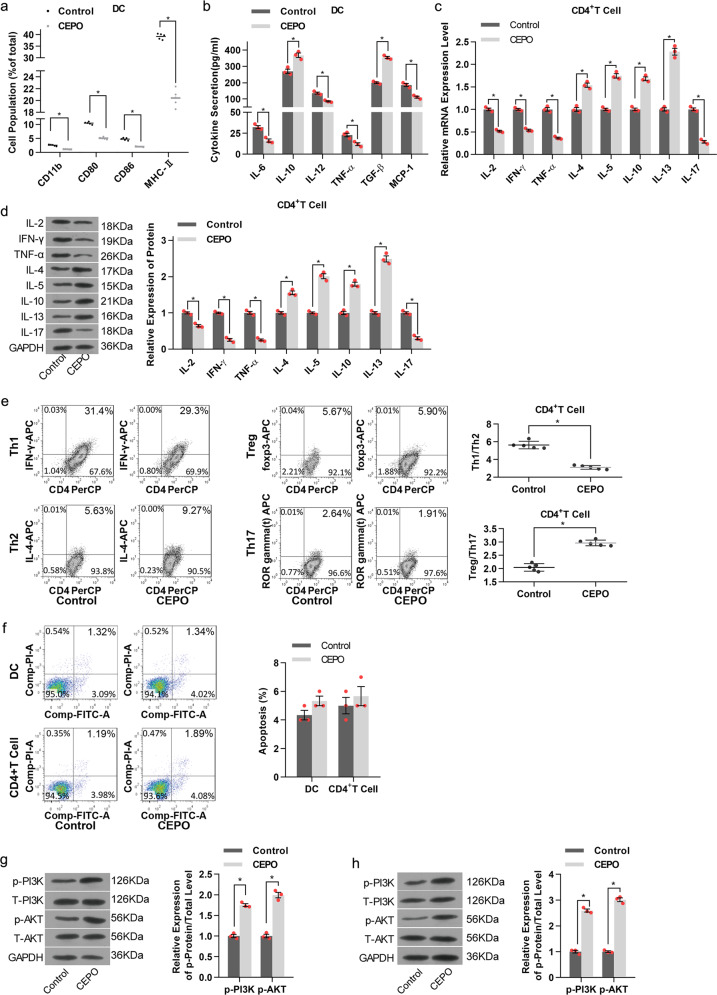
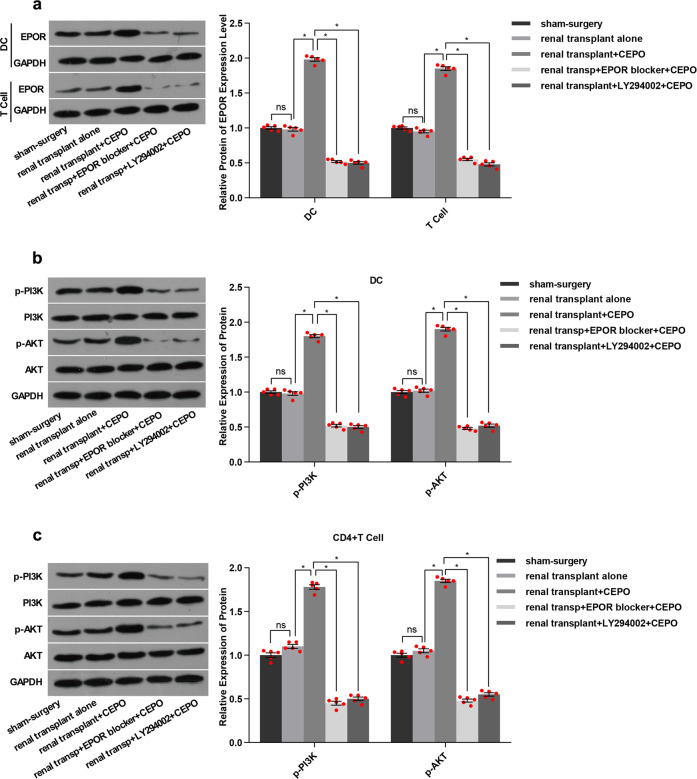
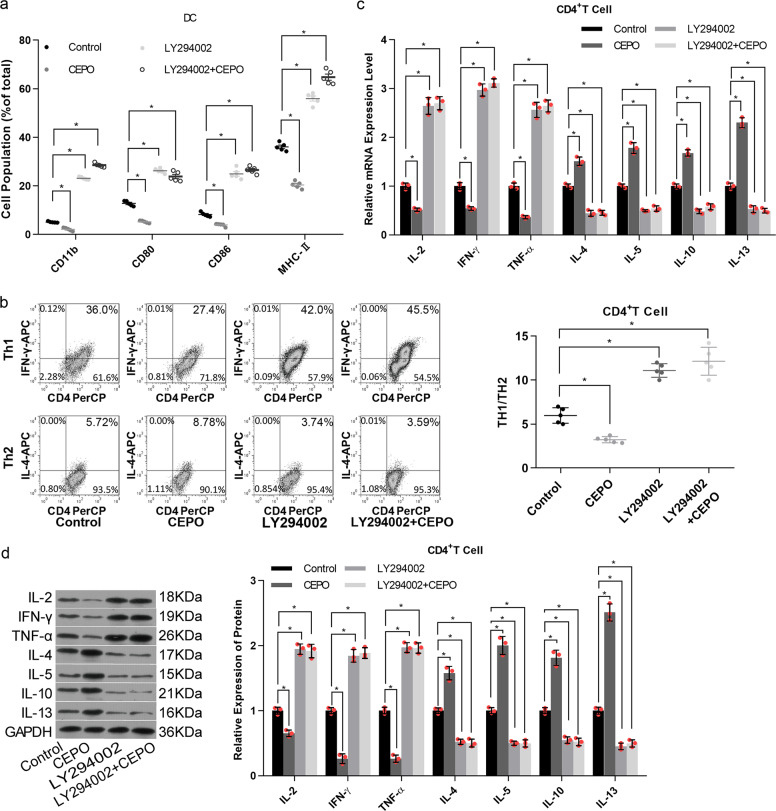
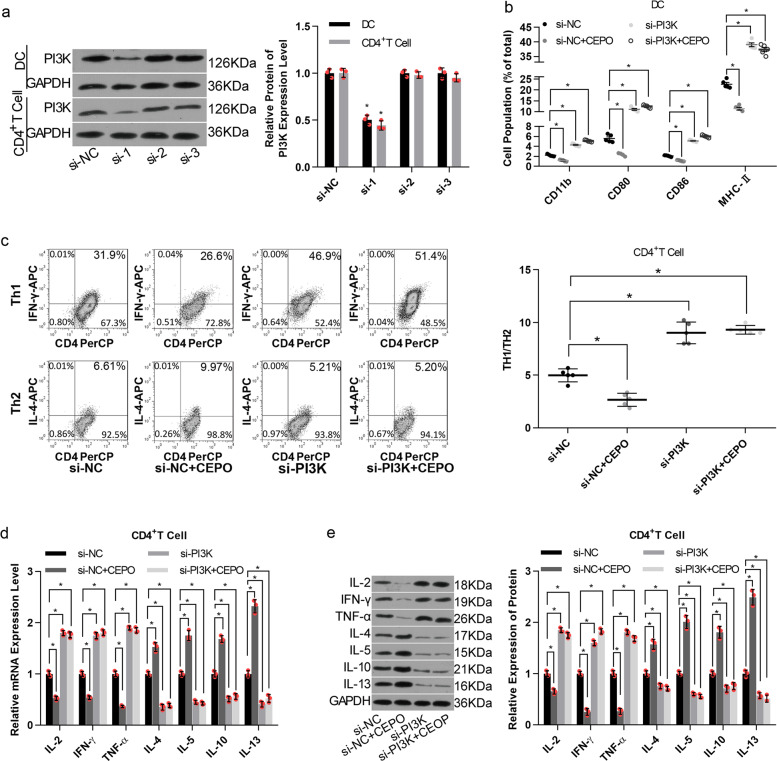
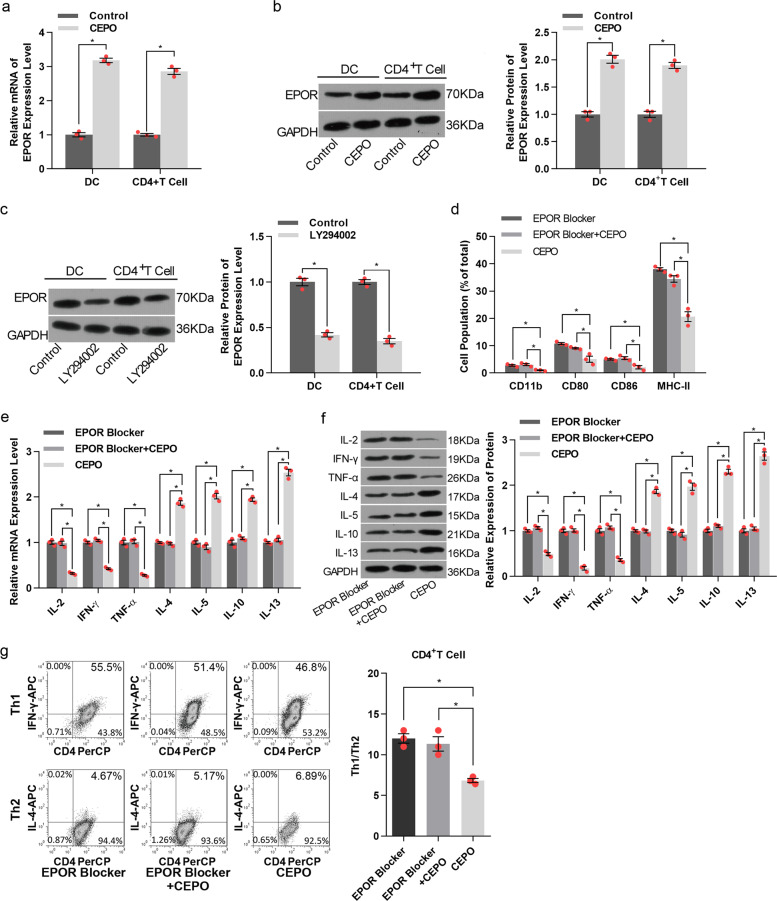
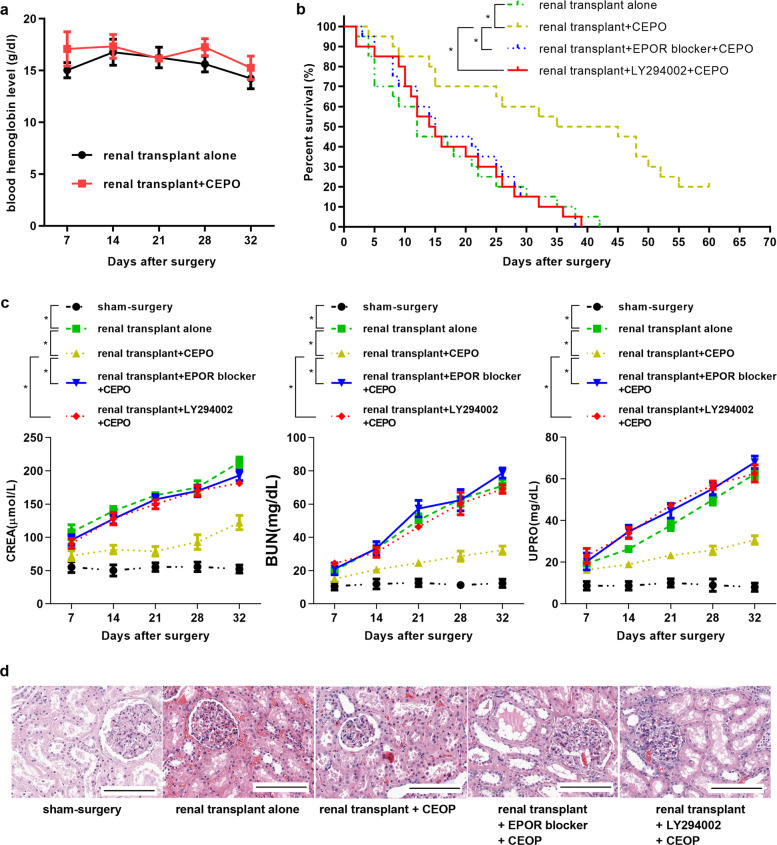
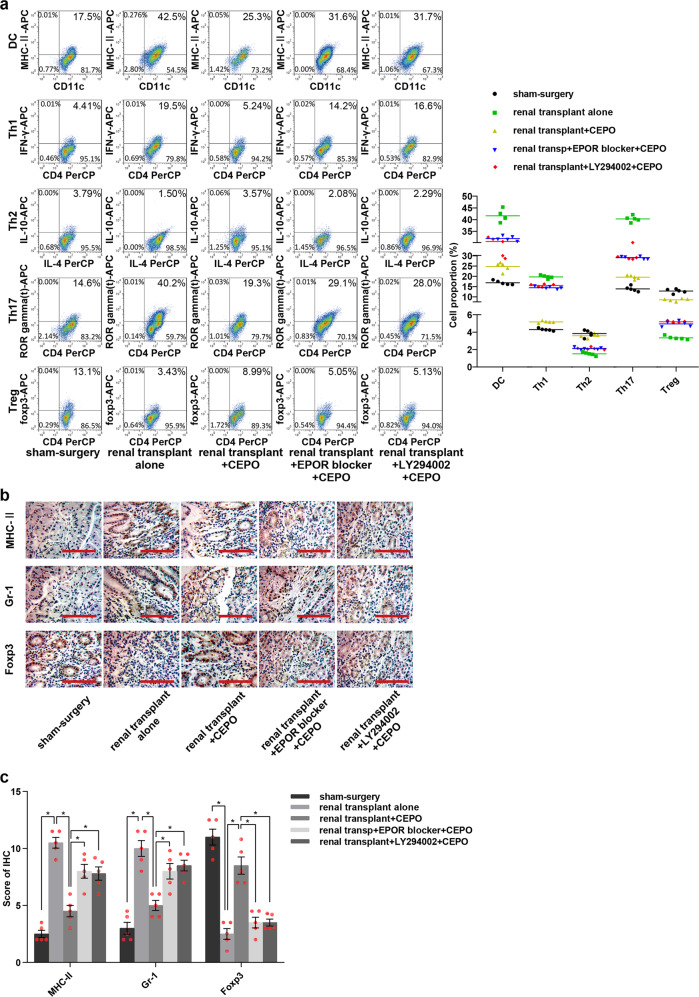
Modulation of alloimmune responses is critical to improving transplant outcome and promoting long-term graft survival. To determine mechanisms by which a nonhematopoietic erythropoietin (EPO) derivative, carbamylated EPO (CEPO), regulates innate and adaptive immune cells and affects renal allograft survival, we utilized a rat model of fully MHC-mismatched kidney transplantation. CEPO administration markedly extended the survival time of kidney allografts compared with the transplant alone control group. This therapeutic effect was inhibited when the recipients were given LY294002, a selective inhibitor of the phosphoinositide 3-kinase (PI3K)/protein kinase B (AKT) signaling pathway or anti-EPO receptor (EPOR) antibody, in addition to CEPO. In vitro, CEPO inhibited the differentiation and function of dendritic cells and modulated their production of pro-inflammatory and anti-inflammatory cytokines, along with activating the PI3K/AKT signaling pathway and increasing EPOR mRNA and protein expression by these innate immune cells. Moreover, after CD4 T cells were exposed to CEPO the Th1/Th2 ratio decreased and the regulatory T cell (Treg)/Th17 ratio increased. These effects were abolished by LY294002 or anti-EPOR antibody, suggesting that CEPO regulates immune responses and promotes kidney allograft survival by activating the PI3K/AKT signaling pathway in an EPOR-dependent manner. The immunomodulatory and specific signaling pathway effects of CEPO identified in this study suggest a potential therapeutic approach to promoting kidney transplant survival.
调节同种免疫反应对于改善移植效果和促进长期移植物存活至关重要。为了确定非造血性促红细胞生成素(EPO)衍生物,氨甲酰化 EPO(CEPO)调节固有和适应性免疫细胞的机制,并影响肾移植的存活,我们利用了大鼠模型的完全 MHC 错配的肾移植。与单独移植对照组相比,CEPO 给药显著延长了肾移植的存活时间。当接受者除 CEPO 外还给予 LY294002(一种磷酸肌醇 3-激酶(PI3K)/蛋白激酶 B(AKT)信号通路的选择性抑制剂)或抗 EPO 受体(EPOR)抗体时,这种治疗效果受到抑制。体外,CEPO 抑制树突状细胞的分化和功能,并调节其产生促炎和抗炎细胞因子,同时激活 PI3K/AKT 信号通路并增加这些固有免疫细胞的 EPOR mRNA 和蛋白表达。此外,CD4 T 细胞暴露于 CEPO 后,Th1/Th2 比值降低,调节性 T 细胞(Treg)/Th17 比值升高。这些作用被 LY294002 或抗 EPOR 抗体所消除,表明 CEPO 通过 EPOR 依赖性方式激活 PI3K/AKT 信号通路来调节免疫反应并促进肾移植的存活。本研究中确定的 CEPO 的免疫调节和特定信号通路作用表明,通过激活 PI3K/AKT 信号通路,促进肾移植存活可能是一种潜在的治疗方法。