Molecular and Cellular Biology Graduate Program, University of Massachusetts, Amherst, MA, 01003, USA.
Department of Food Science, University of Massachusetts, Amherst, MA, 01003, USA.
Sci Rep. 2020 Sep 15;10(1):15115. doi: 10.1038/s41598-020-71864-4.
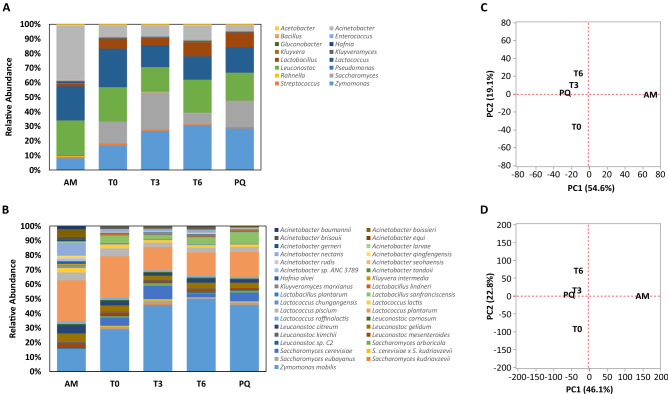
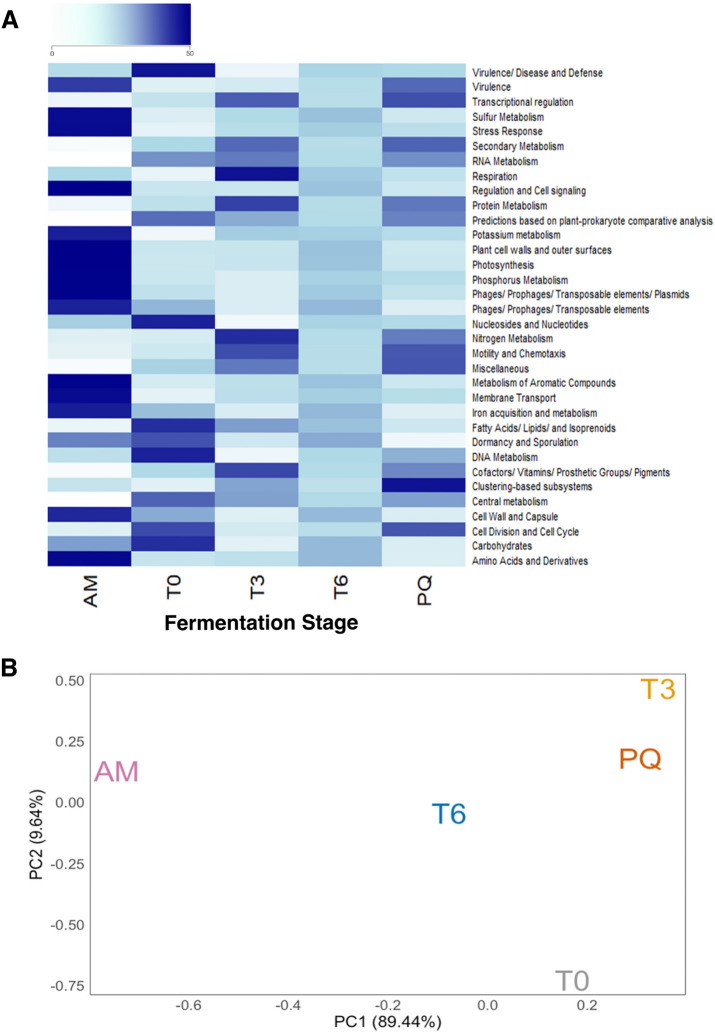
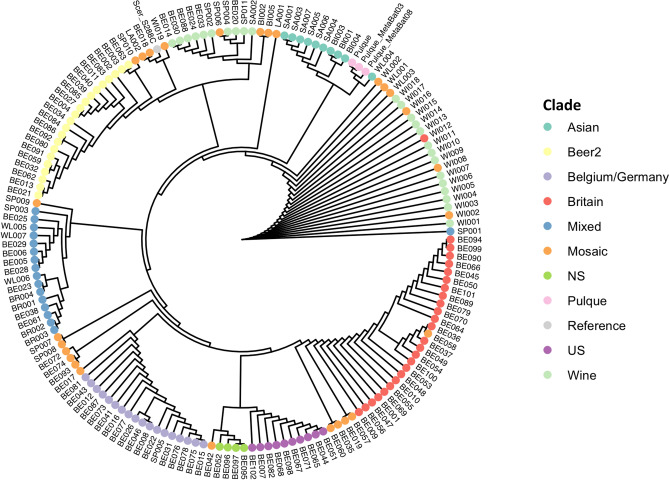
Pulque is a culturally important 4,000-year-old traditional Mexican fermented drink. Pulque is produced by adding fresh aguamiel (agave sap) to mature pulque, resulting in a mixture of microbial communities and chemical compositions. We performed shotgun metagenomic sequencing of five stages of pulque fermentation to characterize organismal and functional diversity. We identified 6 genera (Acinetobacter, Lactobacillus, Lactococcus, Leuconostoc, Saccharomyces and Zymomonas) and 10 species (Acinetobacter boissieri, Acinetobacter nectaris, Lactobacillus sanfranciscensis, Lactococcus lactis, Lactococcus piscium, Lactococcus plantarum, Leuconostoc citreum, Leuconostoc gelidum, Zymomonas mobilis and Saccharomyces cerevisiae) that were present ≥ 1% in at least one stage of pulque fermentation. The abundance of genera and species changed during fermentation and was associated with a decrease in sucrose and increases in ethanol and lactic acid, suggesting that resource competition shapes organismal diversity. We also predicted functional profiles, based on organismal gene content, for each fermentation stage and identified an abundance of genes associated with the biosynthesis of folate, an essential B-vitamin. Additionally, we investigated the evolutionary relationships of S. cerevisiae and Z. mobilis, two of the major microbial species found in pulque. For S. cerevisiae, we used a metagenomics assembly approach to identify S. cerevisiae scaffolds from pulque, and performed phylogenetic analysis of these sequences along with a collection of 158 S. cerevisiae strains. This analysis suggests that S. cerevisiae from pulque is most closely related to Asian strains isolated from sake and bioethanol. Lastly, we isolated and sequenced the whole-genomes of three strains of Z. mobilis from pulque and compared their relationship to seven previously sequenced isolates. Our results suggest pulque strains may represent a distinct lineage of Z. mobilis.
龙舌兰酒是一种具有 4000 年历史的墨西哥传统发酵饮品,具有重要的文化意义。龙舌兰酒是通过向成熟的龙舌兰汁中添加新鲜的龙舌兰汁(龙舌兰汁)制成的,从而形成微生物群落和化学成分的混合物。我们对龙舌兰酒发酵的五个阶段进行了鸟枪法宏基因组测序,以描述生物多样性和功能多样性。我们鉴定了 6 个属(不动杆菌属、乳杆菌属、乳球菌属、肠球菌属、酿酒酵母属和运动发酵单胞菌属)和 10 个种(鲍氏不动杆菌、花斑奈瑟菌、旧金山乳杆菌、乳球菌 lactis、乳球菌 piscium、植物乳杆菌、柠檬明串珠菌、嗜冷明串珠菌、运动发酵单胞菌和酿酒酵母),这些菌在至少一个龙舌兰酒发酵阶段的存在率≥1%。属和种的丰度在发酵过程中发生变化,与蔗糖的减少和乙醇和乳酸的增加有关,表明资源竞争塑造了生物多样性。我们还根据生物体的基因含量预测了每个发酵阶段的功能谱,并鉴定了与叶酸生物合成相关的大量基因,叶酸是一种必需的 B 族维生素。此外,我们还研究了两种主要微生物物种——酿酒酵母和运动发酵单胞菌在龙舌兰酒中的进化关系。对于酿酒酵母,我们使用宏基因组组装方法从龙舌兰酒中鉴定出酿酒酵母支架,并对这些序列进行了系统发育分析,同时还对来自清酒和生物乙醇的 158 株酿酒酵母菌株进行了分析。该分析表明,龙舌兰酒中的酿酒酵母与从清酒和生物乙醇中分离出的亚洲菌株最为密切相关。最后,我们从龙舌兰酒中分离并测序了三株运动发酵单胞菌的全基因组,并将其与之前测序的七个分离株进行了比较。我们的研究结果表明,龙舌兰酒中的运动发酵单胞菌可能代表了一个独特的运动发酵单胞菌谱系。