Universidade Federal do Rio Grande do Norte, Centro de Ciências da Saúde, Programa de Pós-Graduação em Ciências da Saúde, Natal, RN, Brasil.
Universidade Federal do Rio Grande do Norte, Centro de Ciências da Saúde, Programa de Pós-Graduação em Ciências Farmacêuticas, Natal, RN, Brasil.
Rev Soc Bras Med Trop. 2020 Sep 11;53:e20200088. doi: 10.1590/0037-8682-0088-2020. eCollection 2020.
Oral infection by Trypanosoma cruzi is currently the most important route of transmission of acute Chagas disease (ACD) in the North region of Brazil, and the reported outbreaks are usually related to ingestion of contaminated food, especially unprocessed açaí pulp.
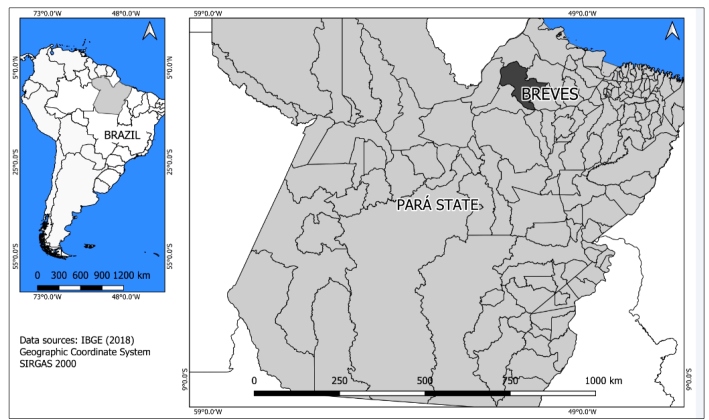
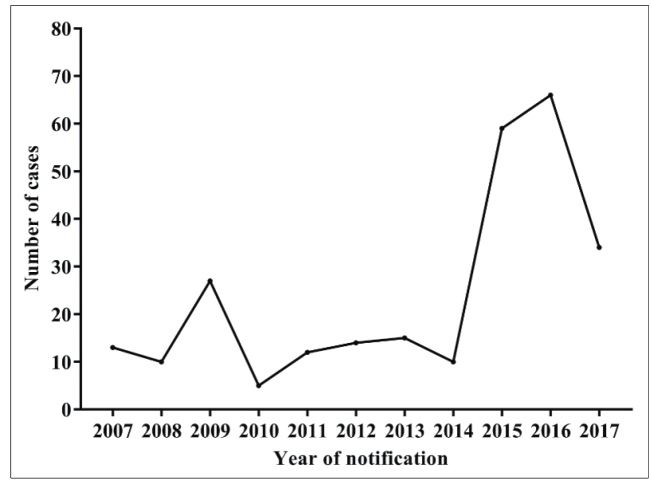
A retrospective cohort study was performed to analyze the epidemiological profile of individuals with suspected cases of ACD in the municipality of Breves, located in the state of Pará, Brazil. Therefore, notifications of suspected cases of ACD were collected from the Municipal Health Department of Breves from January 2007 to December 2017.
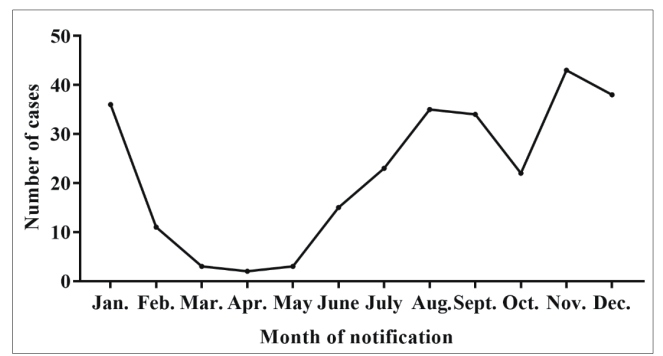
A total of 265 individuals were registered, and the majority were male (54.7%; 145/265). Age ranged from nine months to 79 years, with a greater number of notifications for individuals aged between 1 and 39 years (71.3%; 189/265). Most of them had a low level of education (74.3%, 197/265), were living in rural and urban areas (58.9%; 156/265 and 37.7%; 100/265, respectively). Infection occurred mainly in the domestic environment (96.2%; 255/265) through oral transmission (98.1%; 260/265). There were a greater number of notifications in November, December and January.
These data showed that oral transmission of T. cruzi has become increasingly high in the study region, and health education programs need to be implemented as strategies to ensure good manufacturing practices of unprocessed food.
目前,巴西北部地区通过口部感染克氏锥虫(Trypanosoma cruzi)是急性恰加斯病(Chagas disease,ACD)最重要的传播途径,报道的暴发通常与摄入受污染的食物有关,尤其是未经加工的巴西莓果浆。
对巴西帕拉州贝雷斯市疑似 ACD 病例的流行病学特征进行了回顾性队列研究。因此,从 2007 年 1 月至 2017 年 12 月,从贝雷斯市卫生局收集了疑似 ACD 病例的通知。
共登记了 265 人,其中大多数为男性(54.7%,145/265)。年龄从 9 个月至 79 岁不等,通知中 1 至 39 岁的人数最多(71.3%,189/265)。他们大多受教育程度较低(74.3%,197/265),居住在农村和城市地区(58.9%,156/265 和 37.7%,100/265)。感染主要发生在家庭环境中(96.2%,255/265),通过口部传播(98.1%,260/265)。11 月、12 月和 1 月的通知较多。
这些数据表明,在研究地区,克氏锥虫的口腔传播越来越高,需要实施健康教育计划作为确保未加工食品良好生产规范的策略。