Atkins Lou, Stefanidou Chryssa, Chadborn Tim, Thompson Katherine, Michie Susan, Lorencatto Fabi
Centre for Behaviour Change, University College London, WC1N 3AZ, London, UK.
Public Health England Behavioural Insights, London, UK.
BMC Public Health. 2020 Sep 17;20(1):1359. doi: 10.1186/s12889-020-09365-2.
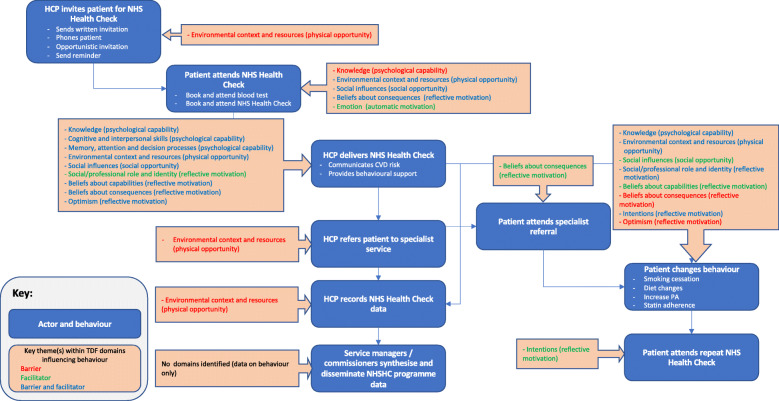
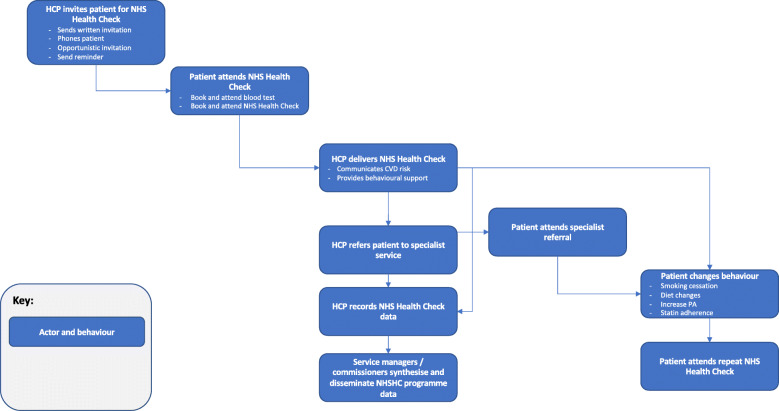
National Health Service Health Checks were introduced in 2009 to reduce cardiovascular disease (CVD) risks and events. Since then, national evaluations have highlighted the need to maximise the programme's impact by improving coverage and outputs. To address these challenges it is important to understand the extent to which positive behaviours are influenced across the NHS Health Check pathway and encourage the promotion or minimisation of behavioural facilitators and barriers respectively. This study applied behavioural science frameworks to: i) identify behaviours and actors relevant to uptake, delivery and follow up of NHS Health Checks and influences on these behaviours and; ii) signpost to example intervention content.
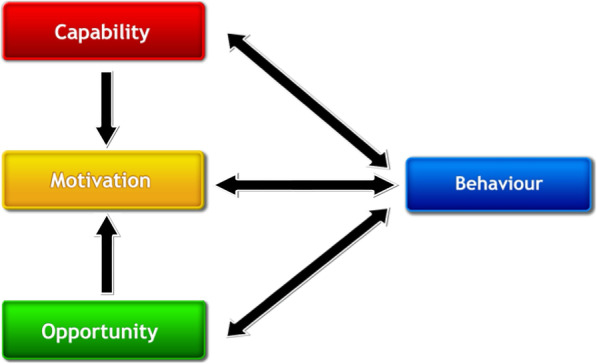
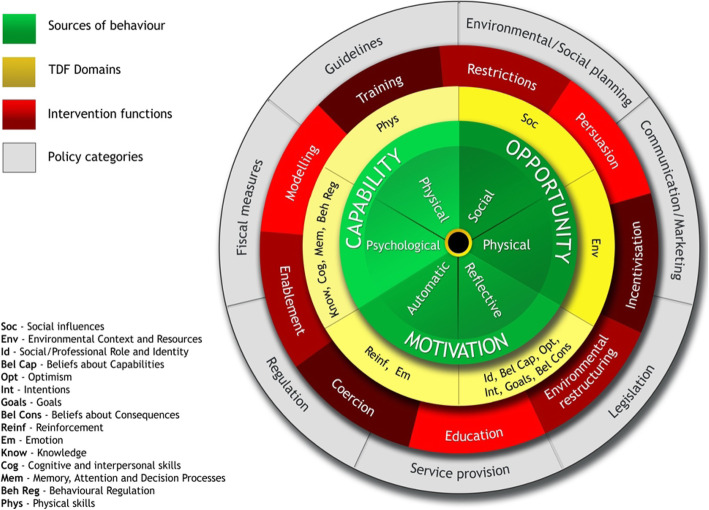
A systematic review of studies reporting behaviours related to NHS Health Check-related behaviours of patients, health care professionals (HCPs) and commissioners. Influences on behaviours were coded using theory-based models: COM-B and Theoretical Domains Framework (TDF). Potential intervention types and behaviour change techniques (BCTs) were suggested to target key influences.
We identified 37 studies reporting nine behaviours and influences for eight of these. The most frequently identified influences were physical opportunity including HCPs having space and time to deliver NHS Health Checks and patients having money to adhere to recommendations to change diet and physical activity. Other key influences were motivational, such as beliefs about consequences about the value of NHS Health Checks and behaviour change, and social, such as influences of others on behaviour change. The following techniques are suggested for websites or smartphone apps: Adding objects to the environment, e.g. provide HCPs with electronic schedules to guide timely delivery of Health Checks to target physical opportunity, Social support (unspecified), e.g. include text suggesting patients to ask a colleague to agree in advance to join them in taking the 'healthy option' lunch at work; Information about health consequences, e.g. quotes and/or videos from patients talking about the health benefits of changes they have made.
Through the application of behavioural science we identified key behaviours and their influences which informed recommendations for intervention content. To ascertain the extent to which this reflects existing interventions we recommend a review of relevant evidence.
国民健康服务健康检查于2009年推出,旨在降低心血管疾病(CVD)风险和事件。自那时以来,全国性评估强调需要通过提高覆盖率和产出量来最大化该项目的影响。为应对这些挑战,了解在国民健康服务健康检查流程中积极行为受到影响的程度,并分别鼓励促进或减少行为促进因素和障碍,这一点很重要。本研究应用行为科学框架来:i)识别与国民健康服务健康检查的接受、实施和随访相关的行为及行为者,以及对这些行为的影响;ii)为示例干预内容提供指引。
对报告患者、医疗保健专业人员(HCPs)和专员与国民健康服务健康检查相关行为的研究进行系统综述。使用基于理论的模型(COM-B和理论领域框架(TDF))对行为影响进行编码。针对关键影响因素,提出了潜在的干预类型和行为改变技术(BCTs)。
我们识别出37项研究,报告了9种行为以及其中8种行为的影响因素。最常识别出的影响因素包括物质机会,例如医疗保健专业人员有空间和时间进行国民健康服务健康检查,以及患者有钱遵循改变饮食和身体活动的建议;其他关键影响因素包括动机方面的,如对国民健康服务健康检查价值和行为改变后果的信念,以及社会方面的,如他人对行为改变的影响。针对网站或智能手机应用程序,建议采用以下技术:在环境中添加物品,例如为医疗保健专业人员提供电子日程安排,以指导及时进行健康检查,解决物质机会问题;社会支持(未明确说明),例如包含文本建议患者请同事提前同意与他们一起在工作时选择“健康选项”午餐;关于健康后果的信息,例如患者谈论他们所做改变的健康益处的引述和/或视频。
通过应用行为科学,我们识别出关键行为及其影响因素,为干预内容提供了建议。为确定这在多大程度上反映了现有干预措施,我们建议对相关证据进行综述。