Rybicka Magda, Bielawski Krzysztof Piotr
Department of Molecular Diagnostics, Intercollegiate Faculty of Biotechnology, University of Gdansk and Medical University of Gdansk, Abrahama 58, 80-307 Gdansk, Poland.
Microorganisms. 2020 Sep 15;8(9):1416. doi: 10.3390/microorganisms8091416.
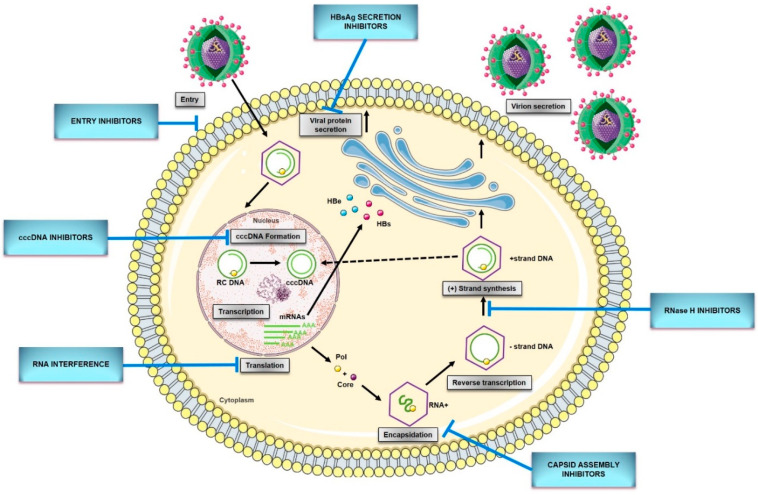
Chronic hepatitis B virus (HBV) infection affects 292 million people worldwide and is associated with a broad range of clinical manifestations including cirrhosis, liver failure, and hepatocellular carcinoma (HCC). Despite the availability of an effective vaccine HBV still causes nearly 900,000 deaths every year. Current treatment options keep HBV under control, but they do not offer a cure as they cannot completely clear HBV from infected hepatocytes. The recent development of reliable cell culture systems allowed for a better understanding of the host and viral mechanisms affecting HBV replication and persistence. Recent advances into the understanding of HBV biology, new potential diagnostic markers of hepatitis B infection, as well as novel antivirals targeting different steps in the HBV replication cycle are summarized in this review article.
慢性乙型肝炎病毒(HBV)感染影响着全球2.92亿人,并与包括肝硬化、肝衰竭和肝细胞癌(HCC)在内的一系列临床表现相关。尽管有有效的疫苗,但HBV每年仍导致近90万人死亡。目前的治疗方案可控制HBV,但无法治愈,因为它们不能完全清除受感染肝细胞中的HBV。可靠的细胞培养系统的最新发展有助于更好地理解影响HBV复制和持续存在的宿主和病毒机制。本文综述了对HBV生物学理解的最新进展、乙型肝炎感染的新潜在诊断标志物以及针对HBV复制周期不同步骤的新型抗病毒药物。