Derdak Reda, Sakoui Souraya, Pop Oana Lelia, Muresan Carmen Ioana, Vodnar Dan Cristian, Addoum Boutaina, Vulturar Romana, Chis Adina, Suharoschi Ramona, Soukri Abdelaziz, El Khalfi Bouchra
Laboratory of Physiopathology, Molecular Genetics & Biotechnology, Faculty of Sciences Ain Chock, Health and Biotechnology Research Centre, Hassan II University of Casablanca, Maarif B.P 5366, Casablanca, Morocco.
Department of Food Science, University of Agricultural Science and Veterinary Medicine, 3-5 Calea Mănăștur, 400372 Cluj-Napoca, Romania.
Foods. 2020 Sep 15;9(9):1302. doi: 10.3390/foods9091302.
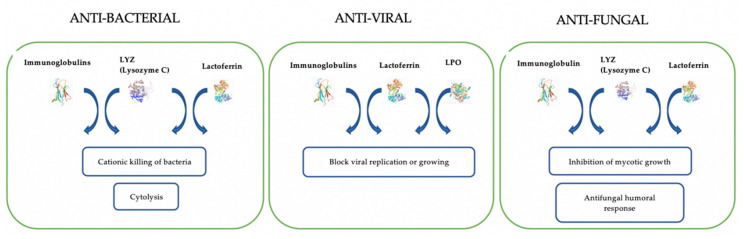
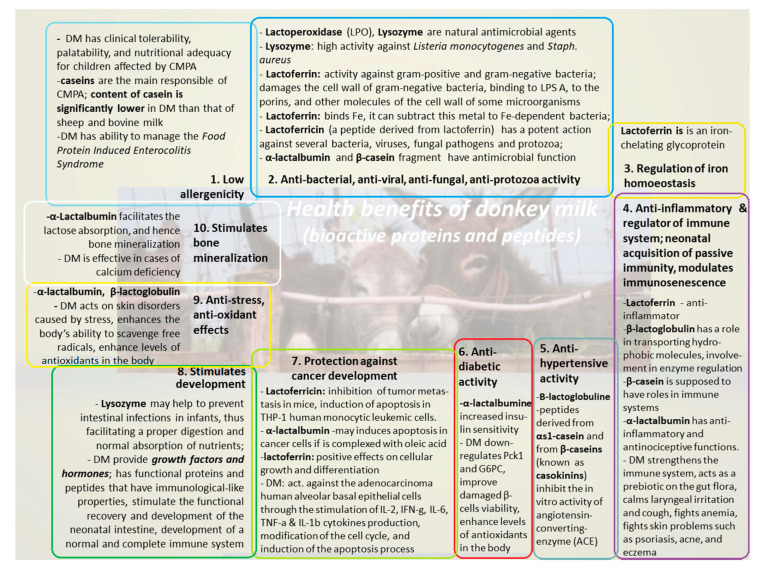
Due to its similarity with human milk and its low allergenic properties, donkey milk has long been used as an alternative for infants and patients with cow's milk protein allergy (CMPA). In addition, this milk is attracting growing interest in human nutrition because of presumed health benefits. It has antioxidant, antimicrobial, antitumoral, antiproliferative and antidiabetic activity. In addition, it stimulates the immune system, regulates the gastrointestinal flora, and prevents inflammatory diseases. Although all donkey milk components can contribute to functional and nutritional effects, it is generally accepted that the whey protein fraction plays a significant role. This review aims to highlight the active proteins and peptides of donkey milk in comparison with other types of milk, emphasizing their properties and their roles in different fields of health and food applications.
由于驴奶与母乳相似且致敏性低,长期以来它一直被用作牛奶蛋白过敏(CMPA)婴儿和患者的替代品。此外,由于其潜在的健康益处,这种奶在人类营养方面正吸引着越来越多的关注。它具有抗氧化、抗菌、抗肿瘤、抗增殖和抗糖尿病活性。此外,它还能刺激免疫系统、调节胃肠道菌群并预防炎症性疾病。尽管驴奶的所有成分都有助于发挥功能和营养作用,但一般认为乳清蛋白部分起着重要作用。本综述旨在突出驴奶中的活性蛋白和肽,并与其他类型的奶进行比较,强调它们的特性以及在健康和食品应用不同领域中的作用。