Department of Ecology and Systematics, Universidade Federal da Paraíba, João Pessoa, PB, 58051-900, Brazil.
School of Environmental Sciences, University of East Anglia, Norwich Research Park, Norwich, NR4 7TJ, UK.
Sci Rep. 2020 Sep 17;10(1):15428. doi: 10.1038/s41598-020-71501-0.
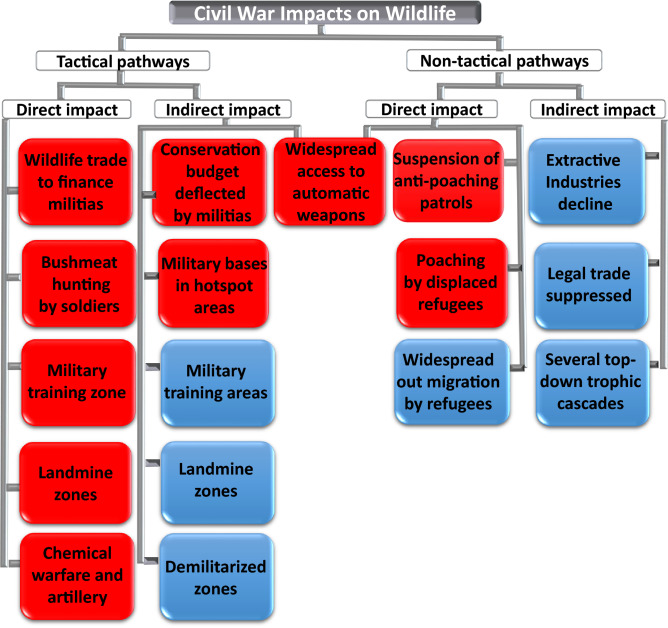
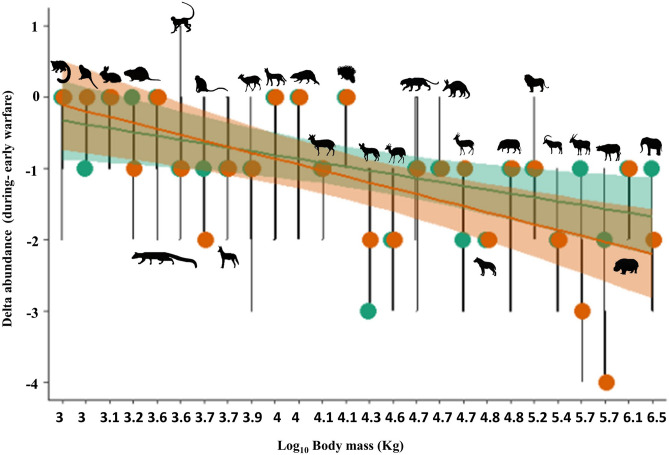
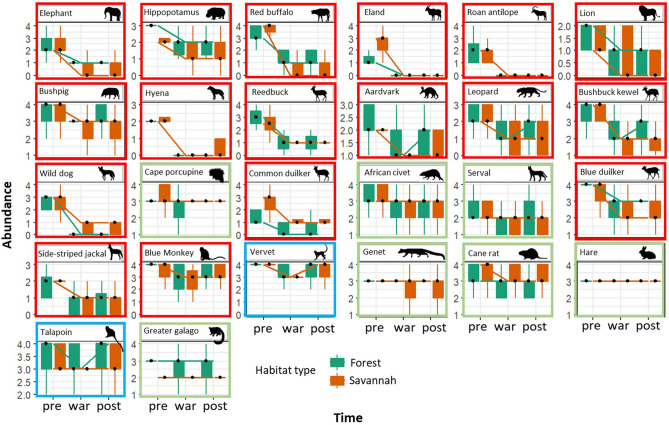
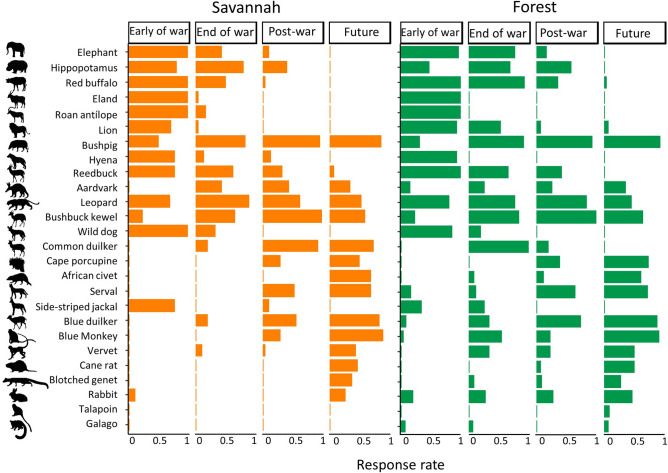
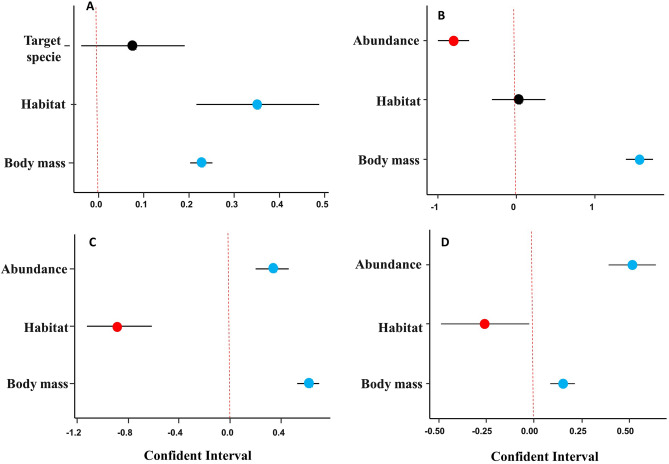
Civil wars often coincide with global biodiversity hotspots and have plagued the everyday reality of many countries throughout human history. However, how do civil wars affect wildlife populations? Are these impacts the same in savannah and forest environments? How persistent are the post-war consequences on wildlife populations within and outside conflict zones? Long-term monitoring programs in war zones, which could answer these questions, are virtually nonexistent, not least due to the risks researchers are exposed to. In this context, only a few methodologies can provide data on wild populations during war conflicts. We used local ecological knowledge to assess the main consequences of a prolonged civil war (1975-2002) in Southwestern Africa on forest and savannah mammals. The post-war abundance in 20 of 26 (77%) mammal species considered in this study was lower in open savannah compared to the closed-canopy forest environments, with some species experiencing a decline of up to 80% of their pre-war baseline abundance. Large-bodied mammals were preferred targets and had been overhunted, but as their populations became increasingly depleted, the size structure of prey species gradually shifted towards smaller-bodied species. Finally, we present a general flow diagram of how civil wars in low-governance countries can have both positive and negative impacts on native wildlife populations at different scales of space and time.
内战常常与全球生物多样性热点地区重合,并困扰着人类历史上许多国家的日常生活。然而,内战如何影响野生动物种群?在草原和森林环境中,这些影响是否相同?冲突区内外野生动物种群的战后后果持续多久?在战区进行长期监测计划可以回答这些问题,但实际上几乎不存在,这主要是因为研究人员面临的风险。在这种情况下,只有少数方法可以在战争冲突期间提供有关野生动物种群的数据。我们利用当地的生态知识来评估西南非地区一场旷日持久的内战(1975-2002 年)对森林和草原哺乳动物的主要影响。在本研究中考虑的 26 种哺乳动物中有 20 种(77%)的战后丰度在开阔草原地区低于封闭树冠森林环境,有些物种的数量下降了高达 80%的战前基线丰度。大型哺乳动物是首选目标,已经过度捕猎,但随着它们的数量逐渐减少,猎物物种的大小结构逐渐向体型较小的物种转移。最后,我们提出了一个一般流程图,说明在低治理国家内战如何在不同的空间和时间尺度上对本地野生动物种群产生正反两方面的影响。