Xie Tiantian, Tan Tao, Li Jun
Centre De Recherche Sur Les Liens Sociaux (CERLIS), Paris Descartes University, Paris, France.
Institute of New Rural Development, South China Agricultural University, Guangzhou, People's Republic of China.
Risk Manag Healthc Policy. 2020 Aug 26;13:1353-1364. doi: 10.2147/RMHP.S257473. eCollection 2020.
A novel coronavirus (COVID-19) caused pneumonia broke out at the end of 2019 in Wuhan, China. Many cases were subsequently reported in other cities, which has aroused strong reverberations on the Internet and social media around the world.
The aim of this study was to investigate the reaction of global Internet users to the outbreak of COVID-19 by evaluating the possibility of using Internet monitoring as an instrument in handling communicable diseases and responding to public health emergencies.
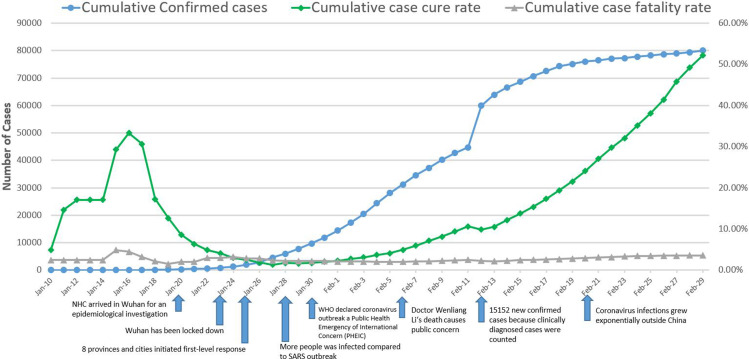
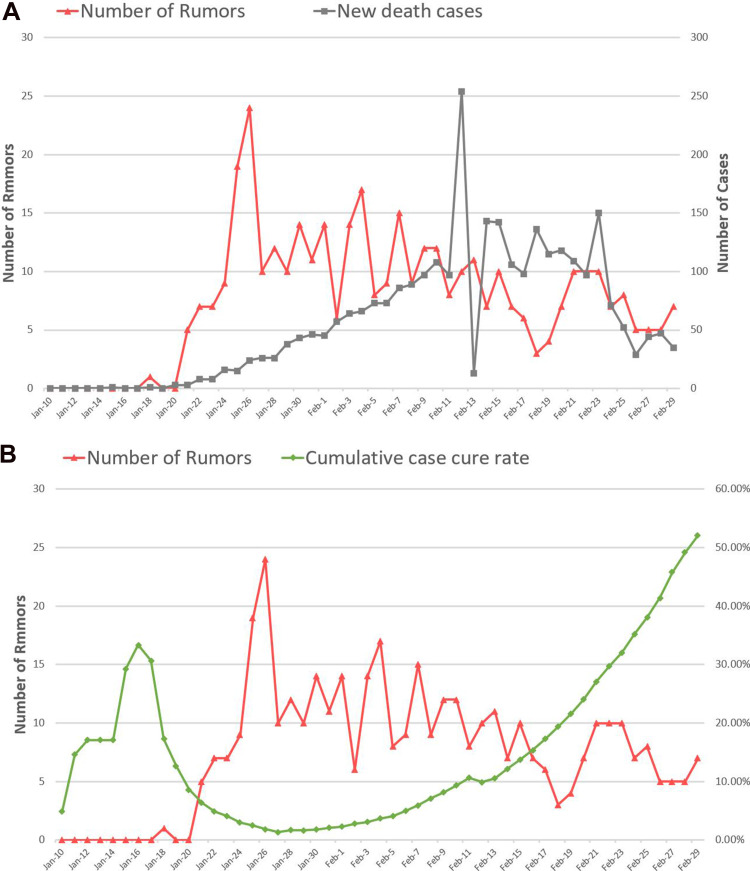
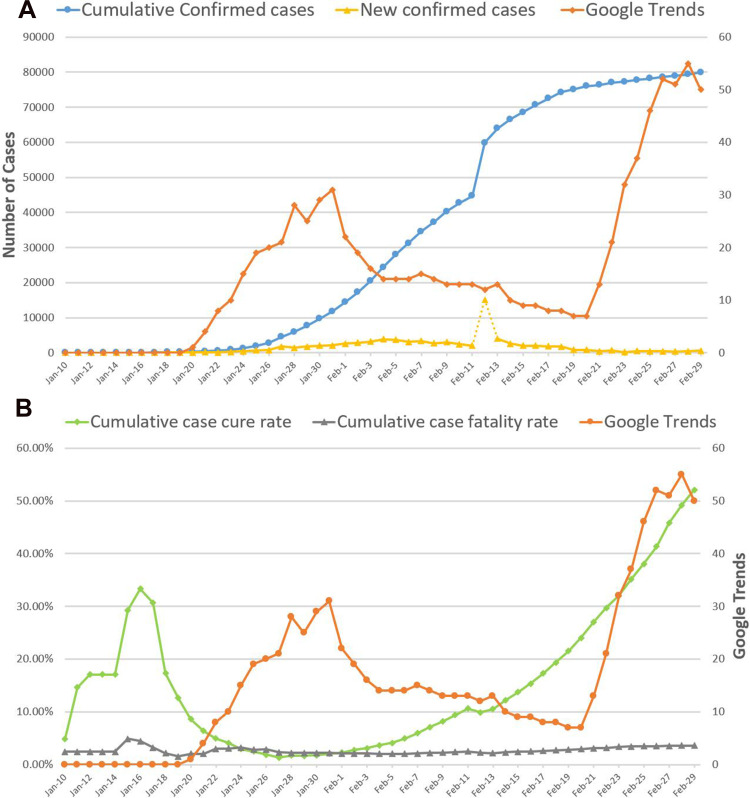
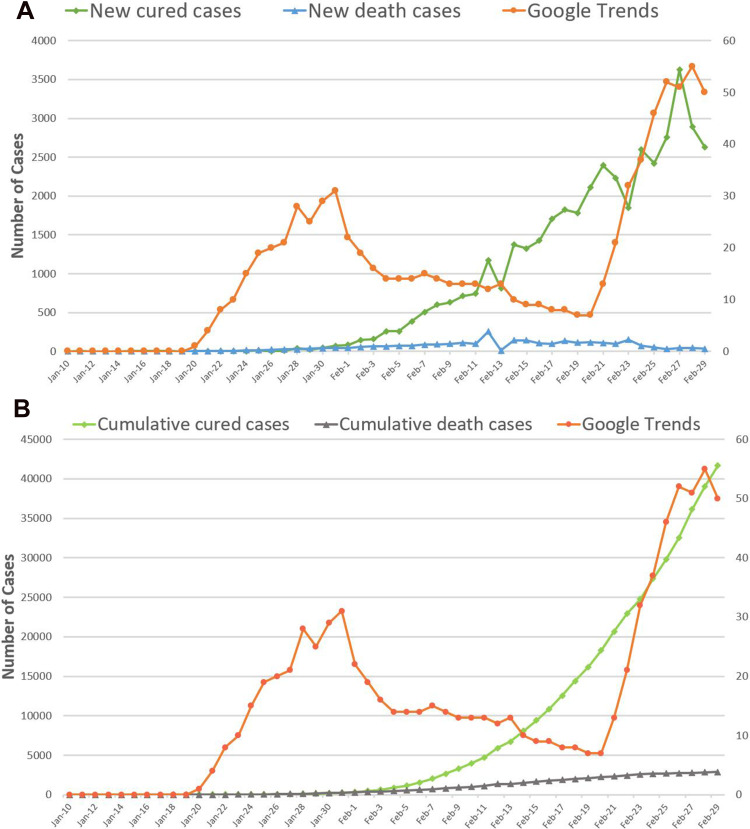
The disease-related data were retrieved from China's National Health Commission (CNHC) and World Health Organization (WHO) from January 10 to February 29, 2020. Daily Google Trends (GT) and daily Baidu Attention Index (BAI) for the keyword "Coronavirus" were collected from their official websites. Rumors which occurred in the course of this outbreak were mined from Chinese National Platform to Refute Rumors (CNPRR) and Tencent Platform to Refute Rumors (TPRR). Kendall's Tau-B rank test was applied to check the bivariate correlation among the two indexes mentioned above, epidemic trends, and rumors.
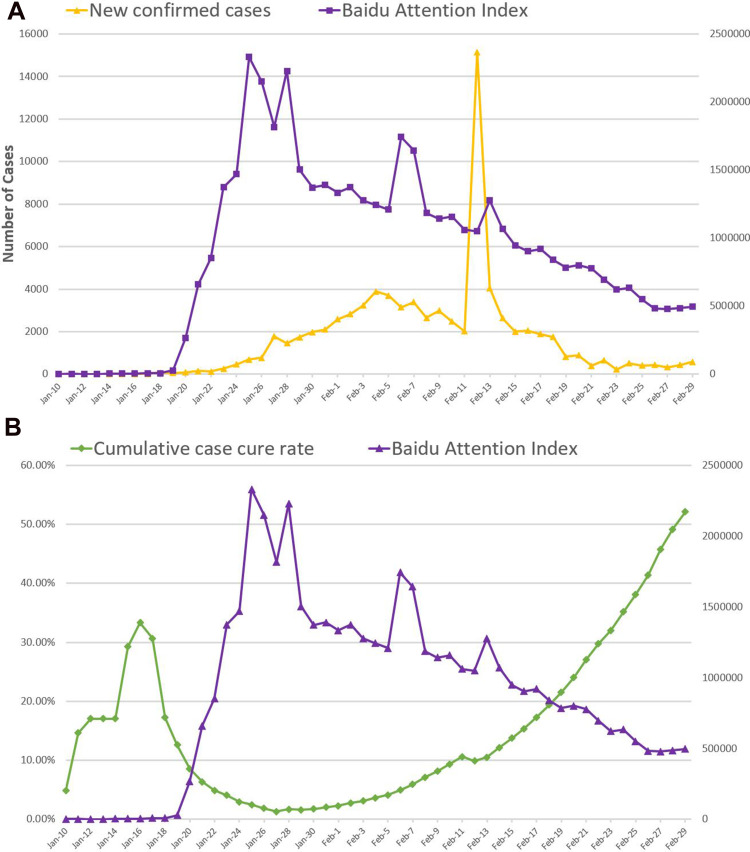
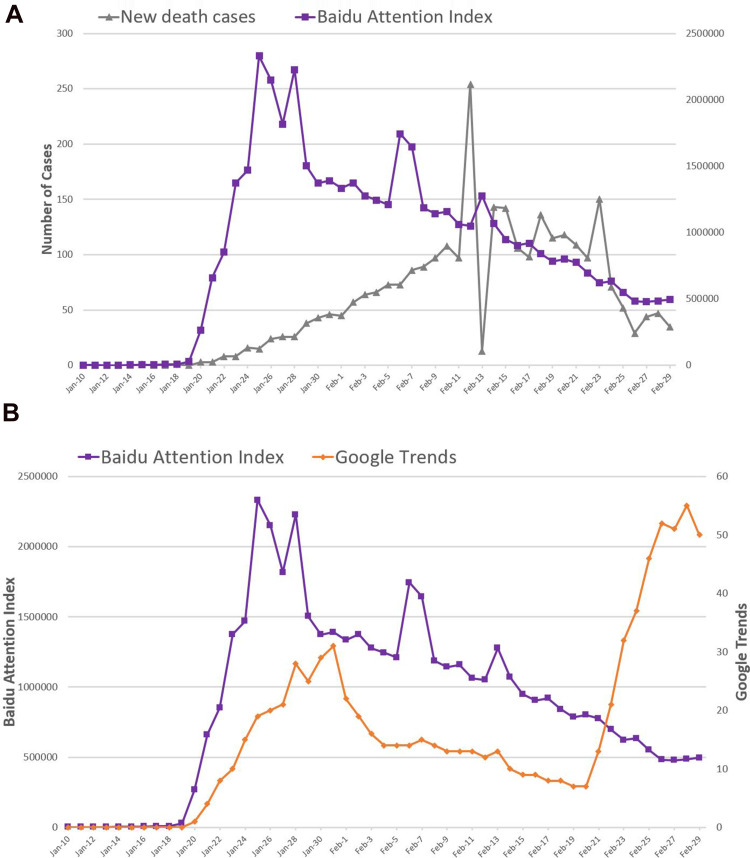
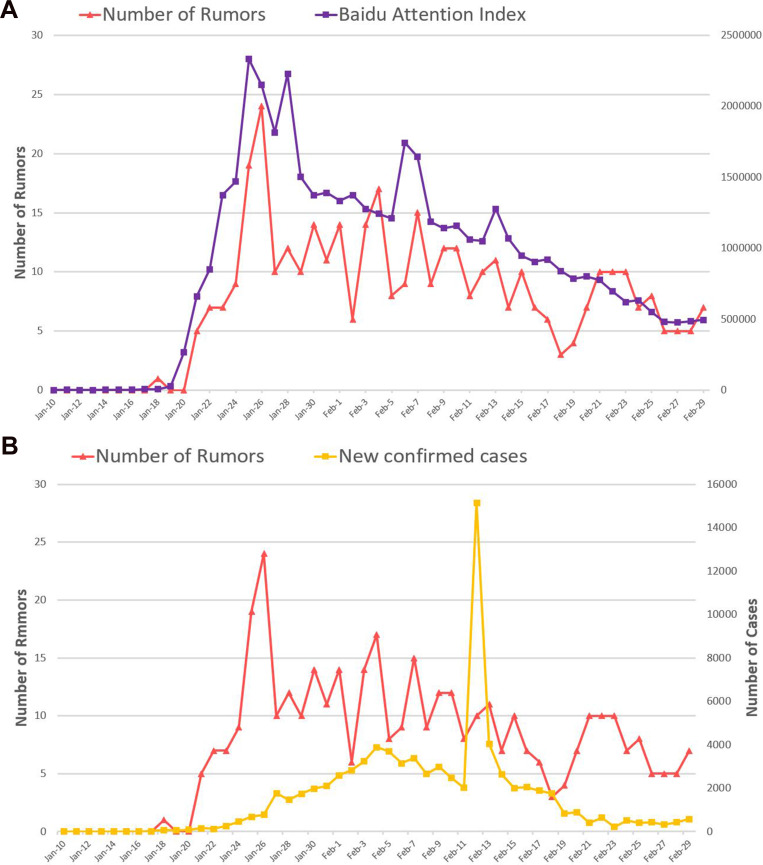
After the outbreak of COVID-19, both daily BAI and daily GT increased rapidly and remained at a high level, this process lasted about 10 days. When major events occurred, daily BAI, daily GT, and the number of rumors simultaneously reached new peaks. Our study indicates that these indexes and rumors are statistically related to disease-related indicators. Information symmetry was also found to help significantly eliminate the false news and to prevent rumors from spreading across social media through the epidemic outbreak.
Compared to traditional methods, Internet monitoring could be particularly efficient and economical in the prevention and control of epidemic and rumors by reflecting public attention and attitude, especially in the early period of an outbreak.
2019年底,一种新型冠状病毒(COVID-19)引发的肺炎在中国武汉爆发。随后,其他城市也报告了许多病例,这在全球互联网和社交媒体上引起了强烈反响。
本研究旨在通过评估利用互联网监测作为应对传染病和公共卫生突发事件的一种手段的可能性,来调查全球互联网用户对COVID-19爆发的反应。
从中国国家卫生健康委员会(CNHC)和世界卫生组织(WHO)检索2020年1月10日至2月29日的疾病相关数据。从谷歌趋势(GT)和百度指数(BAI)的官方网站收集关键词“冠状病毒”的每日数据。从中国国家辟谣平台(CNPRR)和腾讯辟谣平台(TPRR)挖掘此次疫情期间出现的谣言。应用肯德尔等级相关检验(Kendall's Tau-B rank test)来检验上述两个指数、疫情趋势和谣言之间的双变量相关性。
COVID-19爆发后,百度指数和谷歌趋势的日数据均迅速上升并维持在高位,这一过程持续了约10天。当重大事件发生时,百度指数、谷歌趋势和谣言数量同时达到新的峰值。我们的研究表明,这些指数和谣言与疾病相关指标在统计上具有相关性。还发现信息对称有助于显著消除虚假新闻,并防止谣言在疫情期间通过社交媒体传播。
与传统方法相比,互联网监测通过反映公众关注和态度,在疫情和谣言的防控中可能特别高效和经济,尤其是在疫情爆发的早期阶段。