Ebersole Joseph L, Quiñones Rebecca M, Clements Shaun, Letcher Benjamin H
Pacific Ecological Systems Division, Office of Research and Development, US Environmental Protection Agency, Corvallis, OR.
Massachusetts Division of Fisheries and Wildlife, Westborough, MA.
Front Ecol Environ. 2020 Jun 1;18(5):271-280. doi: 10.1002/fee.2206.
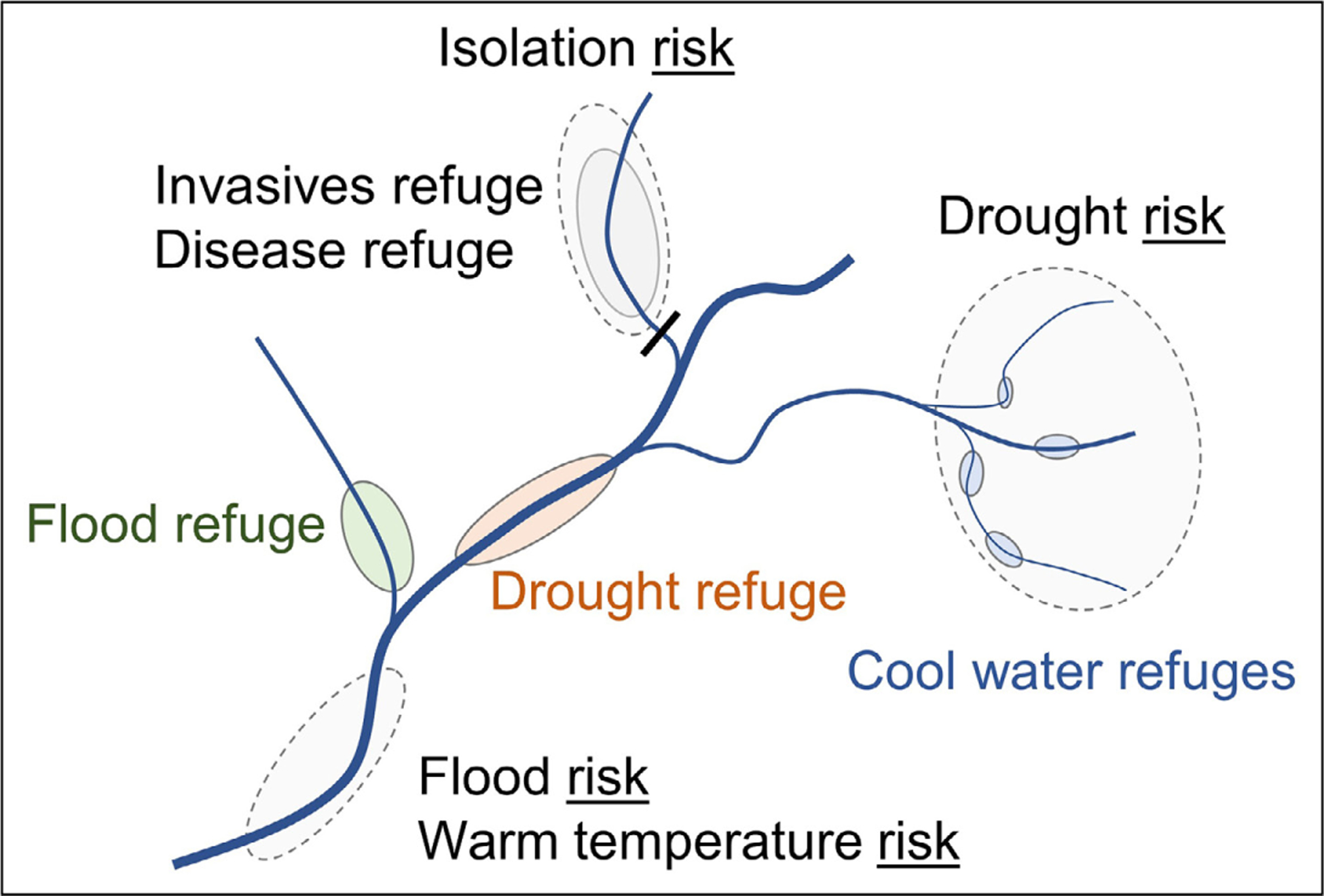
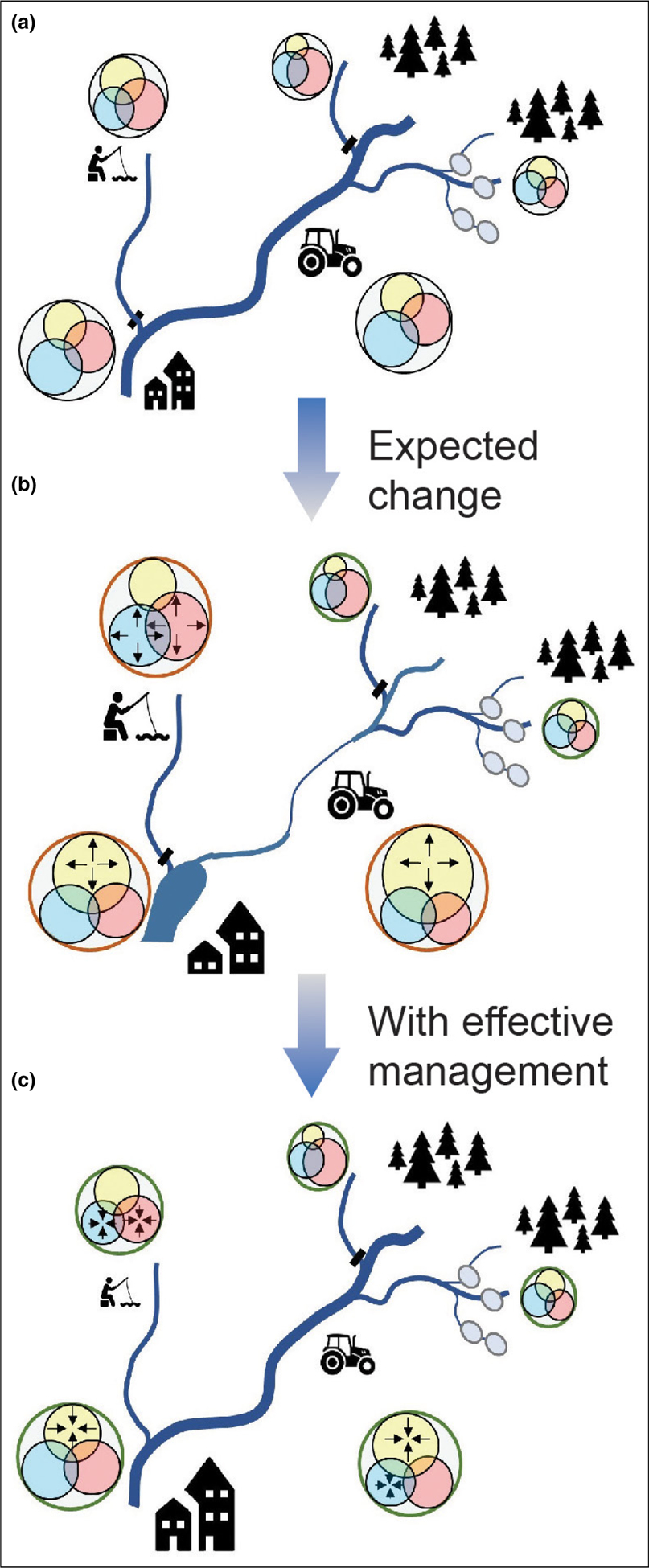
Within the context of climate adaptation, the concept of climate refugia has emerged as a framework for addressing future threats to freshwater fish populations. We evaluated recent climate-refugia management associated with water use and landscape modification by comparing efforts in the US states of Oregon and Massachusetts, for which there are contrasting resource use patterns. Using these examples, we discuss tools and principles that can be applied more broadly. Although many early efforts to identify climate refugia have focused on water temperature, substantial gains in evaluating other factors and processes regulating climate refugia (eg stream flow, groundwater availability) are facilitating refined mapping of refugia and assessment of their ecological value. Major challenges remain for incorporating climate refugia into water-quality standards, evaluating trade-offs among policy options, addressing multiple species' needs, and planning for uncertainty. However, with a procedurally transparent and conceptually sound framework to build upon, recent efforts have revealed a promising path forward.
在气候适应的背景下,气候避难所的概念已成为应对未来淡水鱼类种群威胁的一个框架。我们通过比较美国俄勒冈州和马萨诸塞州的相关努力,评估了近期与用水和景观改造相关的气候避难所管理情况,这两个州的资源利用模式形成对比。利用这些例子,我们讨论了可以更广泛应用的工具和原则。尽管许多早期识别气候避难所的努力都集中在水温上,但在评估调节气候避难所的其他因素和过程(如溪流流量、地下水可利用性)方面取得的重大进展,正在促进对避难所的精确绘图及其生态价值的评估。将气候避难所纳入水质标准、评估政策选项之间的权衡、满足多个物种的需求以及应对不确定性规划等方面仍面临重大挑战。然而,有了一个程序透明且概念合理的框架作为基础,近期的努力已揭示出一条充满希望的前进道路。