Whittaker Thomas E, Nagelkerke Anika, Nele Valeria, Kauscher Ulrike, Stevens Molly M
Department of Materials, Imperial College London, London, UK.
Department of Bioengineering, Imperial College London, London, UK.
J Extracell Vesicles. 2020 Aug 26;9(1):1807674. doi: 10.1080/20013078.2020.1807674.
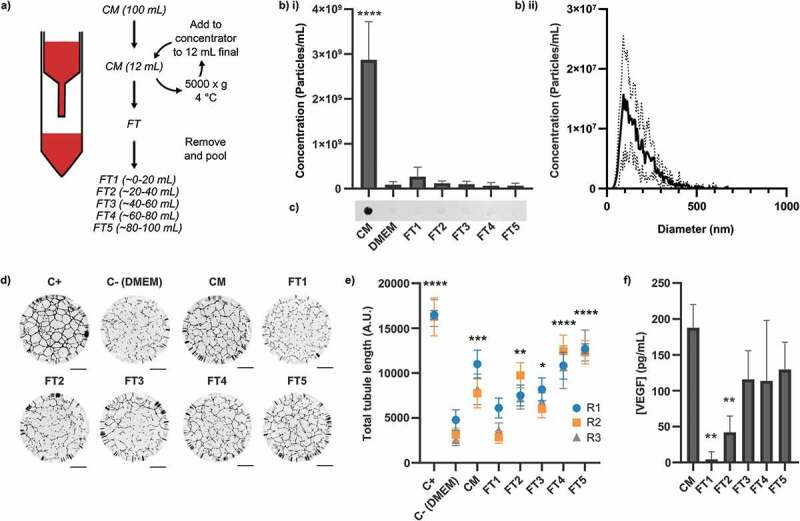
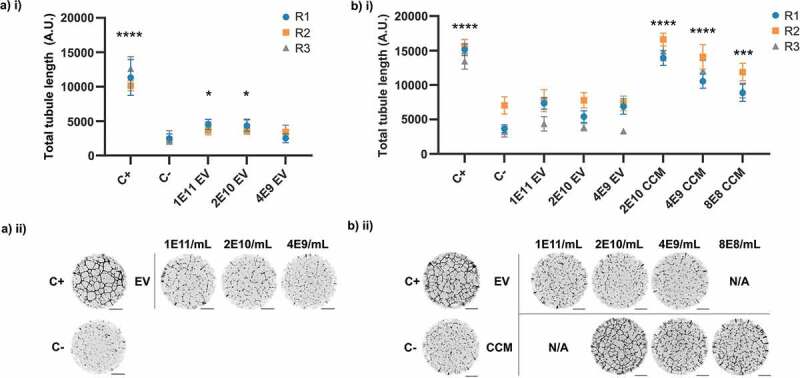
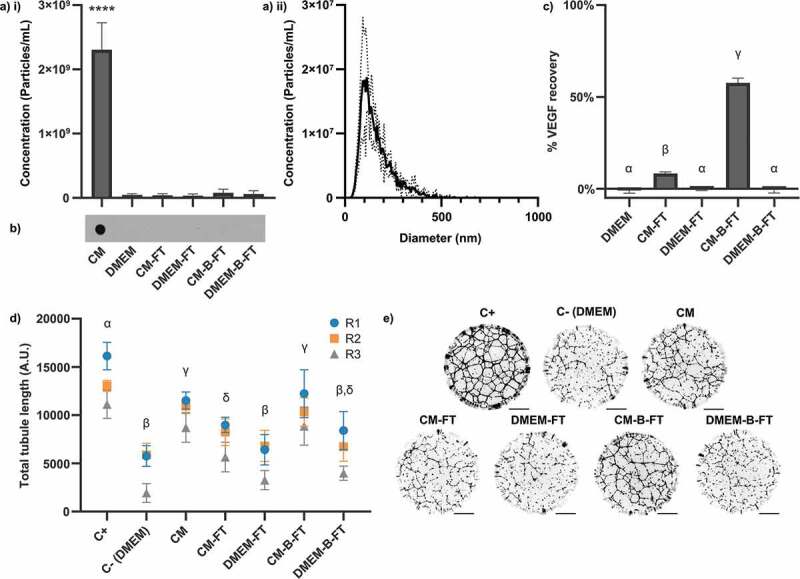
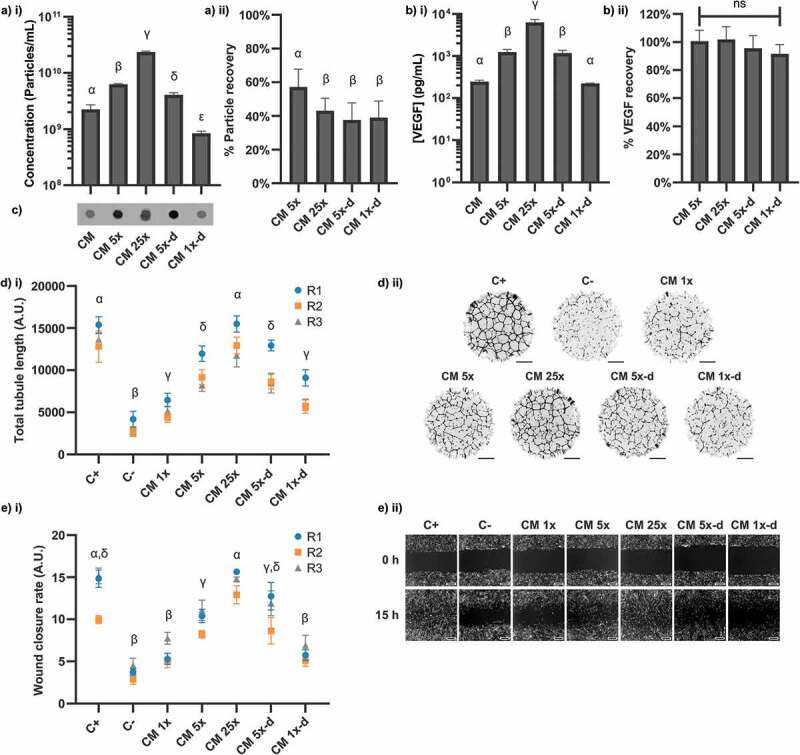
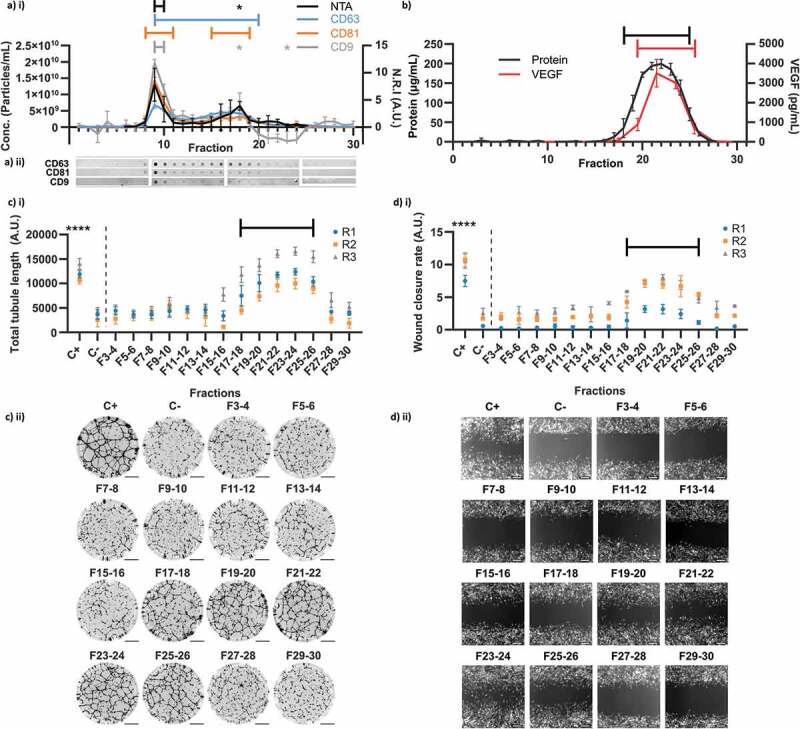
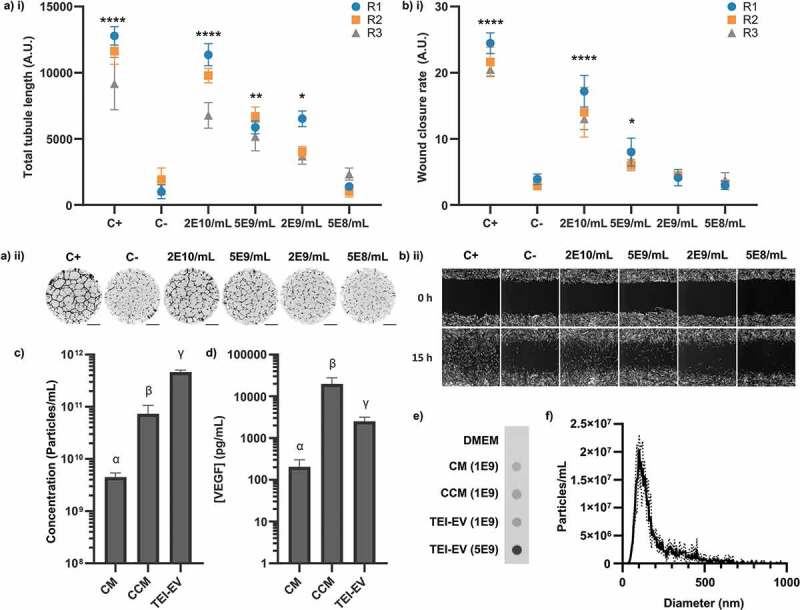
It has been demonstrated that some commonly used Extracellular Vesicle (EV) isolation techniques can lead to substantial contamination with non-EV factors. Whilst it has been established that this impacts the identification of biomarkers, the impact on apparent EV bioactivity has not been explored. Extracellular vesicles have been implicated as critical mediators of therapeutic human mesenchymal stem cell (hMSC) paracrine signalling. Isolated hMSC-EVs have been used to treat multiple and models of tissue damage. However, the relative contributions of EVs and non-EV factors have not been directly compared. The dependence of hMSC paracrine signalling on EVs was first established by ultrafiltration of hMSC-conditioned medium to deplete EVs, which led to a loss of signalling activity. Here, we show that this method also causes depletion of non-EV factors, and that when this is prevented proangiogenic signalling activity is fully restored . Subsequently, we used size-exclusion chromatography (SEC) to separate EVs and soluble proteins to directly and quantitatively compare their relative contributions to signalling. Non-EV factors were found to be necessary and sufficient for the stimulation of angiogenesis and wound healing . EVs in isolation were found to be capable of potentiating signalling only when isolated by a low-purity method, or when used at comparatively high concentrations. These results indicate a potential for contaminating soluble factors to artefactually increase the apparent bioactivity of EV isolates and could have implications for future studies on the biological roles of EVs.
已经证明,一些常用的细胞外囊泡(EV)分离技术会导致大量非EV因子污染。虽然已经确定这会影响生物标志物的识别,但尚未探讨其对表观EV生物活性的影响。细胞外囊泡被认为是治疗性人间充质干细胞(hMSC)旁分泌信号传导的关键介质。分离的hMSC-EV已被用于治疗多种组织损伤模型。然而,EV和非EV因子的相对贡献尚未直接比较。hMSC旁分泌信号传导对EV的依赖性首先通过对hMSC条件培养基进行超滤以耗尽EV来确定,这导致信号活性丧失。在这里,我们表明这种方法也会导致非EV因子的耗尽,并且当防止这种情况时,促血管生成信号活性会完全恢复。随后,我们使用尺寸排阻色谱法(SEC)分离EV和可溶性蛋白,以直接和定量地比较它们对信号传导的相对贡献。发现非EV因子对于刺激血管生成和伤口愈合是必要且充分的。仅当通过低纯度方法分离或使用相对高浓度时,分离的EV才被发现能够增强信号传导。这些结果表明污染的可溶性因子可能会人为地增加EV分离物的表观生物活性,并可能对未来关于EV生物学作用的研究产生影响。