Aheto Justice Moses K, Yankson Robert, Chipeta Michael Give
Department of Biostatistics, School of Public Health, College of Health Sciences, University of Ghana, P. O. Box LG13, Legon, Accra, Ghana.
African Institute for Mathematical Sciences, Accra-Cape Coast Road, Adisadel, Cape Coast, Ghana.
BMC Public Health. 2020 Sep 18;20(1):1428. doi: 10.1186/s12889-020-09534-3.
Under-five mortality (U5M) rates are among the health indicators of utmost importance globally. It is the goal 3 target 2.1 of the Sustainable Development Goals that is expected to be reduced to at least 25 per 1000 livebirths by 2030. Despite a considerable reduction in U5M observed globally, several countries especially those in sub-Saharan Africa (SSA) like Ghana are struggling to meet this target. Evidence-based targeting and utilization of the available limited public health resources are critical for effective design of intervention strategies that will enhance under-five child survival. We aimed to estimate and map U5M risk, with the ultimate goal of identifying communities at high risk where interventions and further research can be targeted.
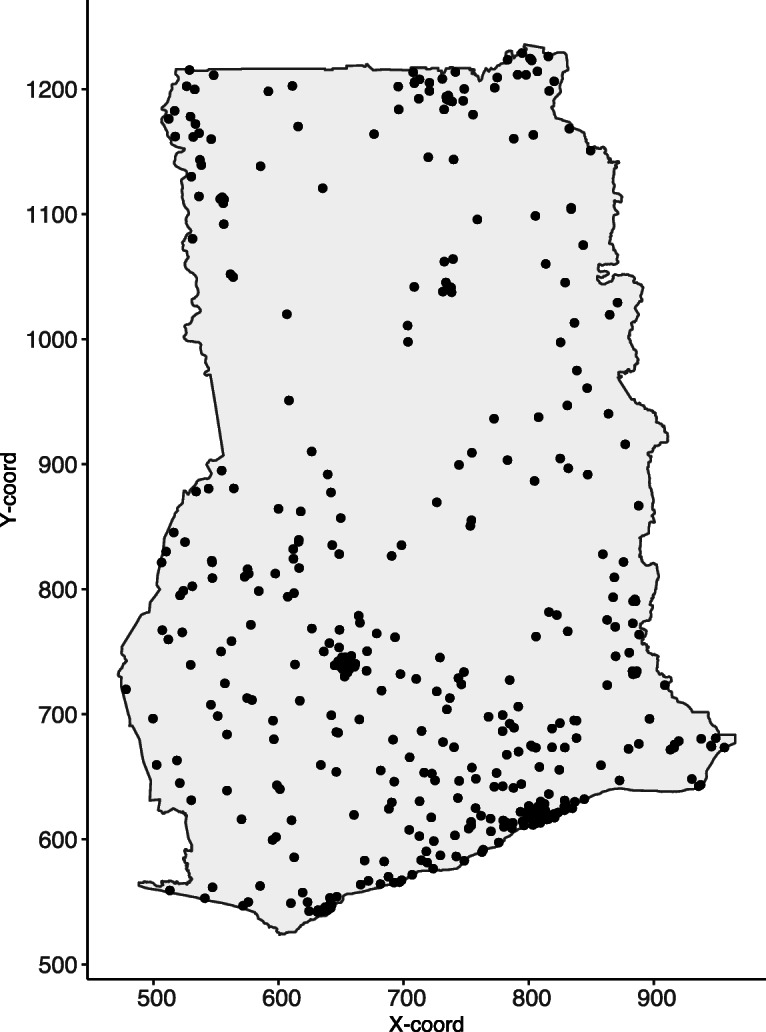
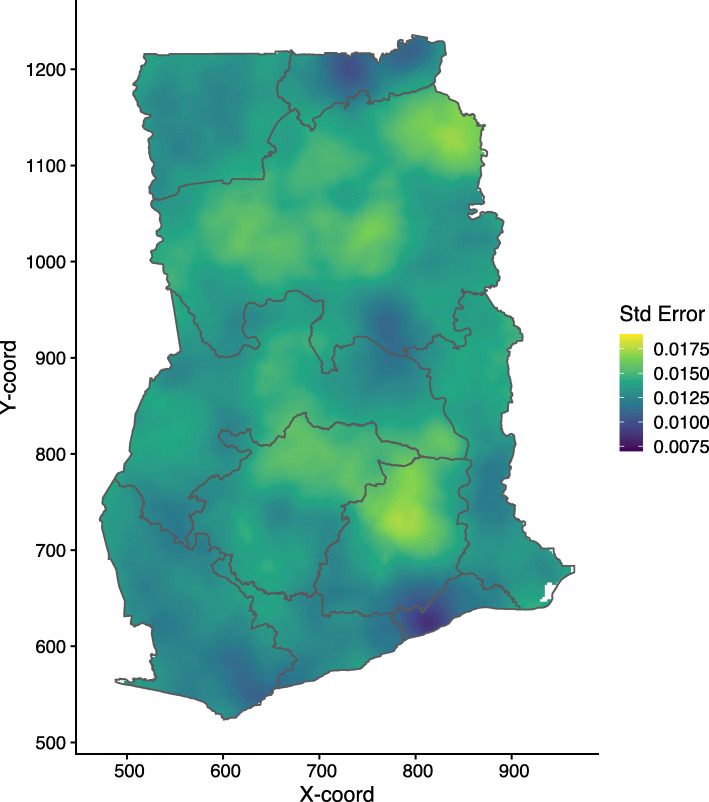
The 2014 Ghana Demographic and Health Survey data was used in this study. Geostatistical analyses were conducted on 5884 children residing in 423 geographical clusters. The outcome variable is child survival status (alive or dead). We employed a geostatistical generalised linear mixed model to investigate both measured and unmeasured child specific and spatial risk factors for child survival. We then visualise child mortality by mapping the predictive probability of survival.
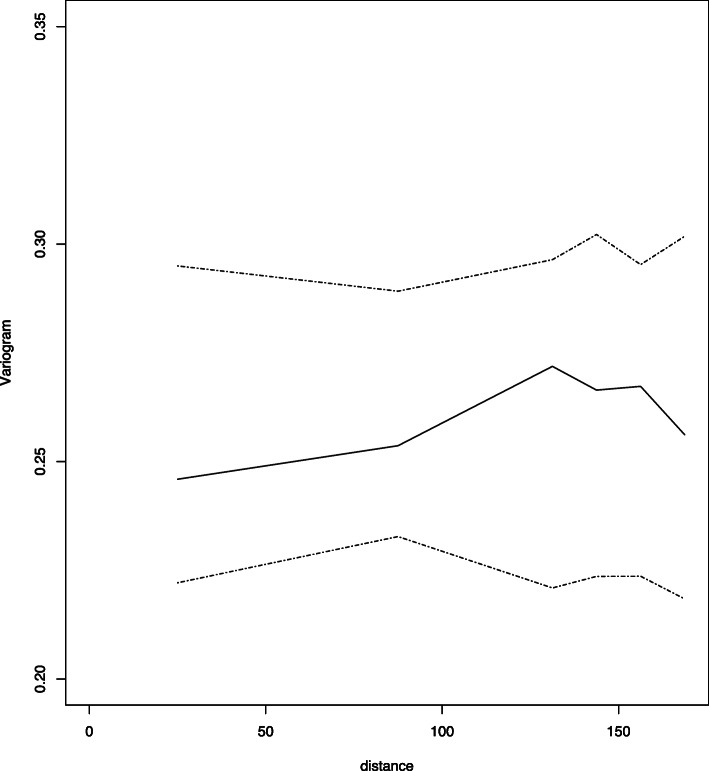
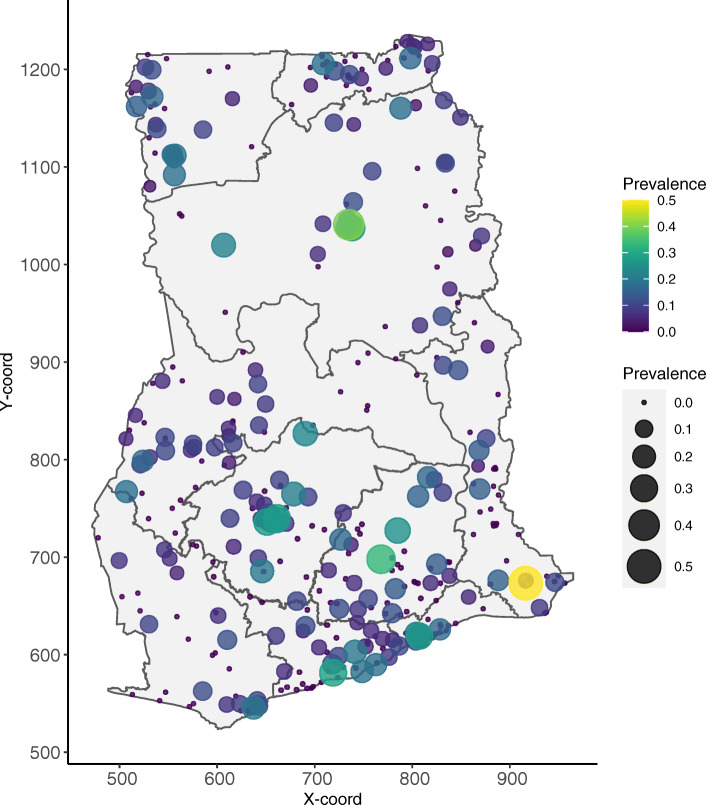
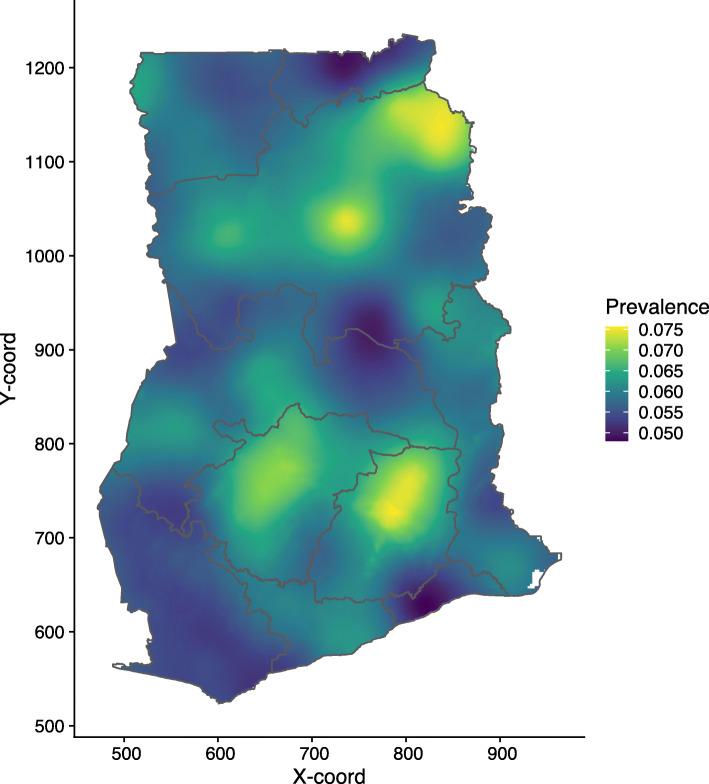
Of the total sampled under 5 children, 289 (4.91%) experienced the outcome of interest. Children born as multiple births were at increased risk of mortality with an adjusted odds ratio (aOR) (aOR: 8.2532, 95% CI: [5.2608-12.9477]) compared to singletons. Maternal age increased risk of mortality (aOR: 1.0325, 95% CI: [1.0128-1.0527]). Child's age (aOR: 0.2277, 95% CI: [0.1870-0.2771]) and number of children under 5 within each household (aOR: 0.3166, 95% CI: [0.2614-0.3835]) were shown to have a protective effect. Additionally, mothers with secondary education level (aOR: 0.6258, 95% CI: [0.4298-0.9114]) decreased the risk of U5M. The predicted U5M risk in 2014 was at 5.98%. Substantial residual spatial variations were observed in U5M.
The analysis found that multiple births is highly associated with increased U5M in Ghana. The high-resolution maps show areas and communities where interventions and further research for U5M can be prioritised to have health impact.
五岁以下儿童死亡率(U5M)是全球最重要的健康指标之一。它是可持续发展目标的目标3具体目标2.1,预计到2030年将降至每1000例活产至少25例。尽管全球范围内观察到五岁以下儿童死亡率有了显著下降,但一些国家,尤其是撒哈拉以南非洲(SSA)的国家,如加纳,仍在努力实现这一目标。基于证据的目标设定和对有限公共卫生资源的利用,对于有效设计能够提高五岁以下儿童存活率的干预策略至关重要。我们旨在估计和绘制五岁以下儿童死亡率风险图,最终目标是识别高风险社区,以便进行干预和进一步研究。
本研究使用了2014年加纳人口与健康调查数据。对居住在423个地理集群中的5884名儿童进行了地理统计分析。结果变量是儿童生存状况(存活或死亡)。我们采用地理统计广义线性混合模型来研究已测量和未测量的儿童特定及空间风险因素对儿童生存的影响。然后通过绘制生存预测概率来直观呈现儿童死亡率。
在总共抽样的五岁以下儿童中,289名(4.91%)出现了感兴趣的结果。与单胎出生的儿童相比,多胞胎出生的儿童死亡风险增加,调整后的优势比(aOR)为8.2532(95%置信区间:[5.2608 - 12.9477])。母亲年龄增加了死亡风险(aOR:1.0325,95%置信区间:[1.0128 - 1.0527])。儿童年龄(aOR:0.2277,95%置信区间:[0.1870 - 0.2771])和每户五岁以下儿童数量(aOR:0.3166,95%置信区间:[0.2614 - 0.3835])显示具有保护作用。此外,具有中等教育水平的母亲(aOR:0.6258,95%置信区间:[0.4298 - 0.9114])降低了五岁以下儿童死亡率的风险。2014年预测的五岁以下儿童死亡率风险为5.98%。在五岁以下儿童死亡率方面观察到了显著的残余空间差异。
分析发现,在加纳,多胞胎出生与五岁以下儿童死亡率升高高度相关。高分辨率地图显示了可以优先进行五岁以下儿童死亡率干预和进一步研究以产生健康影响的地区和社区。