International Livestock Research Institute, Nairobi, Kenya.
Department of Public Health Pharmacology and Toxicology, College of Agriculture and Veterinary Sciences, University of Nairobi, Nairobi, Kenya.
Trop Anim Health Prod. 2020 Nov;52(6):3537-3544. doi: 10.1007/s11250-020-02389-1. Epub 2020 Sep 18.
Brucellosis is an important zoonotic disease in Kenya, and identifying the bacteria in milk is important in assessing the risk of exposure in people.
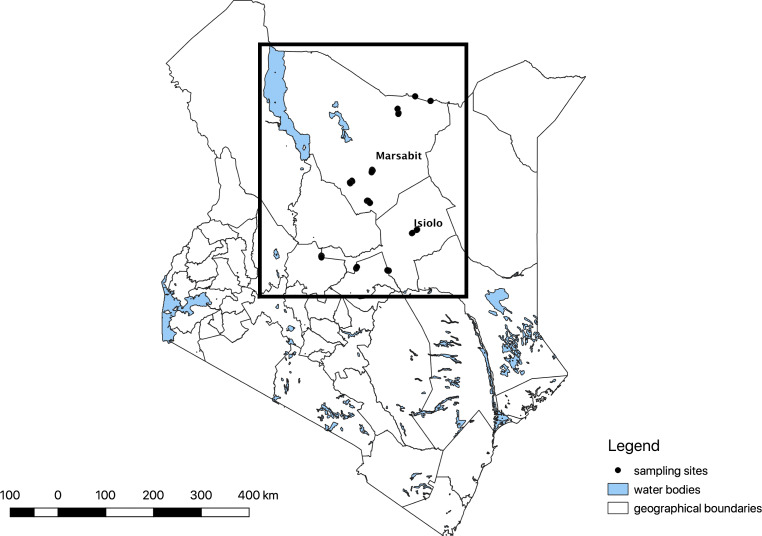
A cross-sectional study that involved 175 households was implemented in the pastoral counties of Marsabit and Isiolo in Kenya. Pooled milk samples (n = 164) were collected at the household level, and another 372 were collected from domesticated lactating animals (312 goats, 7 sheep, 50 cattle and 3 camels). Real-time polymerase chain reaction (qPCR) testing of the milk samples was performed to identify Brucella species. Brucella anti-LPS IgG antibodies were also detected in bovine milk samples using an indirect enzyme-linked immunosorbent assay (ELISA).
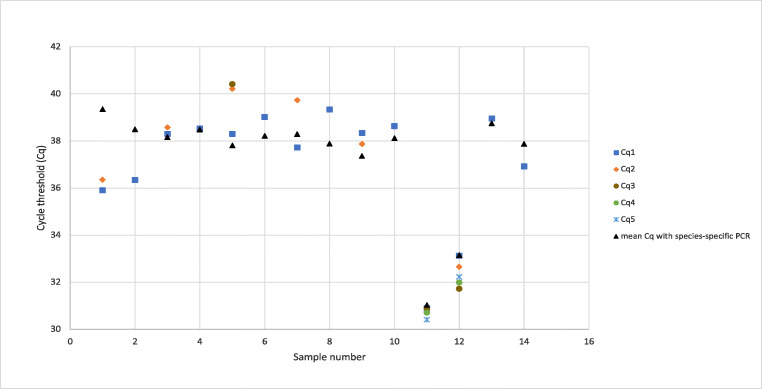
Based on the qPCR, the prevalence of the pathogen at the animal level (considering samples from individual animals) was 2.4% (95% confidence interval (CI) 1.1-4.5) and 3.0% (CI: 1.0-7.0) in pooled samples. All 14 samples found positive by qPCR were from goats, with 10 contaminated with B. abortus and 4 with B. melitensis. The Brucella spp. antibody prevalence in bovine milk using the milk ELISA was 26.0% (95% CI: 14.6-40.3) in individual animal samples and 46.3% (95% CI: 30.7-62.6) in pooled samples.
The study is the first in Kenya to test for Brucella spp. directly from milk using qPCR without culturing for the bacteria. It also detected B. abortus in goats, suggesting transmission of brucellosis between cattle and goats. The high prevalence of Brucella spp. is a significant public health risk, and there is a need for intervention strategies necessary in the study area.
布鲁氏菌病是肯尼亚的一种重要人畜共患病,鉴定奶中的细菌对于评估人群暴露风险非常重要。
本研究在肯尼亚的马赛马拉和伊西奥洛县开展了一项横断面研究,共涉及 175 户家庭。在家庭层面采集了 164 份混合奶样,从 312 只山羊、7 只绵羊、50 头牛和 3 只骆驼等家养泌乳动物采集了 372 份单独的奶样。采用实时聚合酶链反应(qPCR)检测奶样中布鲁氏菌属的种类。采用间接酶联免疫吸附试验(ELISA)检测牛奶中布鲁氏菌 LPS 抗体。
基于 qPCR,在动物层面(考虑个体动物样本),病原体的流行率为 2.4%(95%置信区间(CI)为 1.1-4.5),混合样本为 3.0%(CI:1.0-7.0)。14 份 qPCR 阳性样本均来自山羊,其中 10 份污染了流产布鲁氏菌,4 份污染了马耳他布鲁氏菌。使用奶 ELISA 检测牛奶中的布鲁氏菌抗体,个体动物样本的流行率为 26.0%(95%CI:14.6-40.3),混合样本为 46.3%(95%CI:30.7-62.6)。
本研究是肯尼亚首次直接从奶中使用 qPCR 检测布鲁氏菌属而不进行细菌培养。本研究还在山羊中检测到了流产布鲁氏菌,提示牛和山羊之间存在布鲁氏菌病的传播。布鲁氏菌属的高流行率是一个重大的公共卫生风险,需要在研究地区采取干预策略。