Meeus Sofie, Van den Bulcke Jan, Wyffels Francis
Meise Botanic Garden Meise Belgium.
Department of Environment Ghent University Gent Belgium.
Ecol Evol. 2020 Aug 19;10(17):9178-9191. doi: 10.1002/ece3.6571. eCollection 2020 Sep.
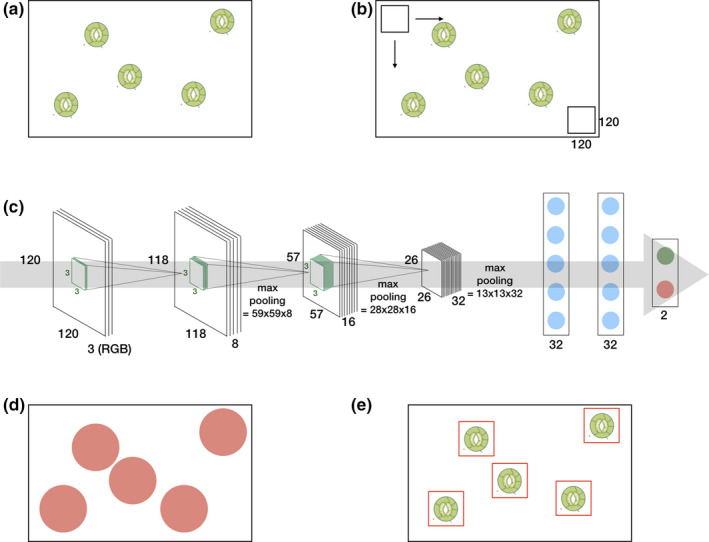
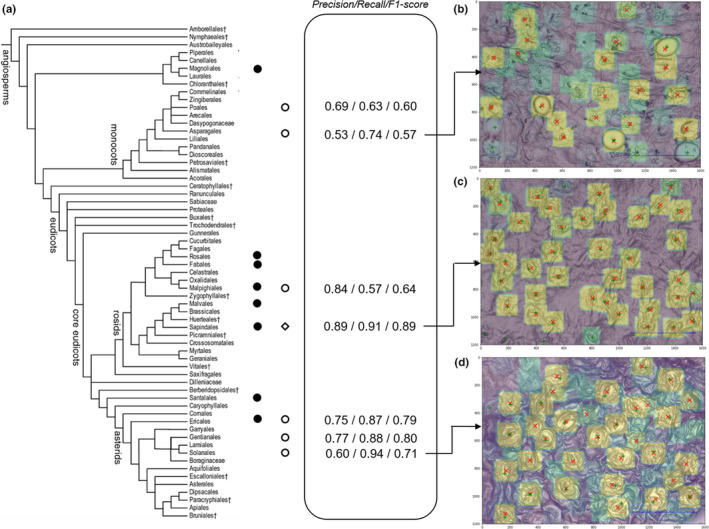
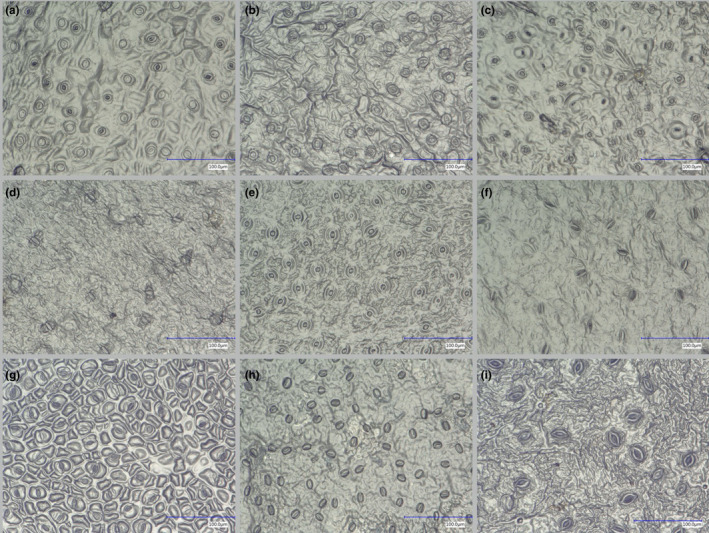
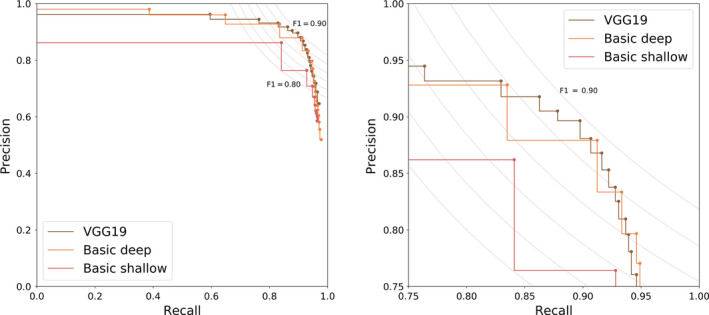
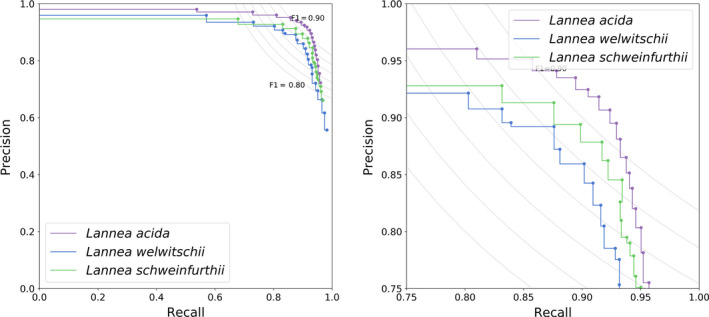
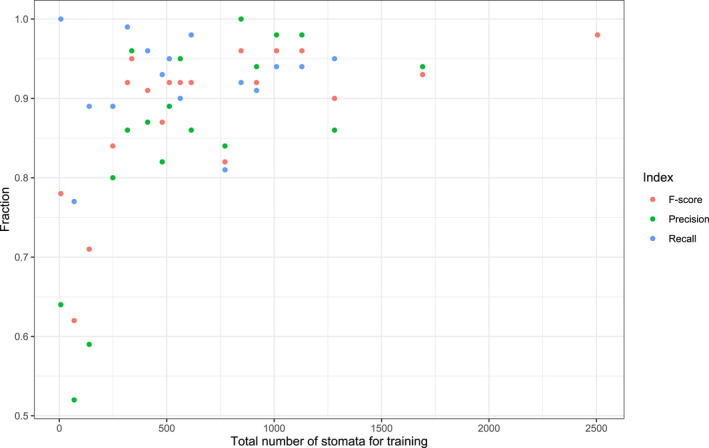
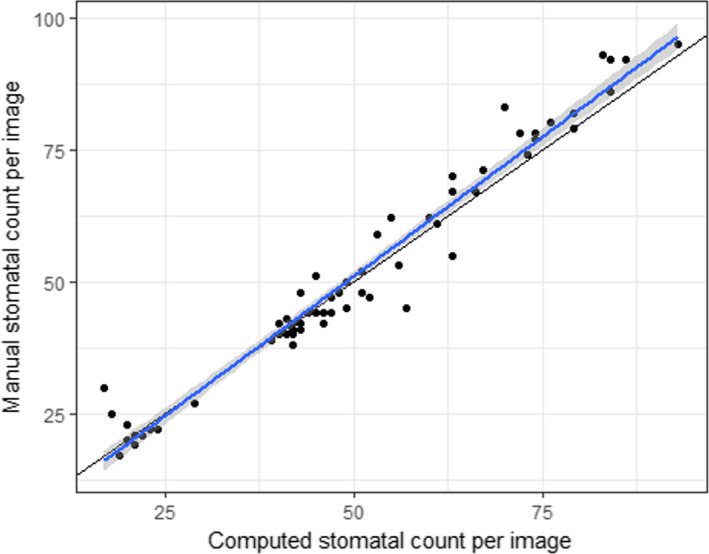
Plant leaf stomata are the gatekeepers of the atmosphere-plant interface and are essential building blocks of land surface models as they control transpiration and photosynthesis. Although more stomatal trait data are needed to significantly reduce the error in these model predictions, recording these traits is time-consuming, and no standardized protocol is currently available. Some attempts were made to automate stomatal detection from photomicrographs; however, these approaches have the disadvantage of using classic image processing or targeting a narrow taxonomic entity which makes these technologies less robust and generalizable to other plant species. We propose an easy-to-use and adaptable workflow from leaf to label. A methodology for automatic stomata detection was developed using deep neural networks according to the state of the art and its applicability demonstrated across the phylogeny of the angiosperms.We used a patch-based approach for training/tuning three different deep learning architectures. For training, we used 431 micrographs taken from leaf prints made according to the nail polish method from herbarium specimens of 19 species. The best-performing architecture was tested on 595 images of 16 additional species spread across the angiosperm phylogeny.The nail polish method was successfully applied in 78% of the species sampled here. The VGG19 architecture slightly outperformed the basic shallow and deep architectures, with a confidence threshold equal to 0.7 resulting in an optimal trade-off between precision and recall. Applying this threshold, the VGG19 architecture obtained an average -score of 0.87, 0.89, and 0.67 on the training, validation, and unseen test set, respectively. The average accuracy was very high (94%) for computed stomatal counts on unseen images of species used for training.The leaf-to-label pipeline is an easy-to-use workflow for researchers of different areas of expertise interested in detecting stomata more efficiently. The described methodology was based on multiple species and well-established methods so that it can serve as a reference for future work.
植物叶片气孔是大气与植物界面的“守门人”,也是陆地表面模型的重要组成部分,因为它们控制着蒸腾作用和光合作用。尽管需要更多的气孔特征数据来显著降低这些模型预测中的误差,但记录这些特征耗时且目前尚无标准化方案。有人尝试从显微照片中自动检测气孔;然而,这些方法的缺点是使用经典图像处理或针对狭窄的分类实体,这使得这些技术的稳健性较差,难以推广到其他植物物种。我们提出了一种从叶片到标签的易于使用且适应性强的工作流程。根据现有技术,利用深度神经网络开发了一种自动检测气孔的方法,并在被子植物系统发育中证明了其适用性。我们采用基于图像块的方法来训练/调整三种不同的深度学习架构。为了进行训练,我们使用了从19个物种的植物标本馆标本上按照指甲油方法制作的叶印中获取的431张显微照片。性能最佳的架构在被子植物系统发育中的另外16个物种的595张图像上进行了测试。指甲油方法在此处采样的78%的物种中成功应用。VGG19架构略优于基本的浅层和深层架构,置信阈值等于0.7时在精度和召回率之间实现了最佳权衡。应用此阈值时,VGG19架构在训练集、验证集和未见过的测试集上的平均得分分别为0.87、0.89和0.67。对于用于训练的物种的未见过图像上计算的气孔计数,平均准确率非常高(94%)。对于不同专业领域中希望更高效地检测气孔的研究人员来说,从叶片到标签的流程是一种易于使用的工作流程。所描述的方法基于多个物种和成熟的方法,因此可以作为未来工作的参考。