Agriculture and Environmental Sciences, School of Biosciences, University of Nottingham Sutton Bonington Campus, Loughborough LE12 5RD, UK.
J Exp Bot. 2024 Nov 15;75(21):6704-6718. doi: 10.1093/jxb/erae207.
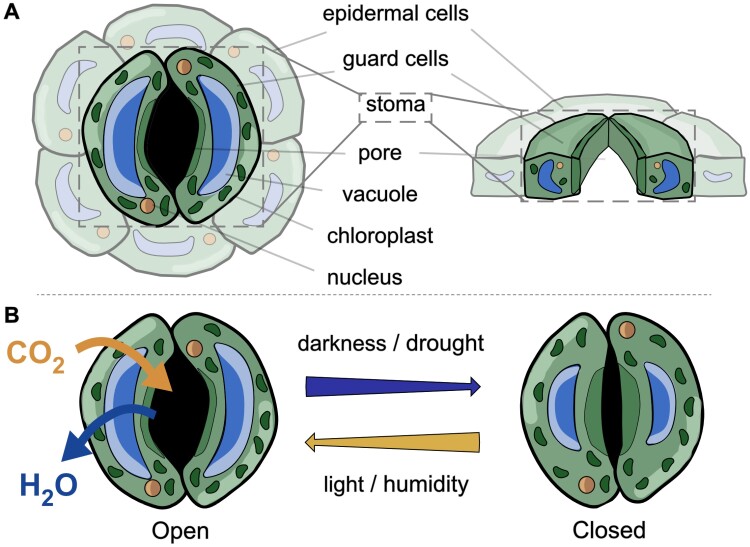
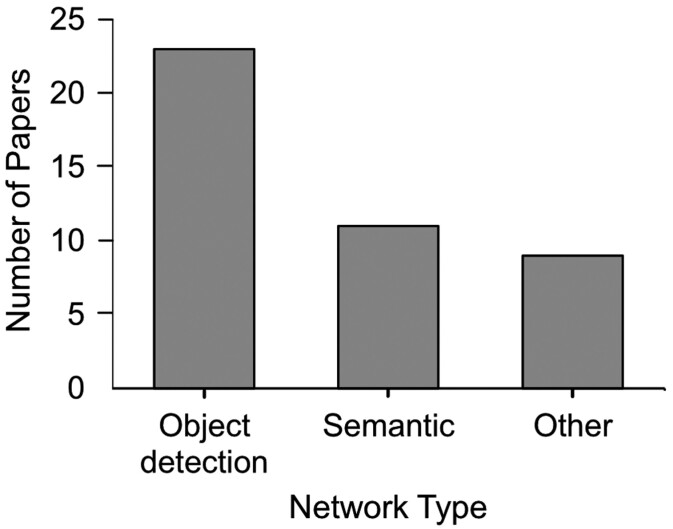
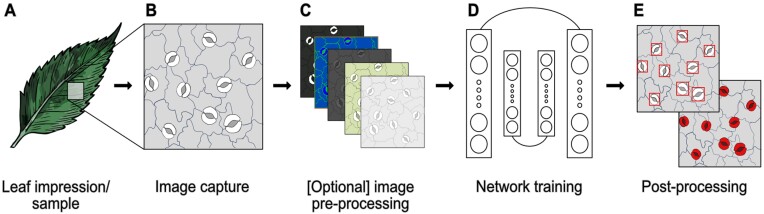
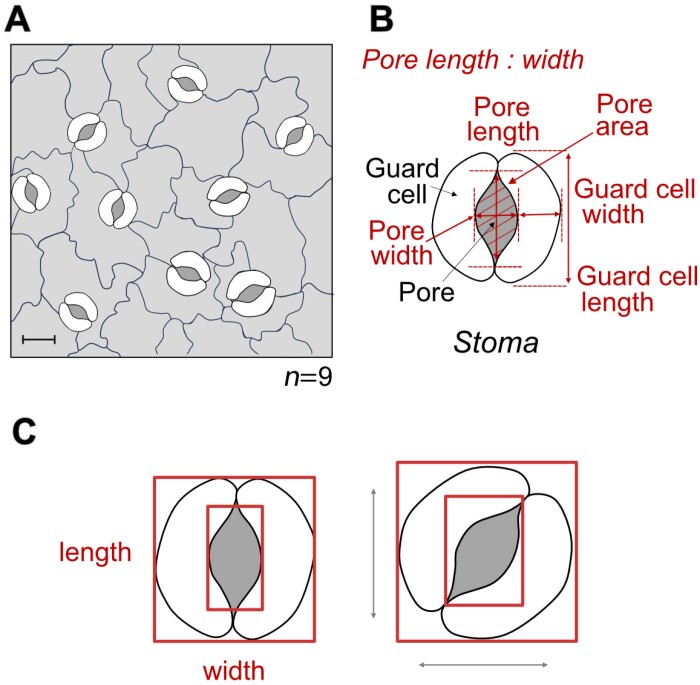
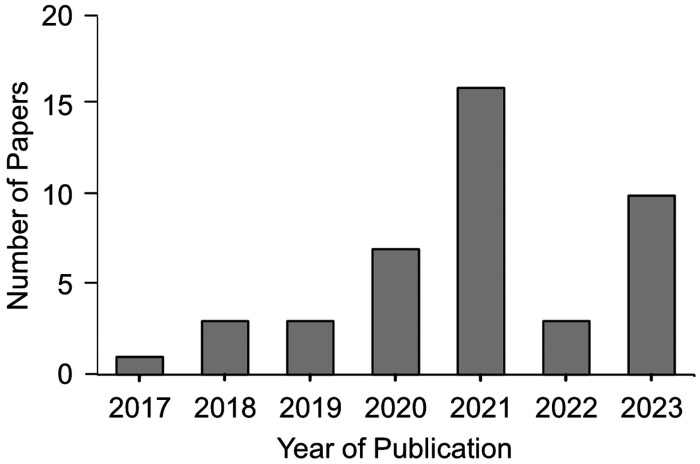
Plant physiology and metabolism rely on the function of stomata, structures on the surface of above-ground organs that facilitate the exchange of gases with the atmosphere. The morphology of the guard cells and corresponding pore that make up the stomata, as well as the density (number per unit area), are critical in determining overall gas exchange capacity. These characteristics can be quantified visually from images captured using microscopy, traditionally relying on time-consuming manual analysis. However, deep learning (DL) models provide a promising route to increase the throughput and accuracy of plant phenotyping tasks, including stomatal analysis. Here we review the published literature on the application of DL for stomatal analysis. We discuss the variation in pipelines used, from data acquisition, pre-processing, DL architecture, and output evaluation to post-processing. We introduce the most common network structures, the plant species that have been studied, and the measurements that have been performed. Through this review, we hope to promote the use of DL methods for plant phenotyping tasks and highlight future requirements to optimize uptake, predominantly focusing on the sharing of datasets and generalization of models as well as the caveats associated with utilizing image data to infer physiological function.
植物生理学和新陈代谢依赖于气孔的功能,气孔是地上器官表面的结构,有助于与大气进行气体交换。构成气孔的保卫细胞和相应孔的形态,以及密度(每单位面积的数量),对于确定整体气体交换能力至关重要。这些特征可以通过使用显微镜拍摄的图像进行直观地量化,传统上依赖于耗时的手动分析。然而,深度学习 (DL) 模型为提高植物表型分析等任务的通量和准确性提供了有希望的途径。在这里,我们回顾了关于 DL 在气孔分析中应用的已发表文献。我们讨论了所使用的管道的变化,从数据采集、预处理、DL 架构和输出评估到后处理。我们介绍了最常见的网络结构、已研究的植物物种以及已进行的测量。通过这次审查,我们希望促进 DL 方法在植物表型分析任务中的应用,并强调未来需要优化采用,主要集中在数据集的共享和模型的泛化以及利用图像数据推断生理功能的注意事项。