Zakama Arthurine K, Ozarslan Nida, Gaw Stephanie L
Division of Maternal-Fetal Medicine, Department of Obstetrics, Gynecology, and Reproductive Sciences, University of California, San Francisco, 513 Parnassus Ave, Box 0556, San Francisco, CA 94143 USA.
Marmara University School of Medicine, Istanbul, Turkey.
Curr Trop Med Rep. 2020;7(4):162-171. doi: 10.1007/s40475-020-00213-2. Epub 2020 Sep 16.
Placental malaria is the primary mechanism through which malaria in pregnancy causes adverse perinatal outcomes. This review summarizes recent work on the significance, pathogenesis, diagnosis, and prevention of placental malaria.
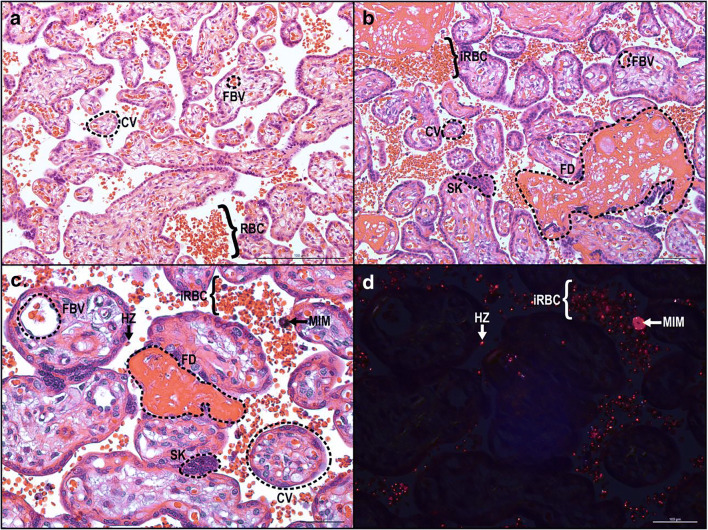
Placental malaria, characterized by the accumulation of -infected red blood cells in the placental intervillous space, leads to adverse perinatal outcomes such as stillbirth, low birth weight, preterm birth, and small-for-gestational-age neonates. Placental inflammatory responses may be primary drivers of these complications. Associated factors contributing to adverse outcomes include maternal gravidity, timing of perinatal infection, and parasite burden.
Placental malaria is an important cause of adverse birth outcomes in endemic regions. The main strategy to combat this is intermittent preventative treatment in pregnancy; however, increasing drug resistance threatens the efficacy of this approach. There are studies dissecting the inflammatory response to placental malaria, alternative preventative treatments, and in developing a vaccine for placental malaria.
胎盘疟疾是妊娠疟疾导致不良围产期结局的主要机制。本综述总结了近期关于胎盘疟疾的重要性、发病机制、诊断和预防的研究工作。
胎盘疟疾的特征是感染疟原虫的红细胞在胎盘绒毛间隙积聚,会导致不良围产期结局,如死产、低出生体重、早产和小于胎龄儿。胎盘炎症反应可能是这些并发症的主要驱动因素。导致不良结局的相关因素包括孕妇妊娠次数、围产期感染时间和寄生虫负荷。
胎盘疟疾是流行地区不良分娩结局的重要原因。应对这一问题的主要策略是孕期间歇性预防性治疗;然而,耐药性增加威胁到这一方法的有效性。目前有研究剖析对胎盘疟疾的炎症反应、替代性预防治疗方法以及开发胎盘疟疾疫苗。