Talotta Rossella, Robertson Erle
Department of Clinical and Experimental Medicine, Rheumatology Unit, AOU "Gaetano Martino", University of Messina, Messina 98100, Italy.
Department of Otorhinolaryngology-Head and Neck Surgery, Perelman School of Medicine, University of Pennsylvania, Philadelphia, PA 19014, United States.
World J Clin Cases. 2020 Sep 6;8(17):3621-3644. doi: 10.12998/wjcc.v8.i17.3621.
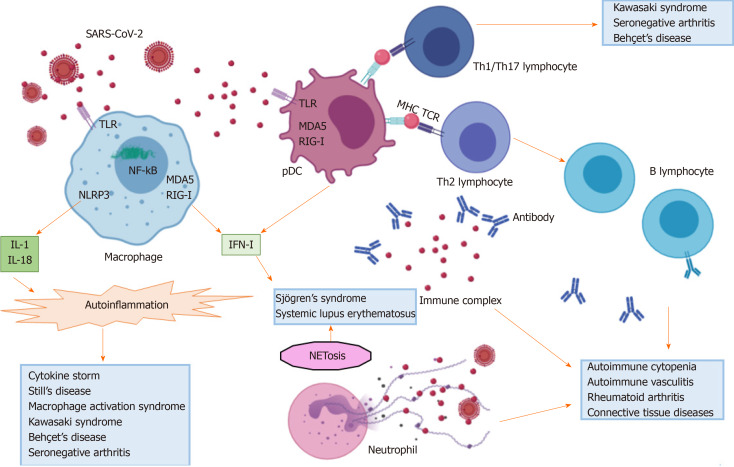
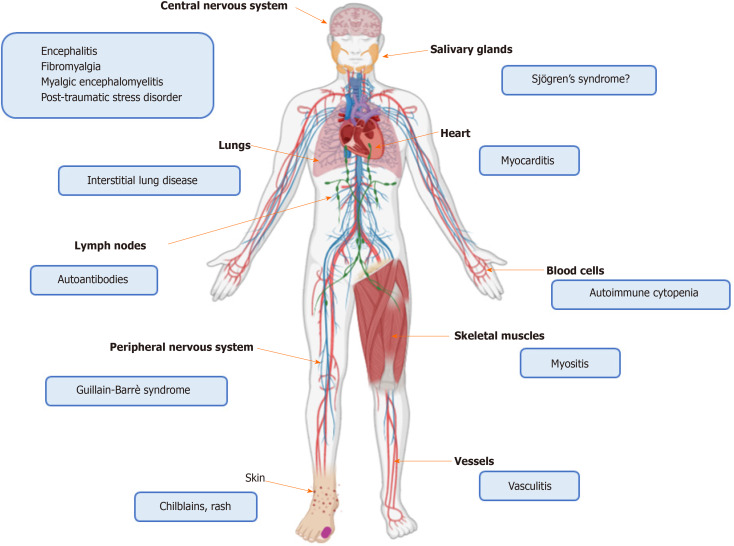
Severe acute respiratory syndrome coronavirus 2 (SARS-CoV-2) infection can give rise to different clinical manifestations that are directly related to viral tissue damage or indirectly induced by the antiviral immune response. Hyper-activation of the immune system in an attempt to eradicate the infection may trigger autoimmunity. Several immune-mediated disorders have been described in SARS-CoV-2-infected individuals. These include cutaneous rashes and vasculitis, autoimmune cytopenia, anti-phospholipid syndrome, central or peripheral neuropathy, myositis and myocarditis. On the other hand, rheumatic patients were reported to have similar coronavirus disease 2019 (COVID-19) incidence, morbidity and mortality rates compared to general population. This opinion review will summarize the crucial immunologic steps which occur during SARS-CoV-2-infection that may link autoimmunity to COVID-19 and provides an opportunity for further discussion regarding this association.
严重急性呼吸综合征冠状病毒2(SARS-CoV-2)感染可引发不同的临床表现,这些表现与病毒组织损伤直接相关或由抗病毒免疫反应间接诱导。免疫系统为试图根除感染而过度激活可能引发自身免疫。在感染SARS-CoV-2的个体中已描述了几种免疫介导的疾病。这些疾病包括皮疹和血管炎、自身免疫性血细胞减少、抗磷脂综合征、中枢或周围神经病变、肌炎和心肌炎。另一方面,据报道,与普通人群相比,风湿病患者的2019冠状病毒病(COVID-19)发病率、发病率和死亡率相似。这篇观点综述将总结SARS-CoV-2感染期间发生的关键免疫步骤,这些步骤可能将自身免疫与COVID-19联系起来,并为进一步讨论这种关联提供了机会。