Faculty of Geographical Science, Beijing Normal University, Beijing, 100875, China.
Department of Urban Planning and Design, The University of Hong Kong, Pokfulam Road, Hong Kong, China.
Int J Equity Health. 2020 Sep 21;19(1):164. doi: 10.1186/s12939-020-01280-7.
Spatial accessibility to healthcare facilities has drawn much attention in health geography. In China, central and local governments have aimed to develop a well-organized hierarchical system of healthcare facilities in recent years. However, few studies have focused on the measurement of healthcare accessibility in a hierarchical service delivery system, which is crucial for the assessment and implementation of such strategies.
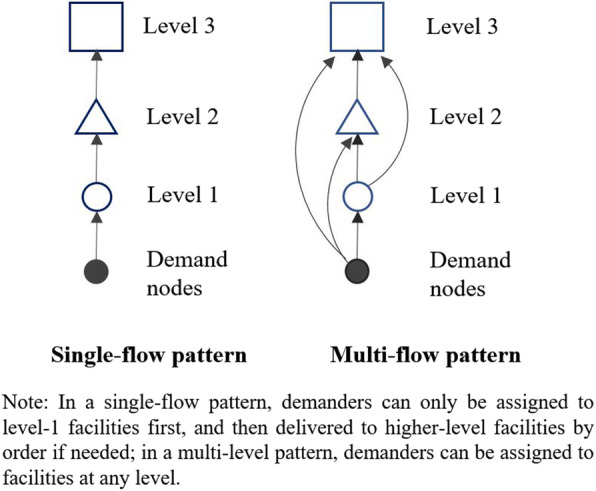
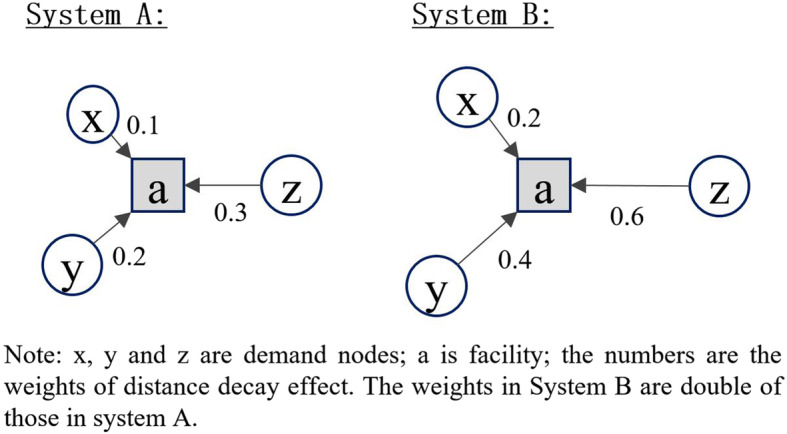
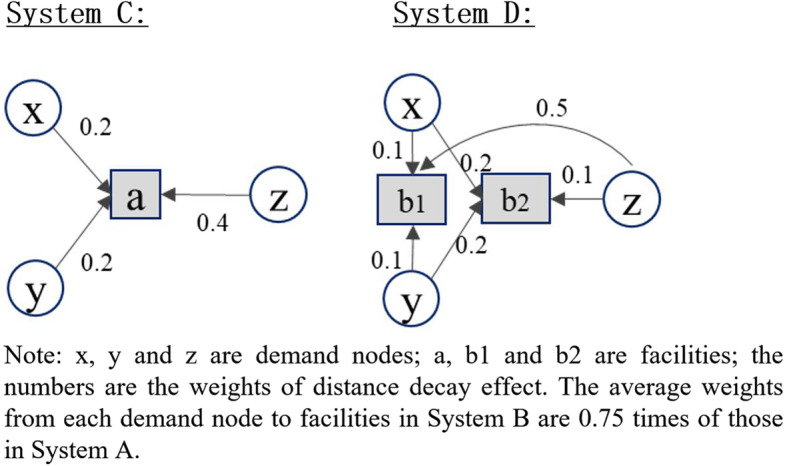
Based on recent improvements in 2SFCA (two-step floating catchment area) method, this study aims to propose a Hierarchical 2SFCA (H2SFCA) method for measuring spatial accessibility to hierarchical facilities. The method considers the varied catchment area sizes, distance decay effects, and transport modes for facilities at various levels. Moreover, both the relative and absolute distance effects are incorporated into the accessibility measurement.
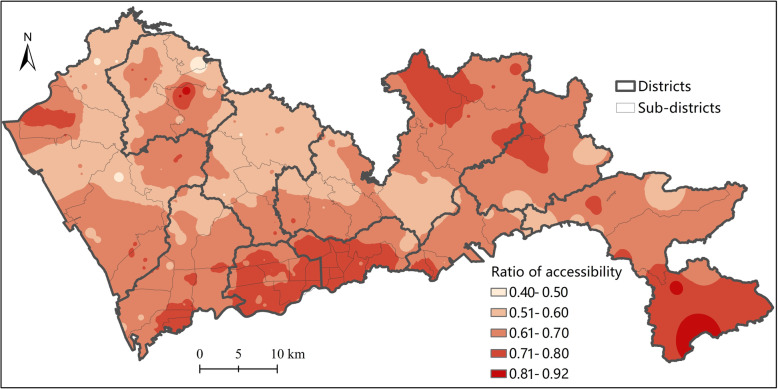
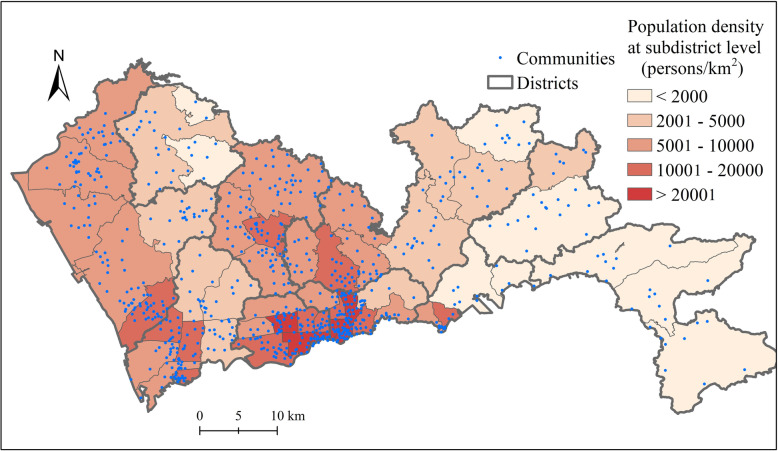
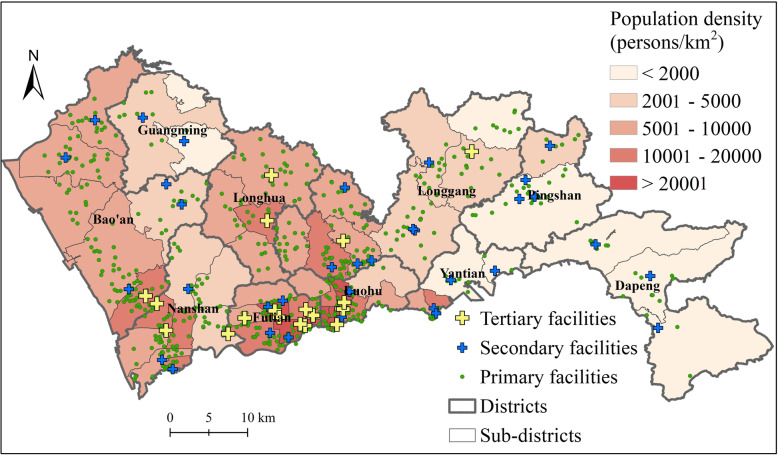
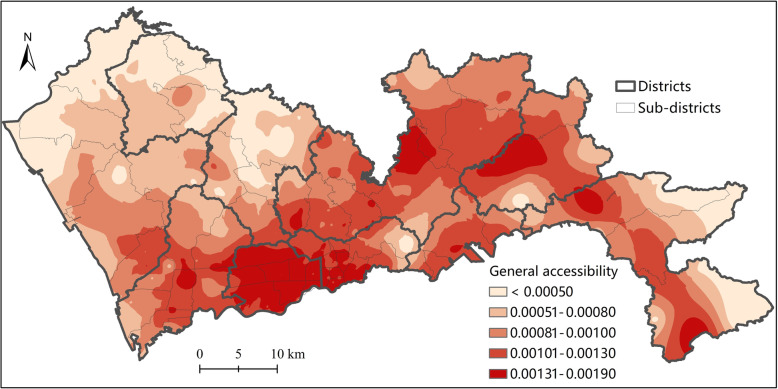
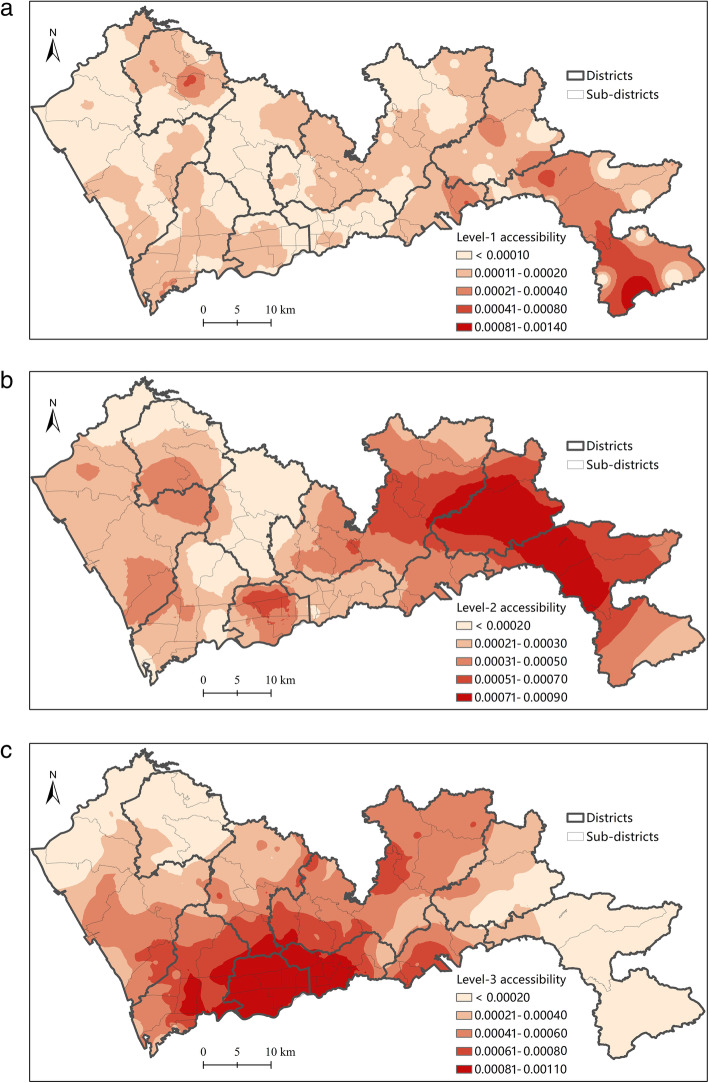
The method is applied and tested in a case study of hierarchical healthcare facilities in Shenzhen, China. The results reveal that the general spatial accessibility to hierarchical healthcare facilities in Shenzhen is unevenly distributed and concentrated. The disparity of general accessibility is largely caused by the concentrated distribution of tertiary hospitals. For facilities at higher levels, average accessibility of demanders is higher, but there are also larger disparities in spatial accessibility. The comparison between H2SFCA and traditional methods reveals that traditional methods underestimate the spatial disparity of accessibility, which may lead to biased suggestions for policy making.
The results suggest that the supply of healthcare resources at primary facilities is far from sufficient. To improve the spatial equity in spatial accessibility to hierarchical healthcare facilities, various actions are needed at different levels. The proposed H2SFCA method contributes to the modelling of spatial accessibility to hierarchical healthcare facilities in China and similar environments where the referral system has not been well designed. It can also act as the foundation for developing more comprehensive measures in future studies.
医疗设施的空间可达性在健康地理学中受到了广泛关注。近年来,中国中央和地方政府旨在发展组织良好的医疗设施层级体系。然而,很少有研究关注层级服务提供系统中的医疗可达性衡量,这对于此类策略的评估和实施至关重要。
基于最近对 2SFCA(两步浮动集水区)方法的改进,本研究旨在提出一种用于衡量层级设施空间可达性的分层 2SFCA(H2SFCA)方法。该方法考虑了不同集水区大小、距离衰减效应以及不同层级设施的交通方式。此外,可达性衡量中还纳入了相对和绝对距离效应。
该方法在中国深圳市的层级医疗设施案例研究中得到了应用和测试。结果表明,深圳市层级医疗设施的总体空间可达性分布不均且集中。总体可达性的差异主要是由三级医院的集中分布造成的。对于较高层级的设施,需求者的平均可达性较高,但空间可达性的差异也较大。H2SFCA 与传统方法的比较表明,传统方法低估了可达性的空间差异,这可能导致政策制定方面存在偏见。
研究结果表明,基层医疗资源的供应远远不足。为了提高层级医疗设施空间可达性的空间公平性,需要在不同层级采取各种行动。所提出的 H2SFCA 方法有助于模拟中国和类似环境中转诊系统设计不佳的层级医疗设施的空间可达性,也可以为未来研究中制定更全面的措施提供基础。