Georgia Cancer Center, Augusta University Medical College of Georgia, Augusta, Georgia, USA.
Oncovir, Inc, Washington, District Columbia, USA.
J Immunother Cancer. 2020 Sep;8(2). doi: 10.1136/jitc-2020-001224.
Immunotherapies, such as immune checkpoint inhibitors and adoptive cell therapies, have revolutionized cancer treatment and resulted in complete and durable responses in some patients. Unfortunately, most immunotherapy treated patients still fail to respond. Absence of T cell infiltration to the tumor site is one of the major obstacles limiting immunotherapy efficacy against solid tumors. Thus, the development of strategies that enhance T cell infiltration and broaden the antitumor efficacy of immunotherapies is greatly needed.
We used mouse tumor models, genetically deficient mice and vascular endothelial cells (VECs) to study the requirements for T cell infiltration into tumors.
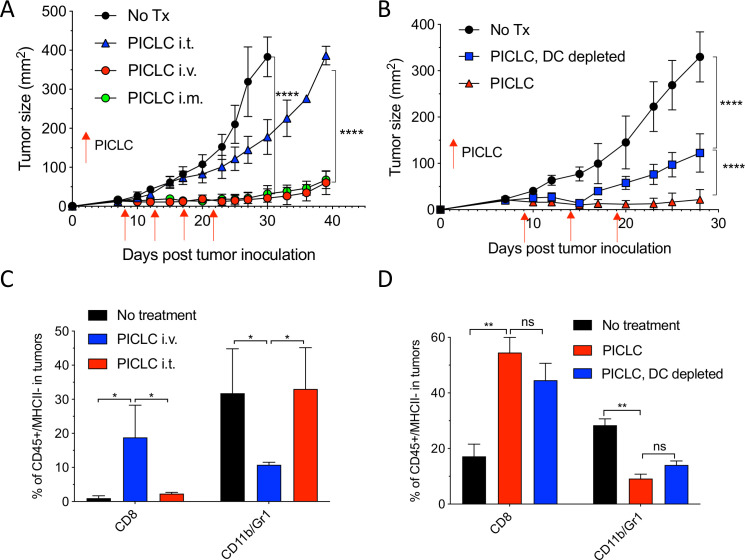
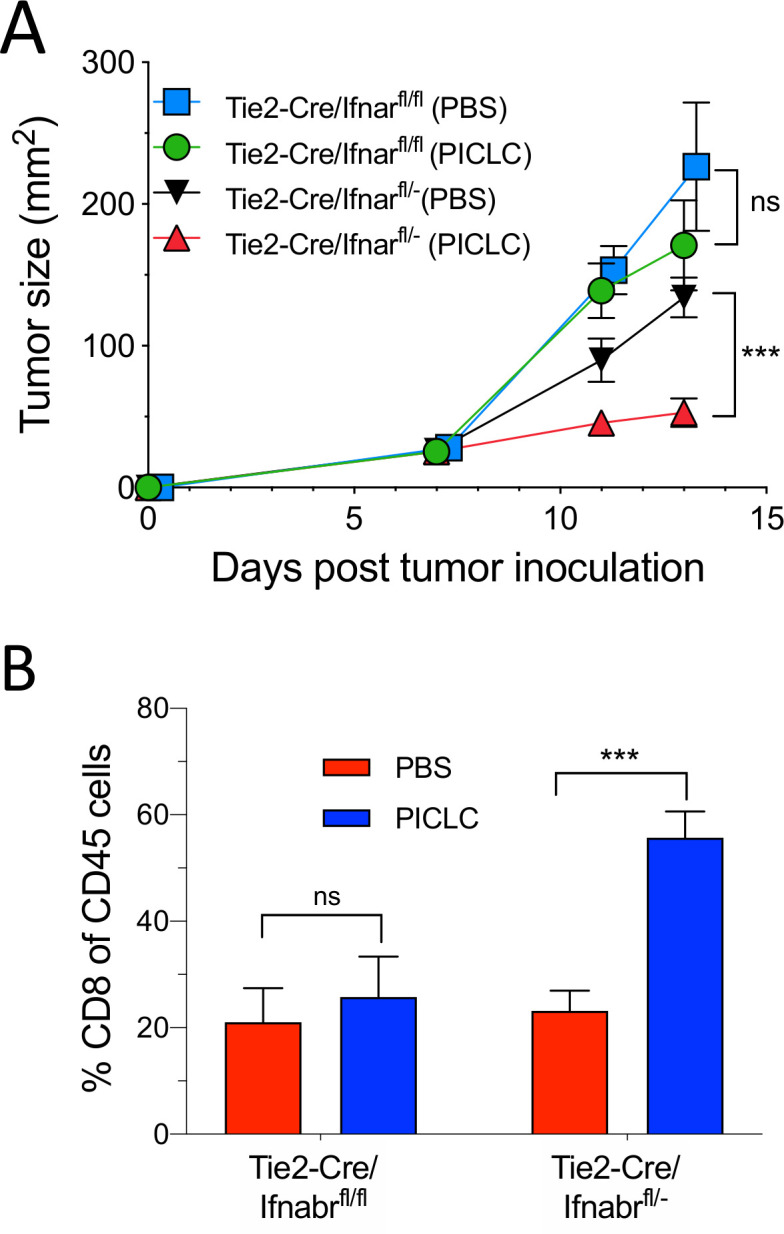
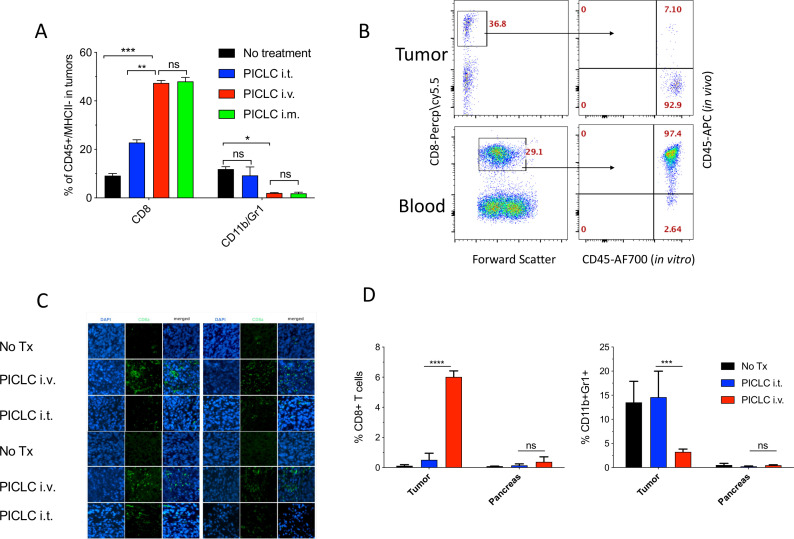
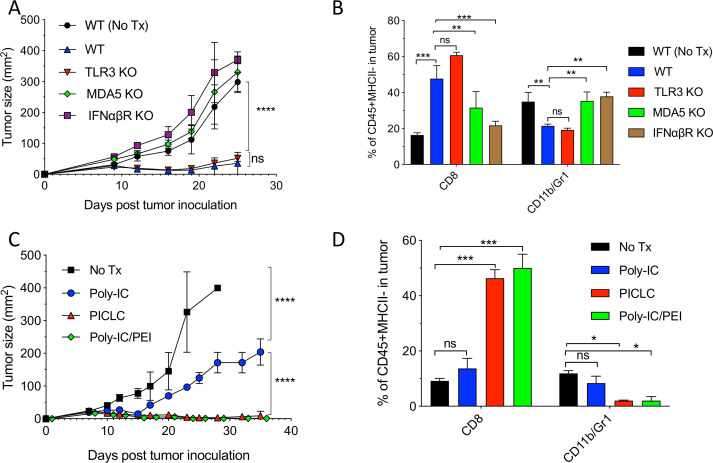
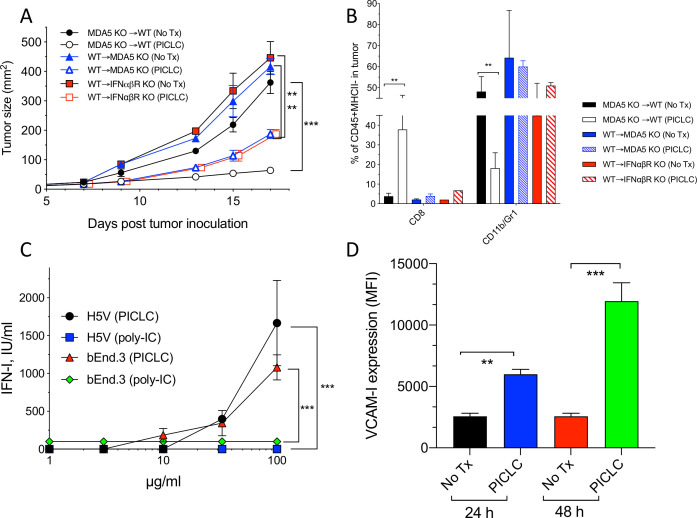
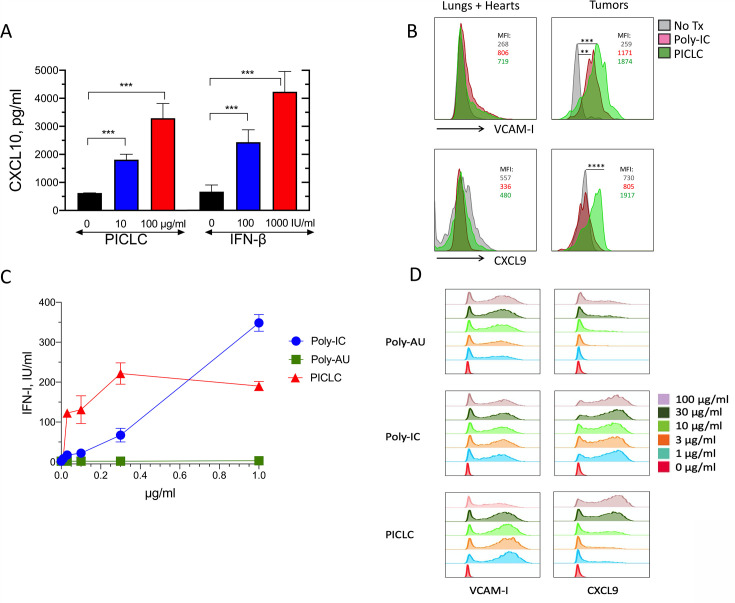
A specific formulation of poly-IC, containing poly-lysine and carboxymethylcellulose (PICLC) facilitated the traffic and infiltration of effector CD8 T cells into the tumors that reduced tumor growth. Surprisingly, intratumoral injection of PICLC was significantly less effective in inducing tumor T cell infiltration and controlling growth of tumors as compared with systemic (intravenous or intramuscular) administration. Systemically administered PICLC, but not poly-IC stimulated tumor VECs via the double-stranded RNA cytoplasmic sensor MDA5, resulting in enhanced adhesion molecule expression and the production of type I interferon (IFN-I) and T cell recruiting chemokines. Expression of IFNαβ receptor in VECs was necessary to obtain the antitumor effects by PICLC and IFN-I was found to directly stimulate the secretion of T cell recruiting chemokines by VECs indicating that this cytokine-chemokine regulatory axis is crucial for recruiting effector T cells into the tumor parenchyma. Unexpectedly, these effects of PICLC were mostly observed in tumors and not in normal tissues.
These findings have strong implications for the improvement of all types of T cell-based immunotherapies for solid cancers. We predict that systemic administration of PICLC will improve immune checkpoint inhibitor therapy, adoptive cell therapies and therapeutic cancer vaccines.
免疫疗法,如免疫检查点抑制剂和过继细胞疗法,已经彻底改变了癌症治疗方法,并使一些患者获得了完全和持久的缓解。不幸的是,大多数接受免疫治疗的患者仍然没有反应。肿瘤部位缺乏 T 细胞浸润是限制免疫疗法治疗实体瘤疗效的主要障碍之一。因此,迫切需要开发能够增强 T 细胞浸润并拓宽免疫疗法抗肿瘤疗效的策略。
我们使用小鼠肿瘤模型、基因缺陷小鼠和血管内皮细胞(VECs)来研究 T 细胞浸润肿瘤的要求。
一种特定的聚肌胞(poly-IC)配方,含有聚赖氨酸和羧甲基纤维素(PICLC),促进了效应 CD8 T 细胞向肿瘤的迁移和浸润,从而减少了肿瘤的生长。令人惊讶的是,与全身(静脉或肌肉内)给药相比,肿瘤内注射 PICLC 诱导肿瘤 T 细胞浸润和控制肿瘤生长的效果明显较差。系统给予 PICLC,但不是聚肌胞,通过双链 RNA 细胞质传感器 MDA5 刺激肿瘤 VEC,导致粘附分子表达增强,并产生 I 型干扰素(IFN-I)和 T 细胞募集趋化因子。VEC 中 IFNαβ 受体的表达是 PICLC 获得抗肿瘤作用所必需的,并且发现 IFN-I 直接刺激 VEC 分泌 T 细胞募集趋化因子,表明这种细胞因子-趋化因子调节轴对于将效应 T 细胞招募到肿瘤实质中至关重要。出乎意料的是,PICLC 的这些作用主要在肿瘤中观察到,而不是在正常组织中观察到。
这些发现对改善所有类型的实体癌基于 T 细胞的免疫疗法具有重要意义。我们预测,PICLC 的系统给药将改善免疫检查点抑制剂治疗、过继细胞疗法和治疗性癌症疫苗。