Department of Medical Sciences, College of Medical Sciences, Soonchunhyang University, Asan 31538, Republic of Korea.
Department of Biomedical Laboratory Science, College of Health Sciences, Yonsei University at Wonju, Wonju, 26493, Republic of Korea.
J Microbiol Biotechnol. 2020 Nov 28;30(11):1640-1650. doi: 10.4014/jmb.2006.06034.
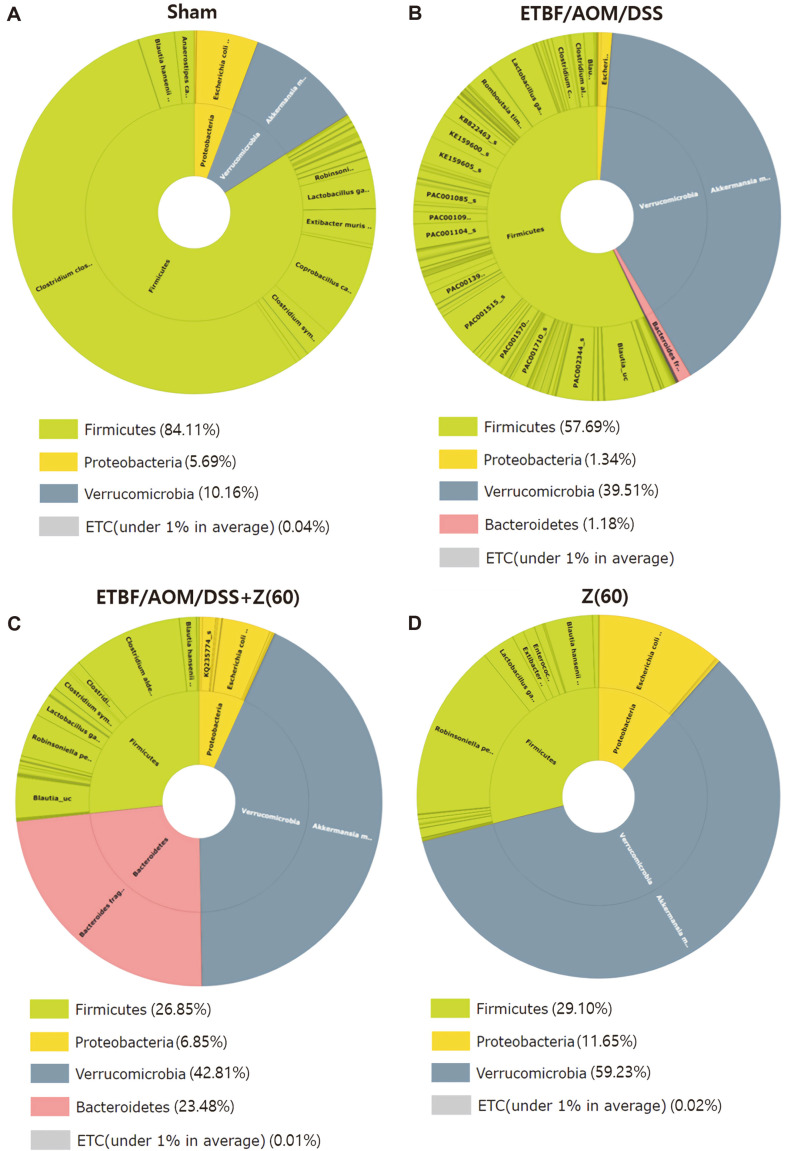
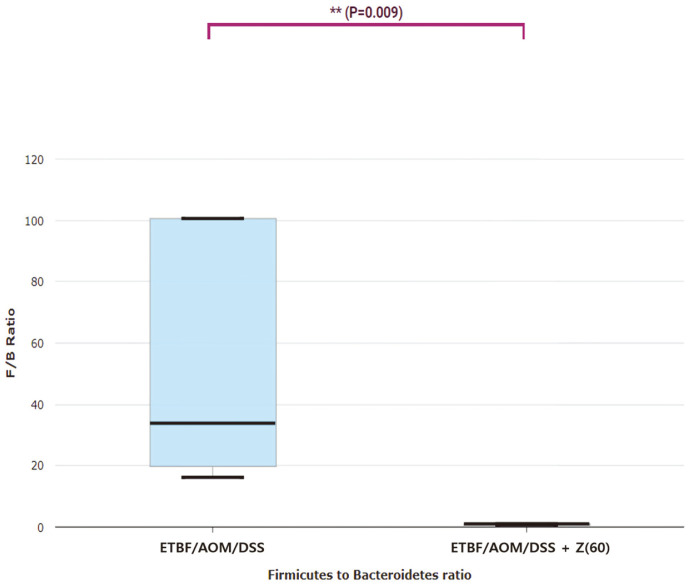
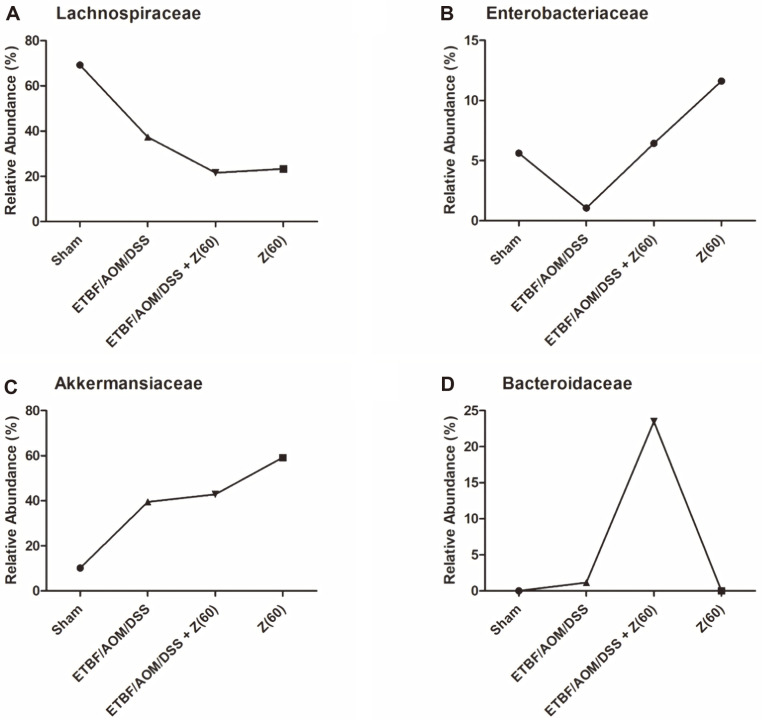
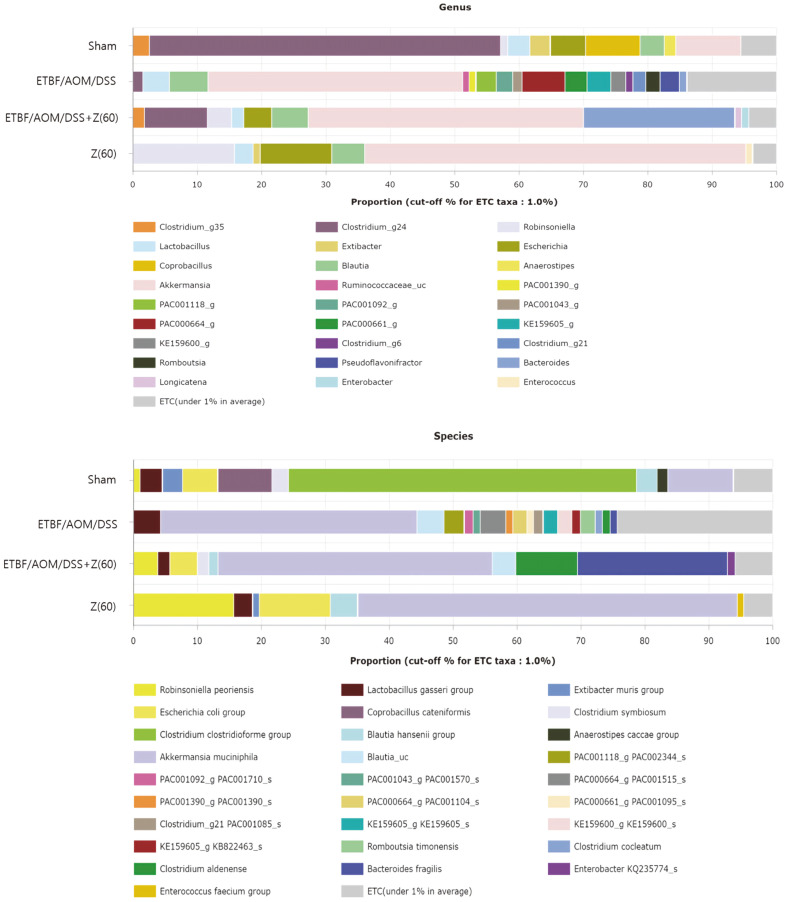
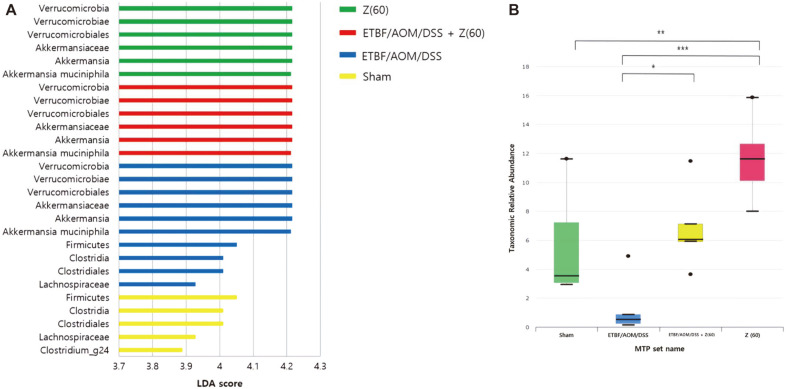
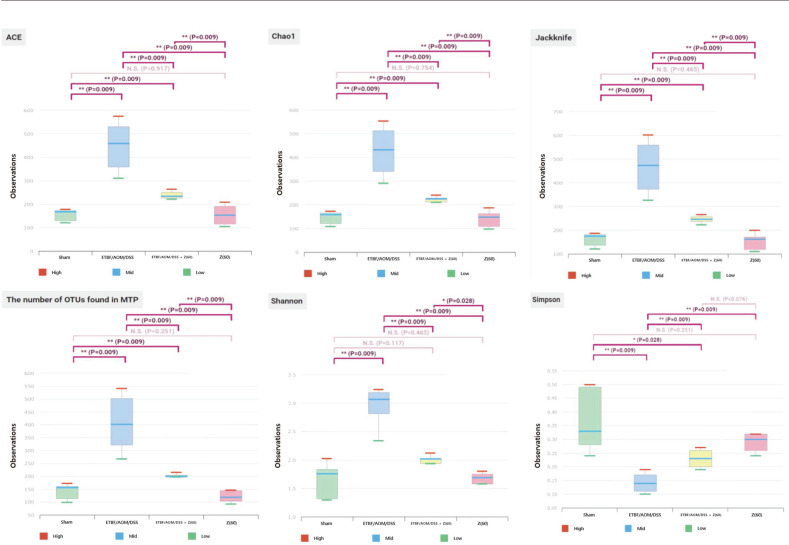
Colorectal cancer (CRC) is the leading cause of common malignant neoplasm worldwide. Many studies have analyzed compositions of gut microbiota associated with various diseases such as inflammatory bowel diseases (IBD) and colon cancer. One of the most representative bacteria involved in CRC is enterotoxigenic (ETBF), a species belonging to phylum Bacteroidetes. We used ETBF colonized mice with azoxymethane (AOM)/dextran sulphate sodium (DSS) and zerumbone, a compound with anti-bacterial effect, to determine whether zerumbone could restore intestinal microbiota composition. Four experimental groups of mice were used: sham, ETBF colonized AOM/DSS group, ETBF colonized AOM/DSS group zerumbone 60 mg kg (ETBF/AOM/ DSS + Z (60)), and only zerumbone (60 mg kg)-treated group. We performed reversible dye terminators-based analysis of 16S rRNA gene region V3-V4 for group comparison. Microbiota compositions of ETBF/AOM/DSS + Z (60) group and ETBF colonized AOM/DSS group not given zerumbone were significantly different. There were more in ETBF/AOM/DSS + Z (60) group than those in ETBF colonized AOM/DSS group, suggesting that could be a normal flora activated by zerumbone. In addition, based on linear discriminant analysis of effect size (LEfSe) analysis, microbial diversity decreased significantly in the ETBF colonized AOM/DSS group. However, after given zerumbone, the taxonomic relative abundance was increased. These findings suggest that zerumbone not only influenced the microbial diversity and richness, but also could be helpful for enhancing the balance of gut microbial composition. In this work, we demonstrate that zerumbone could restore the composition of intestinal microbiota.
结直肠癌(CRC)是全球常见恶性肿瘤的主要病因。许多研究分析了与炎症性肠病(IBD)和结肠癌等各种疾病相关的肠道微生物群组成。涉及 CRC 的最具代表性的细菌之一是肠产毒性(ETBF),一种属于拟杆菌门的物种。我们使用 ETBF 定植的 AOM/DSS 和姜黄烯的小鼠,一种具有抗菌作用的化合物,来确定姜黄烯是否可以恢复肠道微生物群组成。使用了四组实验小鼠:假手术组、ETBF 定植 AOM/DSS 组、ETBF 定植 AOM/DSS 组姜黄烯 60mg/kg(ETBF/AOM/DSS+Z(60))和仅用姜黄烯(60mg/kg)处理组。我们对 16S rRNA 基因区域 V3-V4 进行了可逆染料终止子分析,以进行组间比较。ETBF/AOM/DSS+Z(60)组和未用姜黄烯处理的 ETBF 定植 AOM/DSS 组的微生物群组成有显著差异。ETBF/AOM/DSS+Z(60)组的 更多,表明 可能是姜黄烯激活的正常菌群。此外,基于线性判别分析效应大小(LEfSe)分析,ETBF 定植 AOM/DSS 组的微生物多样性显著降低。然而,给予姜黄烯后,分类相对丰度增加。这些发现表明,姜黄烯不仅影响微生物多样性和丰富度,而且有助于增强肠道微生物组成的平衡。在这项工作中,我们证明了姜黄烯可以恢复肠道微生物群的组成。