State Key Laboratory of Simulation and Regulation of Water Cycle in River Basin, China Institute of Water Resources and Hydropower Research, Beijing, China.
Department of Irrigation and Drainage, China Institute of Water Resources and Hydropower Research, Beijing, China.
PLoS One. 2020 Sep 22;15(9):e0239006. doi: 10.1371/journal.pone.0239006. eCollection 2020.
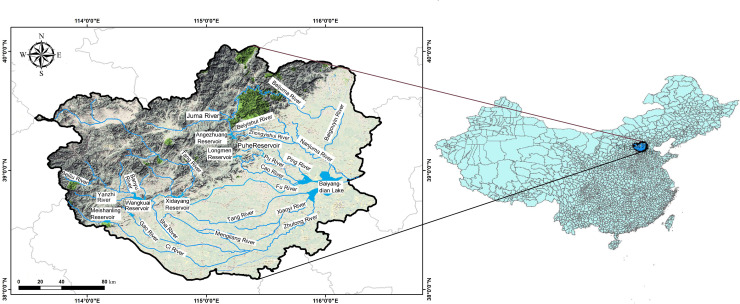
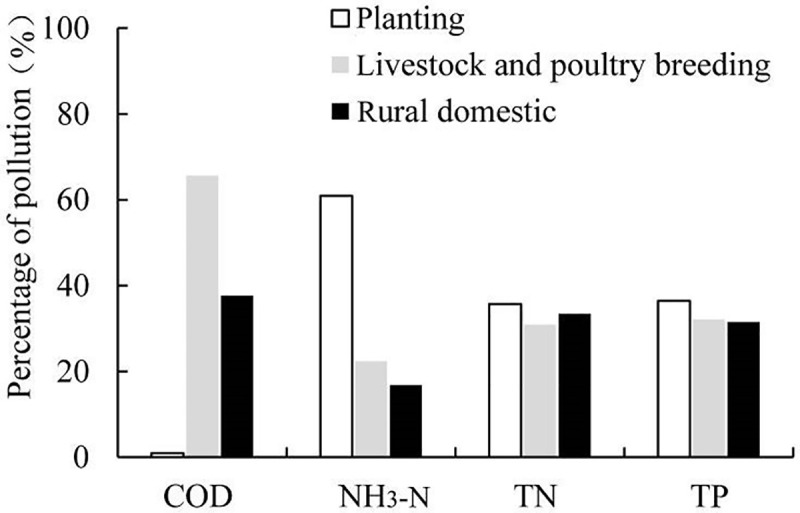
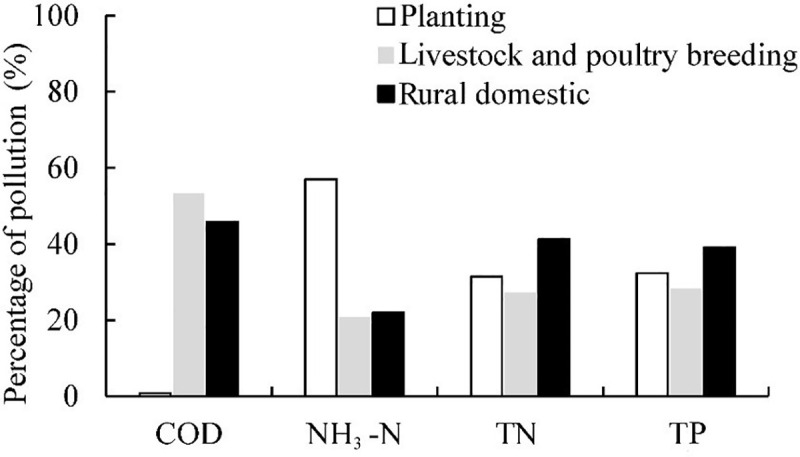
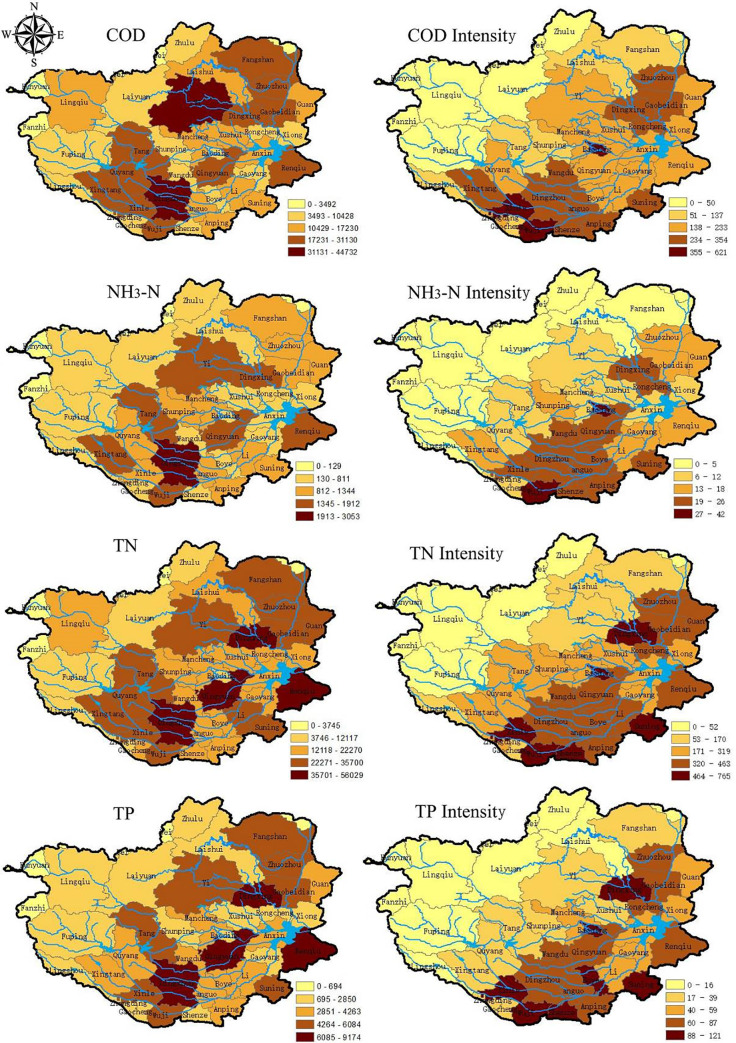
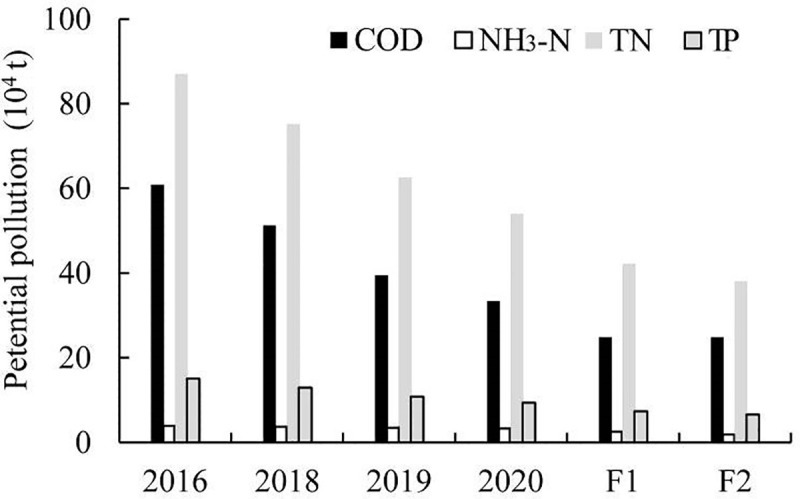
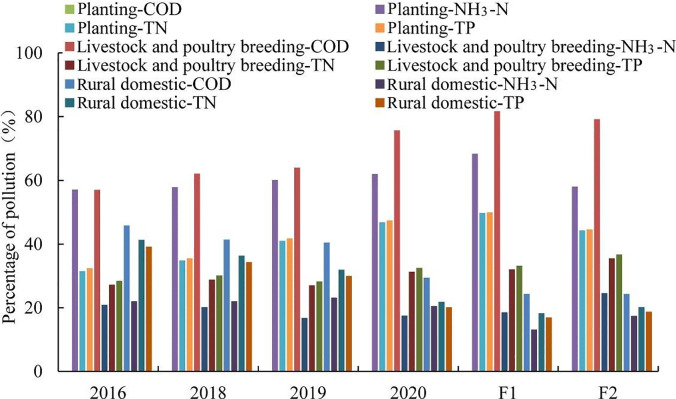
To prevent and control non-point source pollution, many policies have been carried out by government in China. However, the effectiveness of these policies has rarely been evaluated. In this study, the potential and spatial distribution of agricultural non-point source pollution in the Baiyangdian Basin are reported. This investigation considers multiple parameters under various policies with county as a basic unit. The results for the potential pollution from chemical oxygen demand (COD), ammonia nitrogen (NH3-N), total nitrogen (TN) and total phosphorus (TP) are 60.89×10⁴, 3.93×10⁴, 87.05×10⁴ and 15.10×10⁴ Mg, with corresponding intensities of 190, 12, 272 and 47 kg ha-1 for the Baiyangdian Basin in 2016. The highest pollution from COD is attributed to livestock and poultry breeding, whereas TN and TP are dominantly produced by rural domestic sources, and NH3-N is mostly derived from planting. Spatially, distribution of the counties producing larger non-point source pollution presented a northeast to southwest direction, consistent with the Taihang mountain alignment in the basin. The counties with high pollution intensities are mostly in the south and east of the basin. Agricultural non-point source pollution control and prevention policies contributed in pollution reduction. Compared with 2016, the total potential pollution of COD, NH3-N, TN and TP in 2020 decrease by 45.1%, 14.7%, 37.9% and 37.4%, respectively, whereas for an assumed future time (F2), the decreases are 59%, 51.4%, 56.2% and 55.7%, respectively. Prevention measures should focus on reducing pollution from livestock and poultry breeding as well as planting.
为了防治非点源污染,中国政府已经实施了许多政策。然而,这些政策的效果很少得到评估。本研究报告了白洋淀流域农业非点源污染的潜力和空间分布。本研究以县为基本单元,考虑了多种政策下的多个参数。2016 年白洋淀流域化学需氧量(COD)、氨氮(NH3-N)、总氮(TN)和总磷(TP)的潜在污染分别为 60.89×10⁴、3.93×10⁴、87.05×10⁴和 15.10×10⁴ Mg,相应的强度分别为 190、12、272 和 47 kg ha-1。COD 的最大污染来自于畜禽养殖,而 TN 和 TP 主要来自农村生活源,NH3-N 主要来自种植业。空间上,产生较大非点源污染的县域分布呈东北-西南方向,与流域内的太行山脉走向一致。高污染强度的县域主要分布在流域的南部和东部。农业非点源污染控制和防治政策在污染减排方面发挥了作用。与 2016 年相比,2020 年 COD、NH3-N、TN 和 TP 的总潜在污染分别减少了 45.1%、14.7%、37.9%和 37.4%,而在假设的未来时间(F2),减少了 59%、51.4%、56.2%和 55.7%。预防措施应重点减少畜禽养殖和种植业的污染。