Klinkhammer-Schalke Monika, Kaiser Thomas, Apfelbacher Christian, Benz Stefan, Dreinhöfer Karsten E, Geraedts Max, Hauptmann Michael, Hoffmann Falk, Hoffmann Wolfgang, Koller Michael, Kostuj Tanja, Kowalski Christoph, Mugele Katrin, Ortmann Olaf, Schmitt Jochen, Schünemann Holger, Veit Christof, Wesselmann Simone, Bierbaum Thomas
Tumorzentrum Regensburg, Institut für Qualitätssicherung und Versorgungsforschung, Universität Regensburg, Regensburg.
Deutsches Netzwerk Versorgungsforschung e.V., Berlin.
Gesundheitswesen. 2020 Sep;82(8-09):716-722. doi: 10.1055/a-1237-4011. Epub 2020 Sep 22.
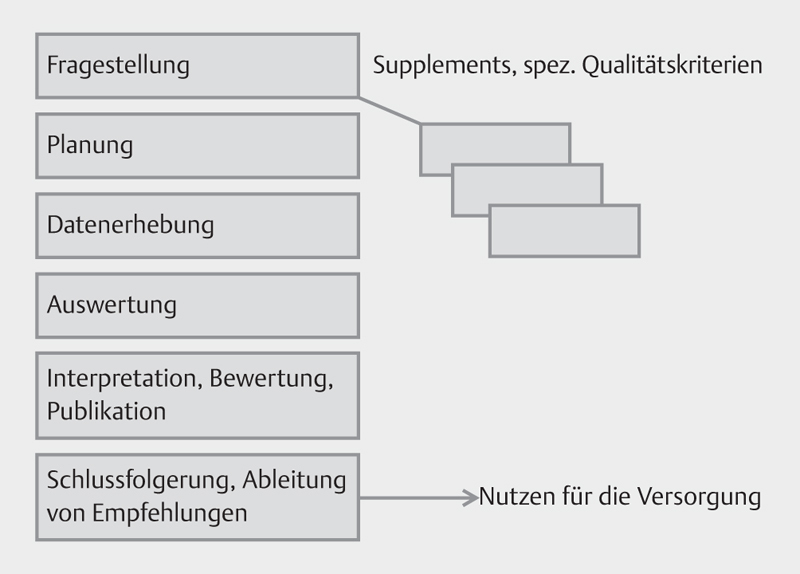
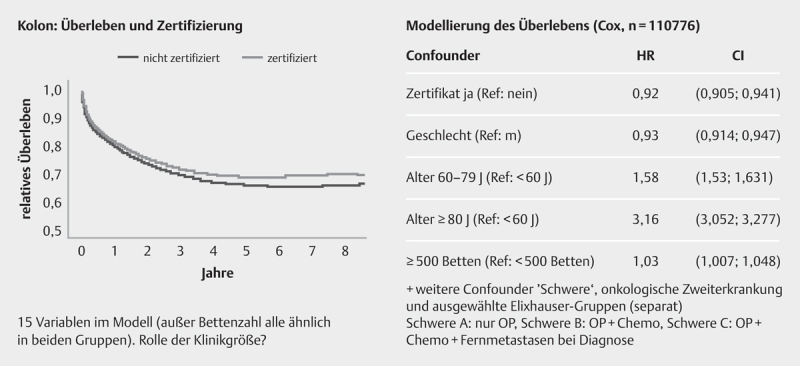
" There are more and more good reasons for using existing care data, with the focus in particular on the use of register data. The associated, clearly structured methodological procedure has so far been insufficiently combined, prepared and presented transparently. The German Network for Health Services Research (DNVF) has therefore set up an ad hoc commission for the use of routine practice data (RWE/RWD). The rapid report prepared by IQWiG on the scientific development of concepts for "generation of care-related data and their evaluation for the purpose of benefit assessment of medicinal products according to § 35a SGB V" is an essential step for the use of register data for the generation of evidence. The "Memorandum Register - Update 2019" published by DNVF 2020 also describes the requirements and methodological foundations of registers. Best practice examples from oncology, which are based on the uniform oncological basic data set for clinical cancer registration (§ 65c SGB V), show, for example, that guidelines can be checked and recommendations for guidelines and necessary interventions can be derived in the sense of knowledge-generating health services research using register data. At the same time, however, there are no clear quality requirements and structured formal and content-related procedures in the areas of data consolidation, data verification and the use of specific methods depending on the question at hand. The previously inconsistent requirements are to be revised and a method guide for the use of suited data is to be developed and published. The first chapter of the manual on methods of care-related data explains the objective and structure of the manual. It explains why the use of the term "routine practice data" is more effective than the use of the terms Real Word Data (RWD) and Real World Evidence (RWE). By avoiding the term "real world" it should be emphasized in particular that high-quality research can also be based on routine practice data (e. g. register-based comparative studies).
使用现有护理数据的理由越来越充分,尤其侧重于登记数据的使用。到目前为止,相关的、结构清晰的方法程序尚未得到充分整合、准备和透明呈现。因此,德国卫生服务研究网络(DNVF)成立了一个关于使用常规实践数据(RWE/RWD)的特别委员会。IQWiG就“根据《社会法典》第五编第35a条生成护理相关数据及其用于药品效益评估的评估概念的科学发展”编写的快速报告,是使用登记数据生成证据的关键一步。DNVF在2020年发布的《登记册备忘录 - 2019年更新》也描述了登记册的要求和方法基础。例如,基于临床癌症登记统一肿瘤学基础数据集(《社会法典》第五编第65c条)的肿瘤学最佳实践案例表明,在利用登记数据进行知识生成型卫生服务研究的意义上,可以检验指南并得出关于指南和必要干预措施的建议。然而,与此同时,在数据整合、数据验证以及根据手头问题使用特定方法等领域,没有明确的质量要求和结构化的形式及内容相关程序。之前不一致的要求将被修订,并将制定和发布一份关于使用合适数据的方法指南。护理相关数据方法手册的第一章解释了该手册的目的和结构。它解释了为什么使用“常规实践数据”一词比使用“真实世界数据”(RWD)和“真实世界证据”(RWE)更有效。通过避免使用“真实世界”一词,尤其应强调高质量研究也可以基于常规实践数据(例如基于登记册的比较研究)。