School of Electrical Engineering and Telecommunications, University of New South Wales, High St, Kensington, NSW 2052, Australia.
Data61, Commonwealth Scientific and Industrial Research Organisation (CSIRO), Marsfield, NSW 2122, Australia.
Sensors (Basel). 2020 Sep 18;20(18):5340. doi: 10.3390/s20185340.
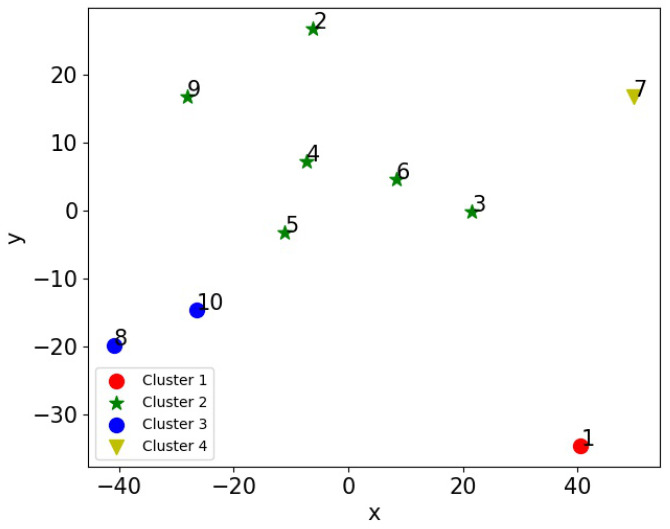
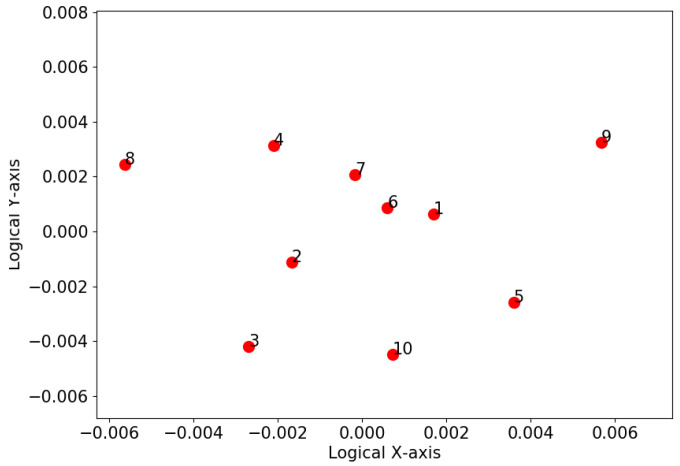
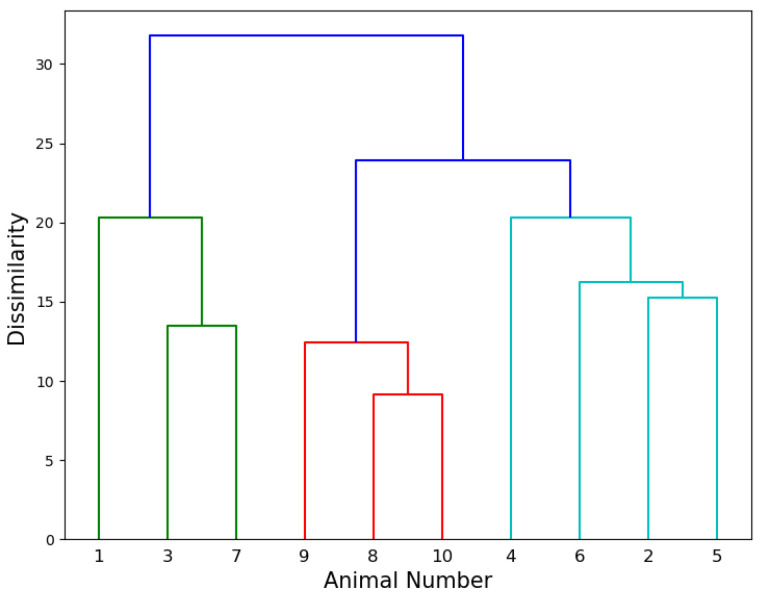
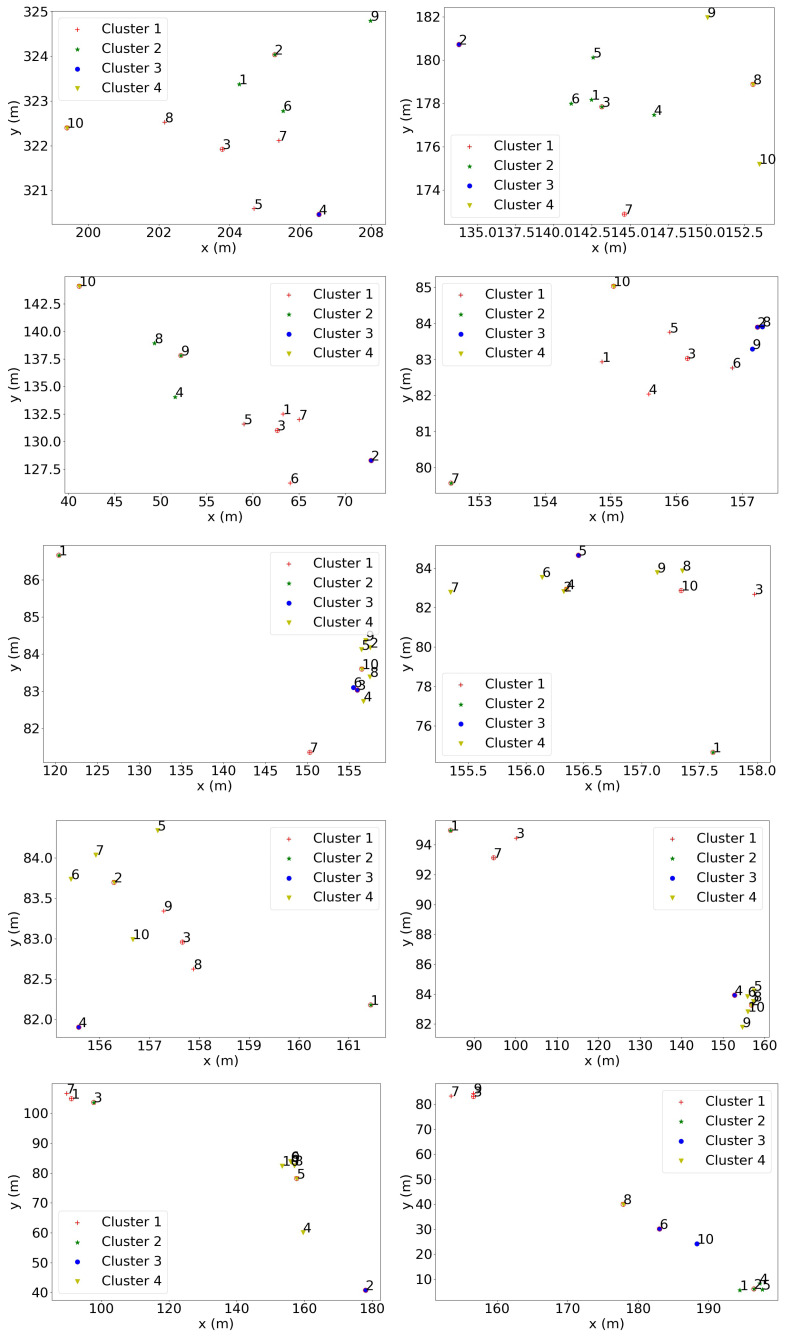
Understanding social interactions in livestock groups could improve management practices, but this can be difficult and time-consuming using traditional methods of live observations and video recordings. Sensor technologies and machine learning techniques could provide insight not previously possible. In this study, based on the animals' location information acquired by a new cooperative wireless localisation system, unsupervised machine learning approaches were performed to identify the social structure of a small group of cattle yearlings (n=10) and the social behaviour of an individual. The paper first defined the affinity between an animal pair based on the ranks of their distance. Unsupervised clustering algorithms were then performed, including K-means clustering and agglomerative hierarchical clustering. In particular, K-means clustering was applied based on logical and physical distance. By comparing the clustering result based on logical distance and physical distance, the leader animals and the influence of an individual in a herd of cattle were identified, which provides valuable information for studying the behaviour of animal herds. Improvements in device robustness and replication of this work would confirm the practical application of this technology and analysis methodologies.
了解家畜群体中的社会互动可以改善管理实践,但使用传统的现场观察和视频记录方法可能会很困难且耗时。传感器技术和机器学习技术可以提供以前不可能获得的见解。在这项研究中,基于新的合作式无线定位系统获取的动物位置信息,使用无监督机器学习方法来识别一小群牛犊(n=10)的社会结构和个体的社会行为。本文首先根据动物之间的距离等级定义了动物对之间的亲和度。然后执行了无监督聚类算法,包括 K 均值聚类和凝聚层次聚类。特别是,基于逻辑和物理距离应用了 K 均值聚类。通过比较基于逻辑距离和物理距离的聚类结果,确定了领头动物和个体在牛群中的影响力,这为研究动物群的行为提供了有价值的信息。设备稳健性的改进和这项工作的复制将证实这项技术和分析方法的实际应用。