Neuroscience Institute, Georgia State University, Atlanta, GA, 30303, USA.
Whitney Laboratory, University of Florida, St. Augustine, Florida, 32084, USA.
BMC Genomics. 2020 Sep 22;21(1):649. doi: 10.1186/s12864-020-07034-7.
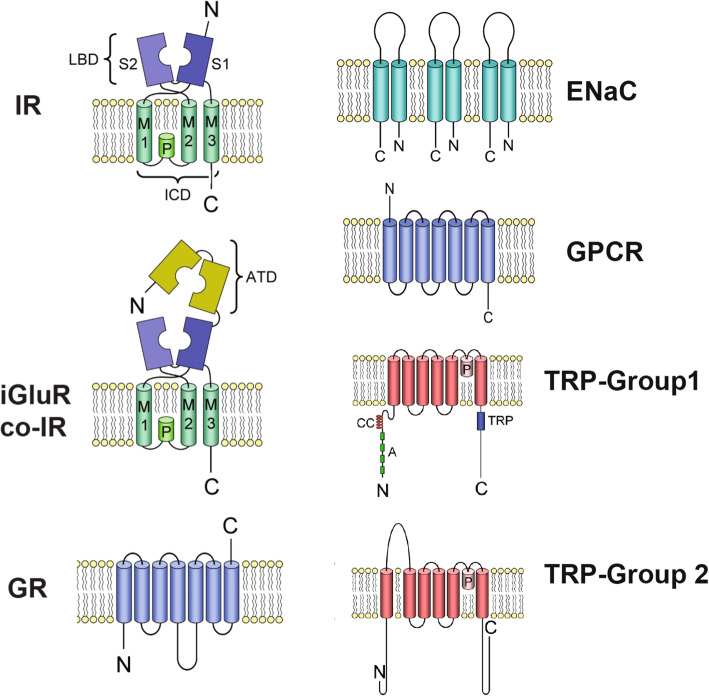
Crustaceans express several classes of receptor genes in their antennules, which house olfactory sensory neurons (OSNs) and non-olfactory chemosensory neurons. Transcriptomics studies reveal that candidate chemoreceptor proteins include variant Ionotropic Receptors (IRs) including both co-receptor IRs and tuning IRs, Transient Receptor Potential (TRP) channels, Gustatory Receptors, epithelial sodium channels, and class A G-protein coupled receptors (GPCRs). The Caribbean spiny lobster, Panulirus argus, expresses in its antennules nearly 600 IRs, 17 TRP channels, 1 Gustatory Receptor, 7 epithelial sodium channels, 81 GPCRs, 6 G proteins, and dozens of enzymes in signaling pathways. However, the specific combinatorial expression patterns of these proteins in single sensory neurons are not known for any crustacean, limiting our understanding of how their chemosensory systems encode chemical quality.
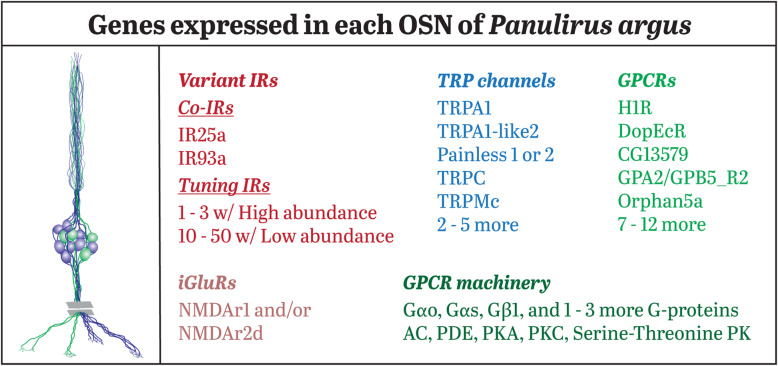
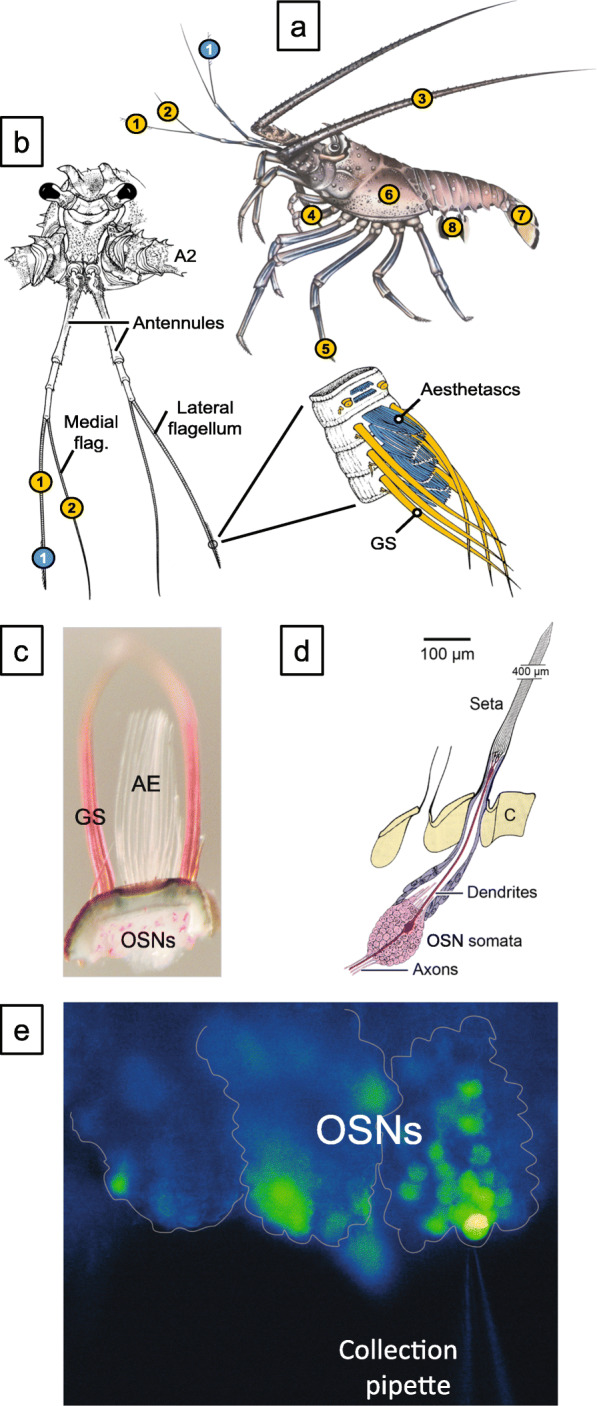
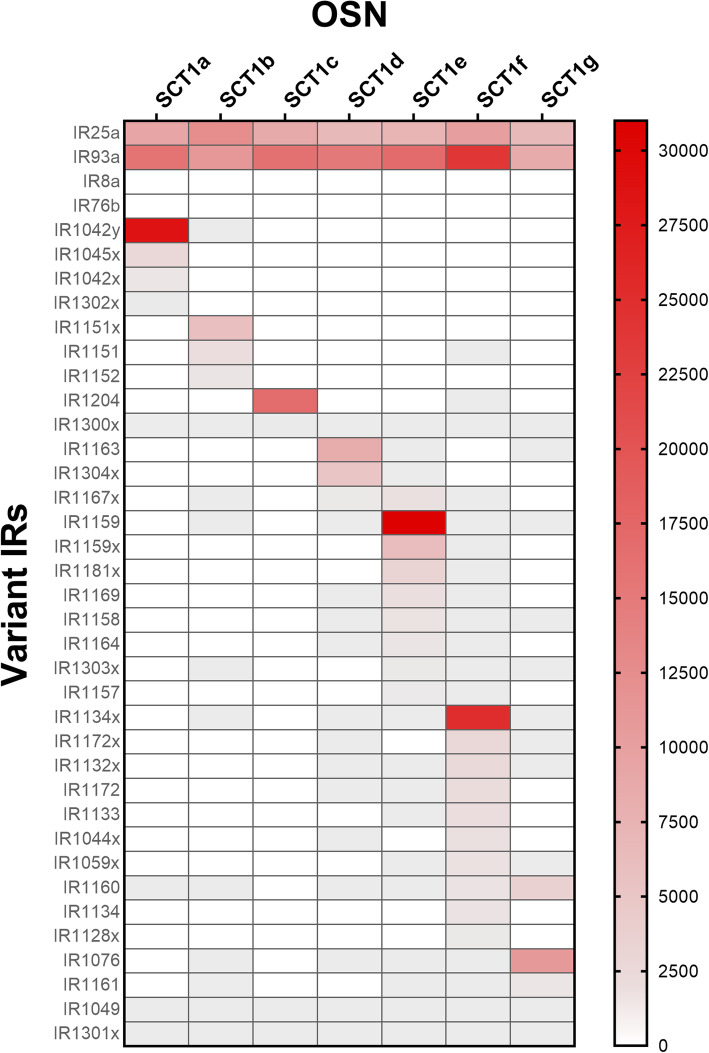
The goal of this study was to use transcriptomics to describe expression patterns of chemoreceptor genes in OSNs of P. argus. We generated and analyzed transcriptomes from 7 single OSNs, some of which were shown to respond to a food odor, as well as an additional 7 multicell transcriptomes from preparations containing few (2-4), several (ca. 15), or many (ca. 400) OSNs. We found that each OSN expressed the same 2 co-receptor IRs (IR25a, IR93a) but not the other 2 antennular coIRs (IR8a, IR76b), 9-53 tuning IRs but only one to a few in high abundance, the same 5 TRP channels plus up to 5 additional TRPs, 12-17 GPCRs including the same 5 expressed in every single cell transcriptome, the same 3 G proteins plus others, many enzymes in the signaling pathways, but no Gustatory Receptors or epithelial sodium channels. The greatest difference in receptor expression among the OSNs was the identity of the tuning IRs.
Our results provide an initial view of the combinatorial expression patterns of receptor molecules in single OSNs in one species of decapod crustacean, including receptors directly involved in olfactory transduction and others likely involved in modulation. Our results also suggest differences in receptor expression in OSNs vs. other chemosensory neurons.
甲壳类动物在其触角中表达几类受体基因,这些基因位于嗅觉感觉神经元(OSN)和非嗅觉化学感觉神经元中。转录组学研究表明,候选化学感受器蛋白包括变构离子型受体(IR),包括共受体 IR 和调谐 IR、瞬时受体电位(TRP)通道、味觉受体、上皮钠离子通道和 A 类 G 蛋白偶联受体(GPCR)。加勒比刺龙虾 Panulirus argus 在其触角中表达了近 600 个 IR、17 个 TRP 通道、1 个味觉受体、7 个上皮钠离子通道、81 个 GPCR、6 个 G 蛋白和信号通路中的数十种酶。然而,对于任何甲壳类动物来说,这些蛋白质在单个感觉神经元中的特定组合表达模式都尚不清楚,这限制了我们对其化学感觉系统如何编码化学质量的理解。
本研究的目的是使用转录组学来描述 P. argus OSN 中化学感受器基因的表达模式。我们从 7 个单个 OSN 中生成并分析了转录组,其中一些 OSN 对食物气味有反应,此外,还从包含 2-4 个、约 15 个或约 400 个 OSN 的 7 个多细胞转录组中进行了分析。我们发现,每个 OSN 都表达相同的 2 个共受体 IR(IR25a、IR93a),但不表达其他 2 个触角共 IR(IR8a、IR76b)、9-53 个调谐 IR,但只表达一个或几个高丰度的调谐 IR,相同的 5 个 TRP 通道,外加多达 5 个额外的 TRP,12-17 个 GPCR,包括在每个单细胞转录组中表达的相同的 5 个,相同的 3 个 G 蛋白,外加其他的,信号通路中的许多酶,但没有味觉受体或上皮钠离子通道。OSN 之间受体表达的最大差异是调谐 IR 的身份。
我们的研究结果提供了一种初步的观点,即一种十足目甲壳类动物单个 OSN 中受体分子的组合表达模式,包括直接参与嗅觉转导的受体和其他可能参与调节的受体。我们的研究结果还表明,OSN 与其他化学感觉神经元之间的受体表达存在差异。