lnner Mongolia Key Laboratory of Equine Genetics, Breeding and Reproduction; Scientific Observing and Experimental Station of Equine Genetics, Breeding and Reproduction, Ministry of Agriculture and Rural Affairs; Equine Research Center, College of animal science, Inner Mongolia Agricultural University, Zhao Wu Da Road, Hohhot, 306 010018, Inner Mongolia, China.
Inner Mongolia Center for Disease Comprehensive Control and Prevention, Hohhot, 010030, China.
BMC Genomics. 2020 Sep 22;21(1):651. doi: 10.1186/s12864-020-07064-1.
Different morphological structures of hairs having properties like defense and camouflage help animals survive in the wild environment. Horse is one of the rare kinds of animals with complex hair phenotypes in one individual; however, knowledge of horse hair follicle is limited in literature and their molecular basis remains unclear. Therefore, the investigation of horse hair follicle morphogenesis and pigmentogenesis attracts considerable interest.
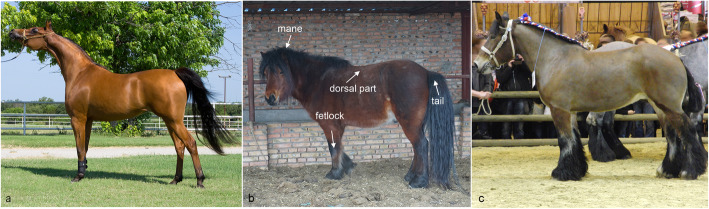
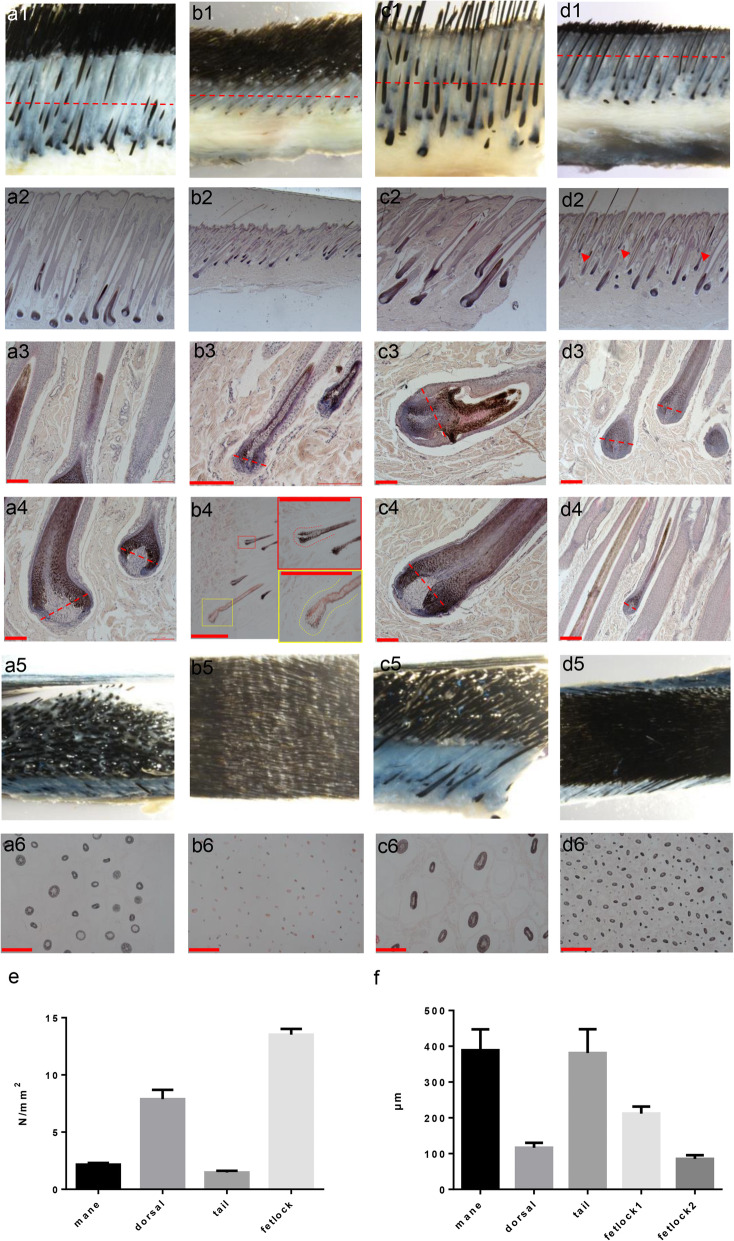
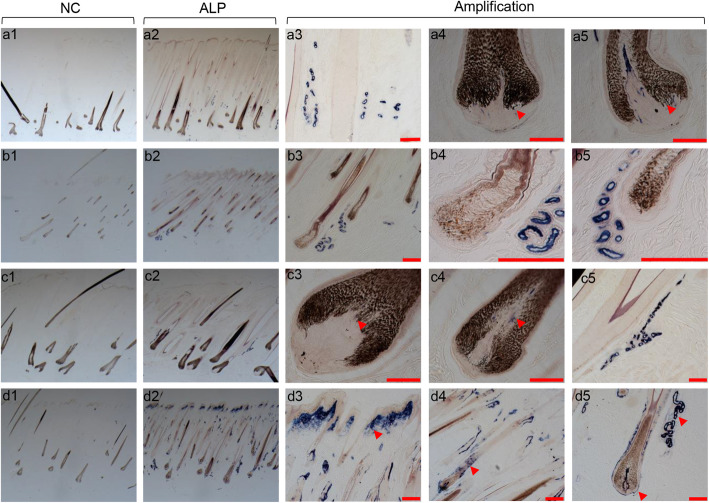
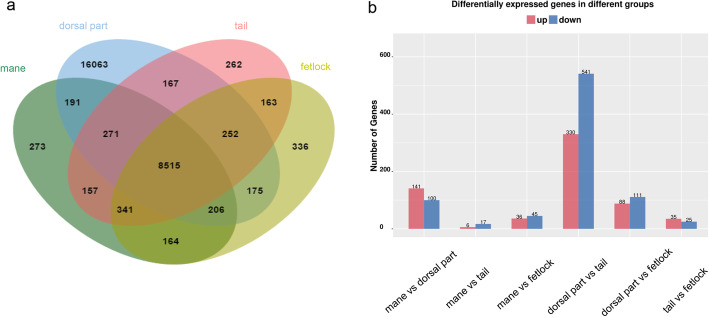
Histological studies revealed the morphology and pigment synthesis of hair follicles are different in between four different parts (mane, dorsal part, tail, and fetlock) of the bay Mongolian horse. Hair follicle size, density, and cycle are strongly associated with the activity of alkaline phosphatase (ALP). We observed a great difference in gene expression between the mane, tail, and fetlock, which had a greater different gene expression pattern compared with the dorsal part through transcriptomics. The development of the hair follicle in all four parts was related to angiogenesis, stem cells, Wnt, and IGF signaling pathways. Pigmentogenesis-related pathways were involved in their hair follicle pigment synthesis.
Hair follicle morphology and the activity of ALP differ among four body parts in bay Mongolian horse. Hair follicles of the different body parts of the are not synchronized in their cycle stages. GO terms show a regional specificity pattern between different skin parts of the bay Mongolian horse. These results provide an insight into the understanding of the biological mechanism of the hair follicle in other mammals.
具有防御和伪装等特性的不同形态结构的毛发帮助动物在野外环境中生存。马是个体中具有复杂毛发表型的稀有动物之一;然而,马毛囊的知识在文献中有限,其分子基础尚不清楚。因此,对马毛囊形态发生和色素生成的研究引起了相当大的兴趣。
组织学研究揭示了不同部位(马鬃、背部、尾部和跗关节)的蒙古马的毛囊形态和色素合成不同。毛囊大小、密度和周期与碱性磷酸酶(ALP)的活性密切相关。我们观察到马鬃、尾巴和跗关节之间的基因表达存在很大差异,通过转录组学发现,它们的基因表达模式与背部有很大不同。所有四个部位的毛囊发育都与血管生成、干细胞、Wnt 和 IGF 信号通路有关。色素生成相关通路参与了它们的毛囊色素合成。
在 bay Mongolian 马的四个身体部位中,毛囊形态和 ALP 的活性存在差异。不同身体部位的毛囊在其周期阶段不同步。GO 术语显示了 bay Mongolian 马不同皮肤部位之间的区域特异性模式。这些结果为理解其他哺乳动物的毛囊生物学机制提供了深入了解。