Department of Thoracic/Head and Neck Medical Oncology, The University of Texas MD Anderson Cancer Center, 1515 Holcombe Blvd, Houston, TX, 77030, USA.
Department of Molecular and Cellular Oncology, University of Texas MD Anderson Cancer Center, 1515 Holcombe Blvd, Houston, TX, 77030, USA.
Oncogene. 2020 Oct;39(43):6719-6732. doi: 10.1038/s41388-020-01463-0. Epub 2020 Sep 22.
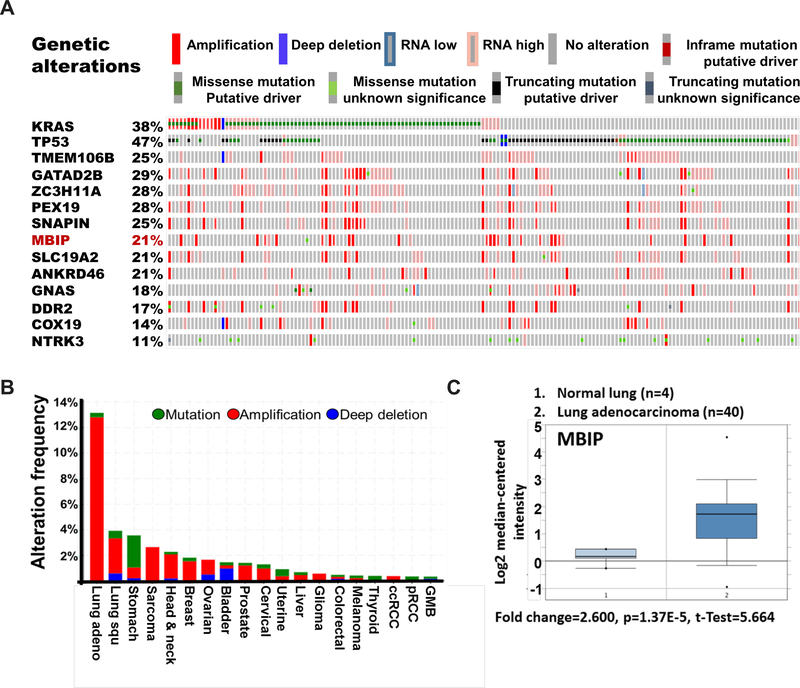
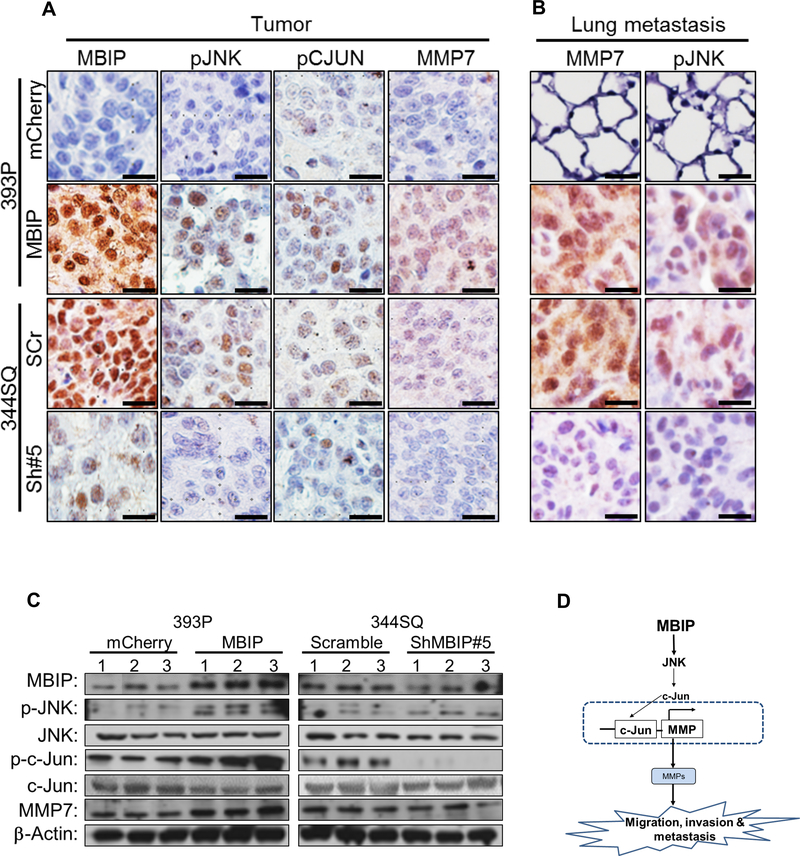
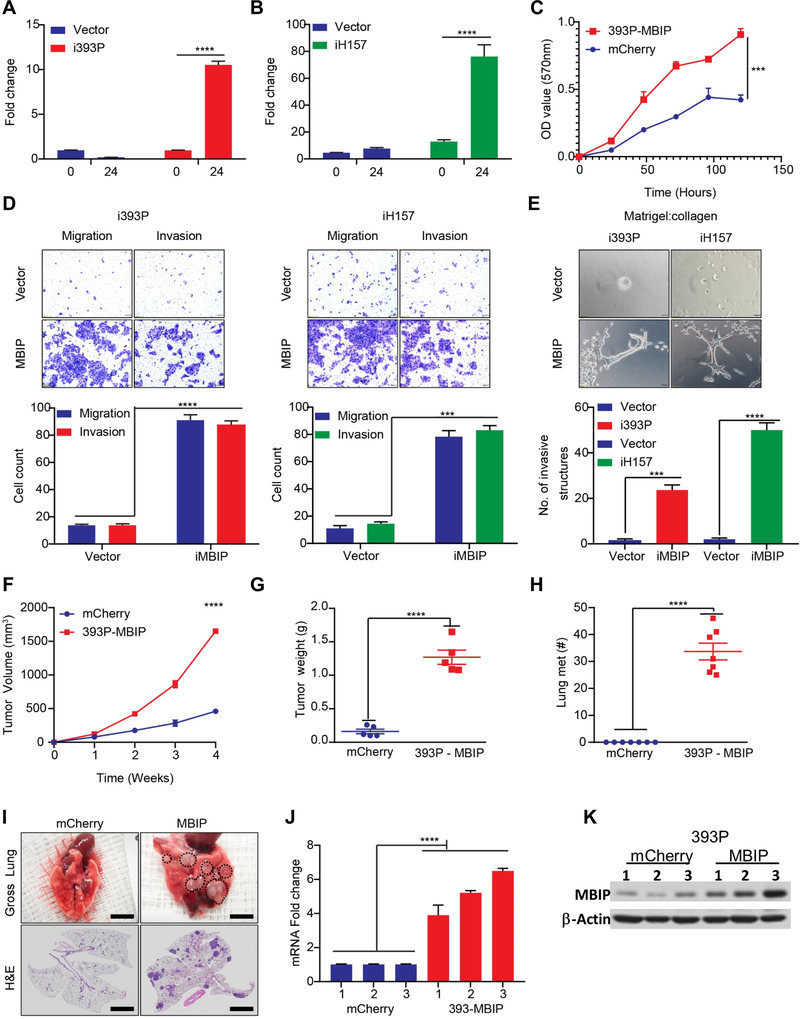
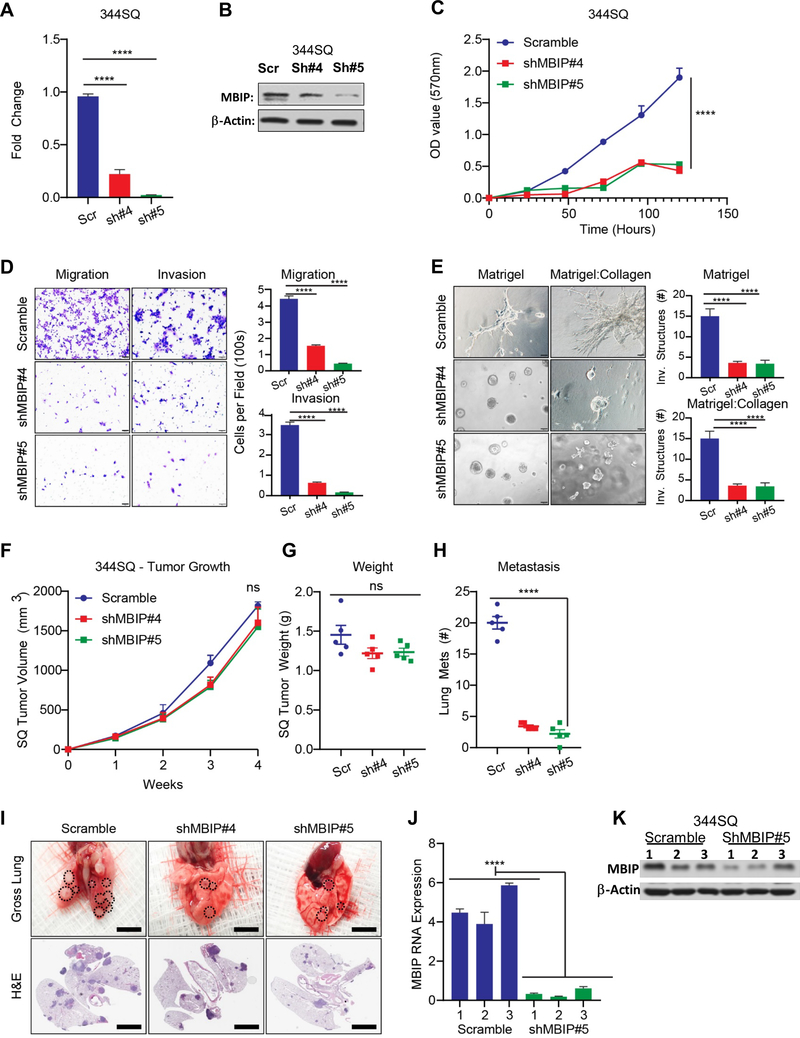
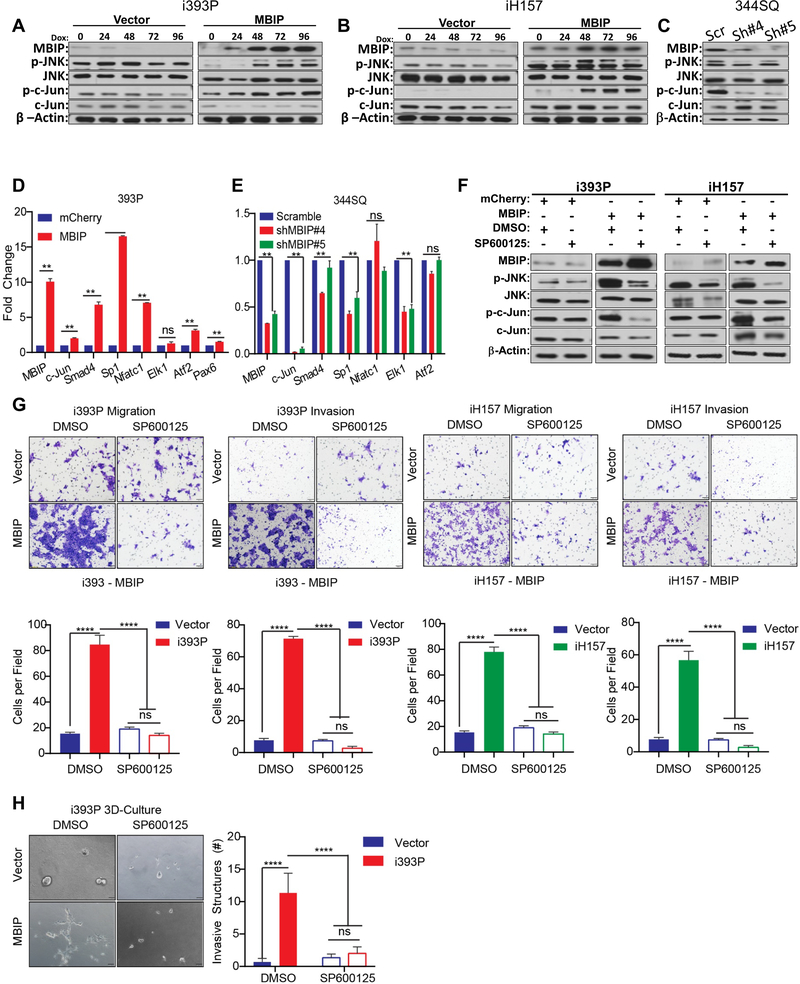
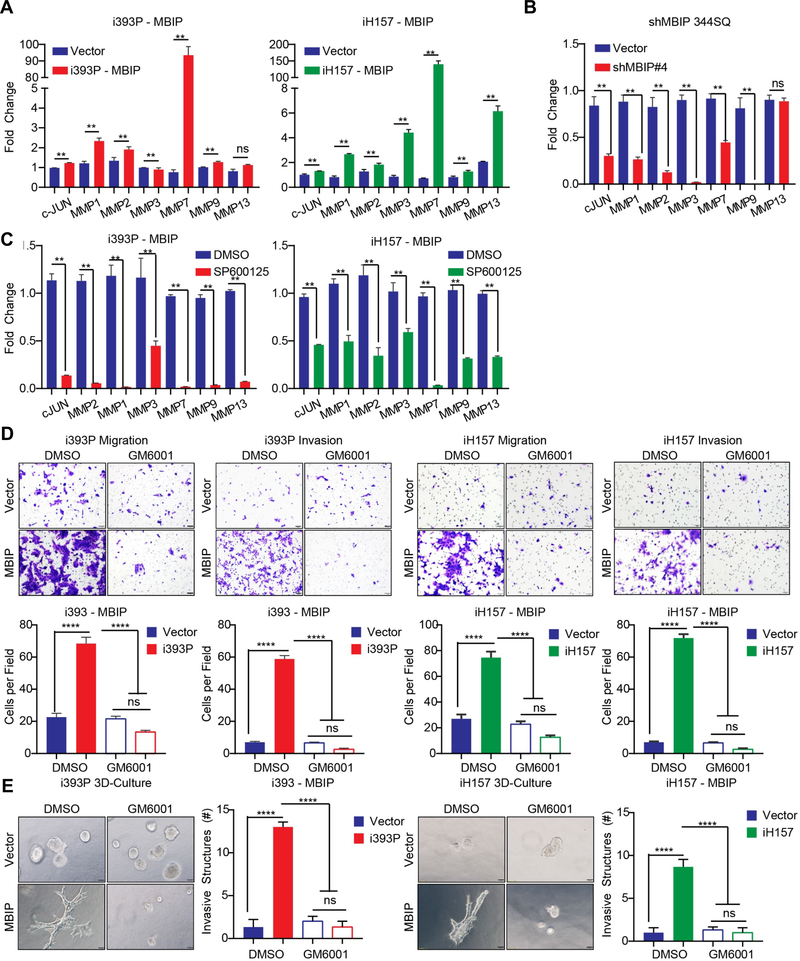
Metastasis is the cause for 90% of cancer-related mortalities. Identification of genetic drivers promoting dissemination of tumor cells may provide opportunities for novel therapeutic strategies. We previously reported an in vivo gain-of-function screen that identified ~30 genes with a functional role in metastasis promotion and characterized detailed mechanistic functions of two hits. In this study, we characterized the contribution of one of the identified genes, MBIP (MAP3K12 binding inhibitory protein), towards driving tumor invasion and metastasis. We demonstrate that expression of MBIP significantly enhances the cellular proliferation, migration and invasion of NSCLC cells in vitro and metastasis in vivo. We functionally characterized that MBIP mediates activation of the JNK pathway and induces expression of matrix metalloproteinases (MMPs), which are necessary for the invasive and metastatic phenotype. Our findings establish a novel mechanistic role of MBIP as a driver of NSCLC progression and metastasis.
转移是 90%癌症相关死亡的原因。鉴定促进肿瘤细胞扩散的遗传驱动因素可能为新的治疗策略提供机会。我们之前报道了一项体内功能获得性筛选,该筛选鉴定了约 30 个在促进转移方面具有功能作用的基因,并对其中两个命中基因的详细机制功能进行了特征描述。在这项研究中,我们描述了鉴定基因之一 MBIP(MAP3K12 结合抑制蛋白)在驱动肿瘤侵袭和转移中的作用。我们证明 MBIP 的表达显著增强了 NSCLC 细胞在体外的细胞增殖、迁移和侵袭以及体内的转移。我们从功能上证实,MBIP 介导 JNK 途径的激活,并诱导基质金属蛋白酶(MMPs)的表达,这对于侵袭和转移表型是必需的。我们的研究结果确立了 MBIP 作为 NSCLC 进展和转移的驱动因素的新的机制作用。