Jang Bum-Sup, Park Andrew J, Jeon Seung Hyuck, Kim Il Han, Lim Do Hoon, Park Shin-Hyung, Lee Ju Hye, Chang Ji Hyun, Cho Kwan Ho, Kim Jin Hee, Sunwoo Leonard, Choi Seung Hong, Kim In Ah
Department of Radiation Oncology, Seoul National University Bundang Hospital, Seongnam 13620, Korea.
Artificial Intelligence Research and Development Laboratory, SELVAS AI Incorporation, Seoul 08594, Korea.
Cancers (Basel). 2020 Sep 21;12(9):2706. doi: 10.3390/cancers12092706.
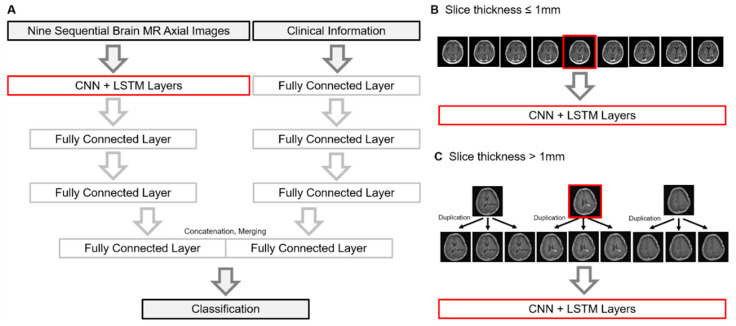
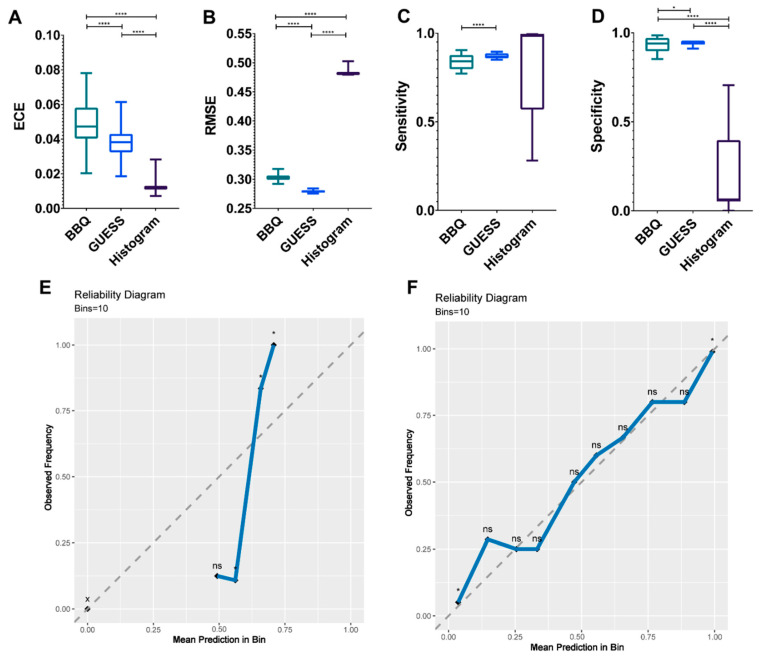
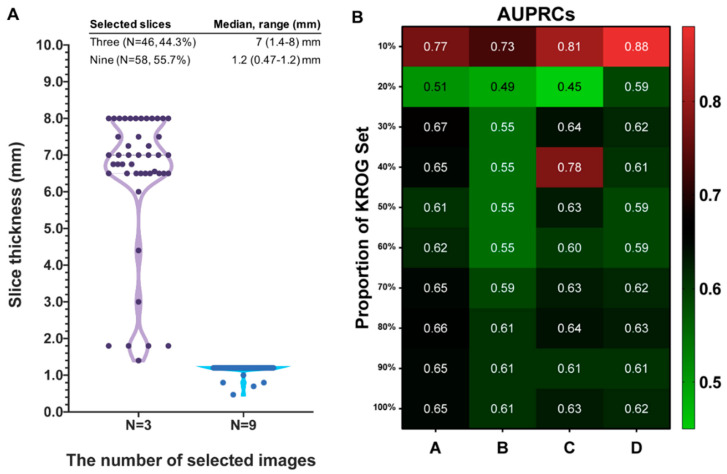
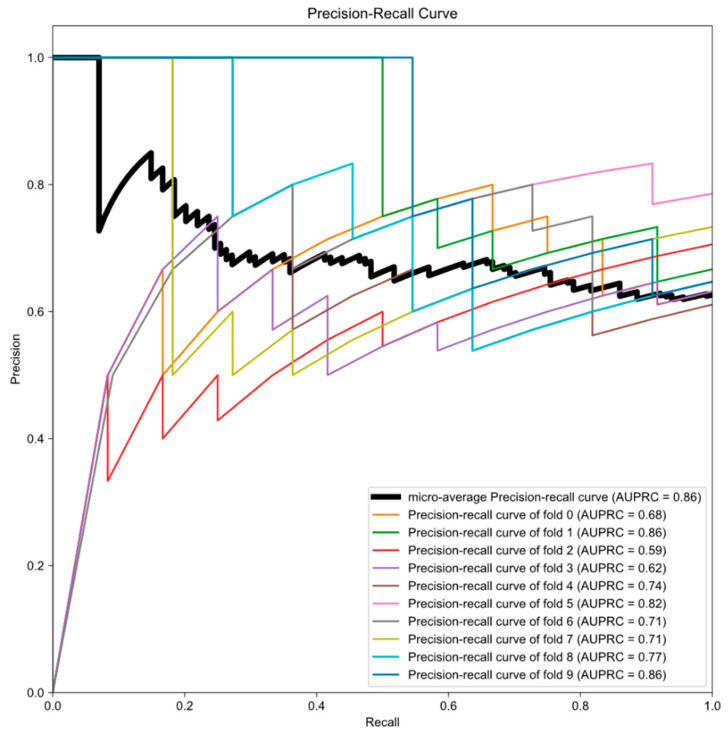
Some patients with glioblastoma show a worsening presentation in imaging after concurrent chemoradiation, even when they receive gross total resection. Previously, we showed the feasibility of a machine learning model to predict pseudoprogression (PsPD) versus progressive disease (PD) in glioblastoma patients. The previous model was based on the dataset from two institutions (termed as the Seoul National University Hospital (SNUH) dataset, = 78). To test this model in a larger dataset, we collected cases from multiple institutions that raised the problem of PsPD vs. PD diagnosis in clinics (Korean Radiation Oncology Group (KROG) dataset, = 104). The dataset was composed of brain MR images and clinical information. We tested the previous model in the KROG dataset; however, that model showed limited performance. After hyperparameter optimization, we developed a deep learning model based on the whole dataset ( = 182). The 10-fold cross validation revealed that the micro-average area under the precision-recall curve (AUPRC) was 0.86. The calibration model was constructed to estimate the interpretable probability directly from the model output. After calibration, the final model offers clinical probability in a web-user interface.
一些胶质母细胞瘤患者在同步放化疗后影像学表现恶化,即使他们接受了全切除。此前,我们展示了一种机器学习模型在预测胶质母细胞瘤患者假性进展(PsPD)与疾病进展(PD)方面的可行性。先前的模型基于两个机构的数据集(称为首尔国立大学医院(SNUH)数据集,n = 78)。为了在更大的数据集中测试该模型,我们收集了多个机构中在临床上面临PsPD与PD诊断问题的病例(韩国放射肿瘤学组(KROG)数据集,n = 104)。该数据集由脑部MR图像和临床信息组成。我们在KROG数据集中测试了先前的模型;然而,该模型表现有限。经过超参数优化后,我们基于整个数据集(n = 182)开发了一个深度学习模型。10折交叉验证显示,精确召回率曲线下的微平均面积(AUPRC)为0.86。构建校准模型以直接从模型输出估计可解释的概率。校准后,最终模型在网络用户界面中提供临床概率。