Romani Annalisa, Campo Margherita, Urciuoli Silvia, Marrone Giulia, Noce Annalisa, Bernini Roberta
PHYTOLAB (Pharmaceutical, Cosmetic, Food Supplement, Technology and Analysis), DiSIA, University of Florence, Florence, Italy.
PhD School of Applied Medical, Surgical Sciences, University of Rome Tor Vergata, Rome, Italy.
Front Nutr. 2020 Aug 21;7:120. doi: 10.3389/fnut.2020.00120. eCollection 2020.
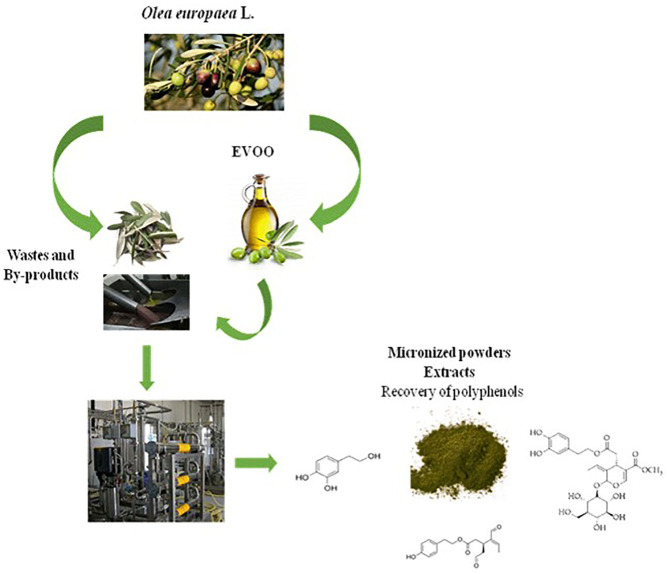
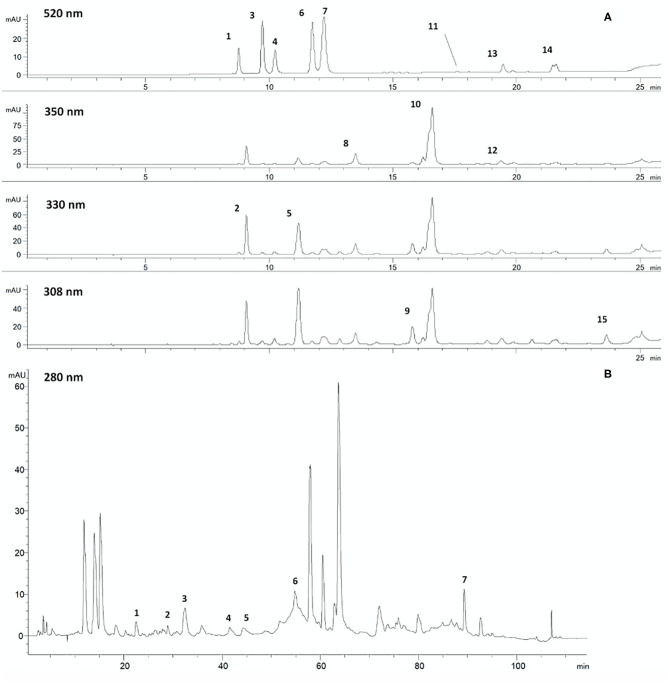
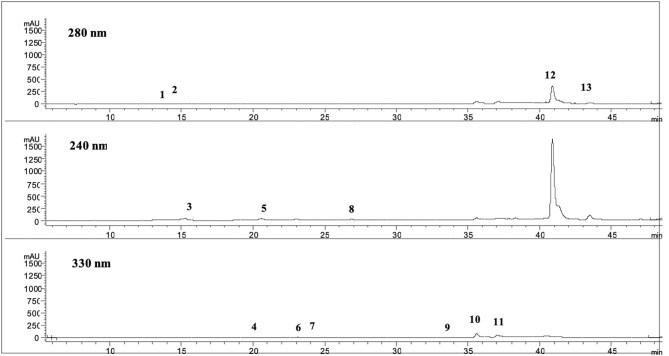
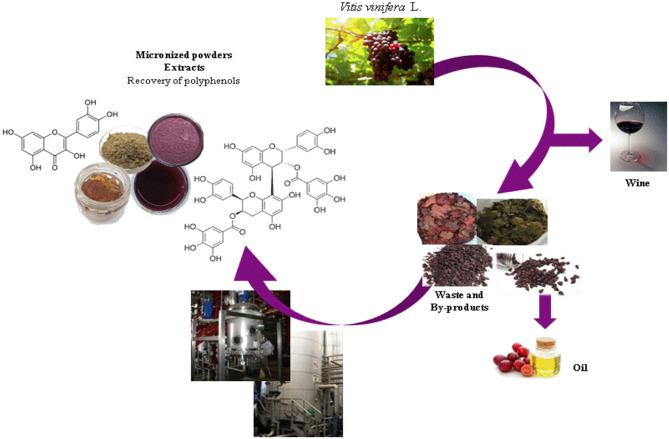
In the last few years, literature data have reported that health status is related to the consumption of foods rich in polyphenols, bioactive compounds found in the plant world, in particular in vegetables and fruit. These pieces of scientific evidence have led to an increase in the demand for functional foods and drinks enriched in polyphenols, so that plant materials are more and more requested. The availability of food and agricultural wastes has adverse effects on the economy, environment, and human health. On the other hand, these materials are a precious source of bioactive compounds as polyphenols. Their recovery and reuse from wastes are according to the circular economy strategy, which has introduced the "zero waste concept." However, the process is convenient from an economic and environmental point of view only if the final products are standardized and obtained using sustainable and industrial technologies. In this panorama, this paper describes an industrial and sustainable platform for the production of micronized powders and extracts enriched in polyphenols from L. and L. wastes that are useful for food, cosmetics, and pharmaceuticals sectors. The platform is based on drying plant materials, extraction of polyphenols through membrane technologies with water, and, when necessary, the concentration of the final fractions under vacuum evaporation. All powders and extracts were characterized by high-performance liquid chromatography-diode array detector-mass spectrometry analysis to define the qualitative and quantitative content of bioactive compounds and insure their standardization and reproducibility. The chromatographic profiles evidenced the presence of secoiridoids, flavones, flavonols, anthocyanins, hydroxycinnamic acids, catechins, and condensed tannins. An overview of the biological activities of the main polyphenols present in L. and L. powders and extracts is reported because of biomedical applications.
在过去几年中,文献数据报道健康状况与富含多酚的食物消费有关,多酚是植物界中发现的生物活性化合物,特别是在蔬菜和水果中。这些科学证据导致对富含多酚的功能性食品和饮料的需求增加,因此对植物原料的需求也越来越大。食品和农业废弃物的存在对经济、环境和人类健康产生不利影响。另一方面,这些材料是多酚等生物活性化合物的宝贵来源。根据引入“零废物概念”的循环经济战略,从废物中回收和再利用这些材料。然而,只有当最终产品标准化并采用可持续和工业技术获得时,该过程才在经济和环境方面具有便利性。在此背景下,本文描述了一个工业且可持续的平台,用于从[植物名称1]和[植物名称2]废弃物中生产富含多酚的微粉和提取物,这些产品可用于食品、化妆品和制药行业。该平台基于干燥植物材料,通过膜技术用水提取多酚,并在必要时在真空蒸发下浓缩最终馏分。所有粉末和提取物均通过高效液相色谱 - 二极管阵列检测器 - 质谱分析进行表征,以确定生物活性化合物的定性和定量含量,并确保其标准化和可重复性。色谱图表明存在裂环烯醚萜类、黄酮类、黄酮醇类、花青素类、羟基肉桂酸类、儿茶素类和缩合单宁类。由于生物医学应用,本文报道了[植物名称1]和[植物名称2]粉末及提取物中主要多酚的生物活性概述。