Jain Shubham, Yassin Mohammed Ahmad, Fuoco Tiziana, Liu Hailong, Mohamed-Ahmed Samih, Mustafa Kamal, Finne-Wistrand Anna
Department of Fibre and Polymer Technology, KTH Royal Institute of Technology, Stockholm, Sweden.
Tissue Engineering Group, Department of Clinical Dentistry, Faculty of Medicine, University of Bergen, Hordaland, Norway.
J Tissue Eng. 2020 Sep 16;11:2041731420954316. doi: 10.1177/2041731420954316. eCollection 2020 Jan-Dec.
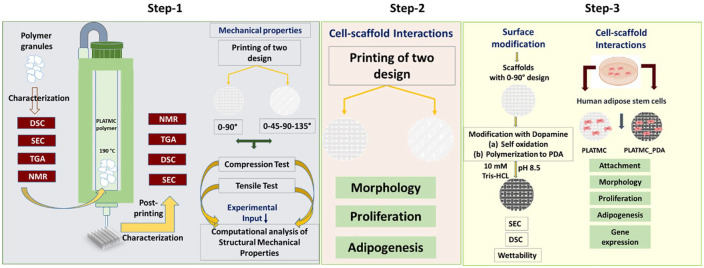
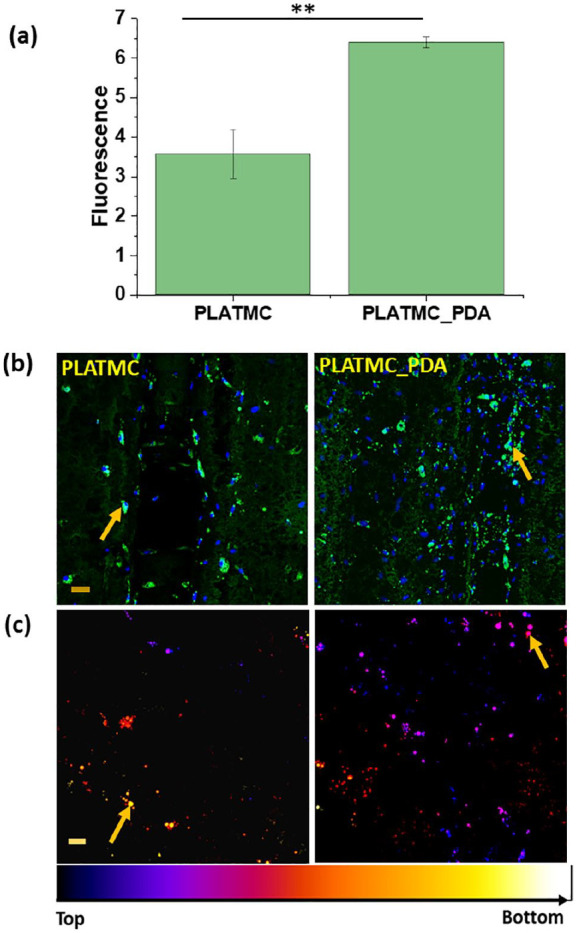
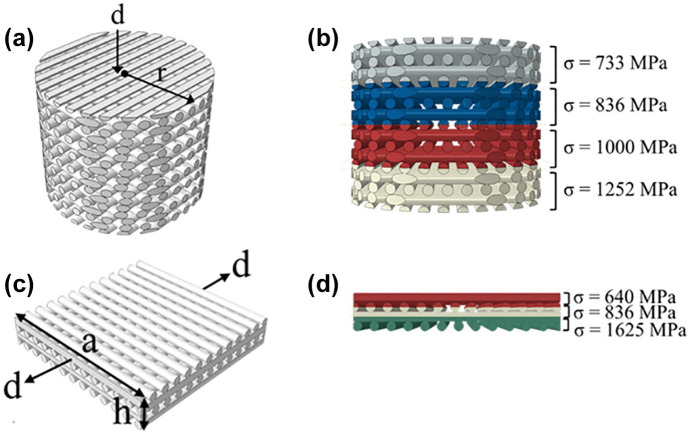
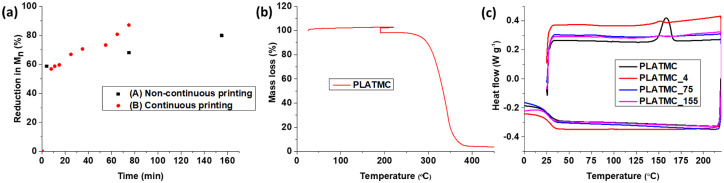
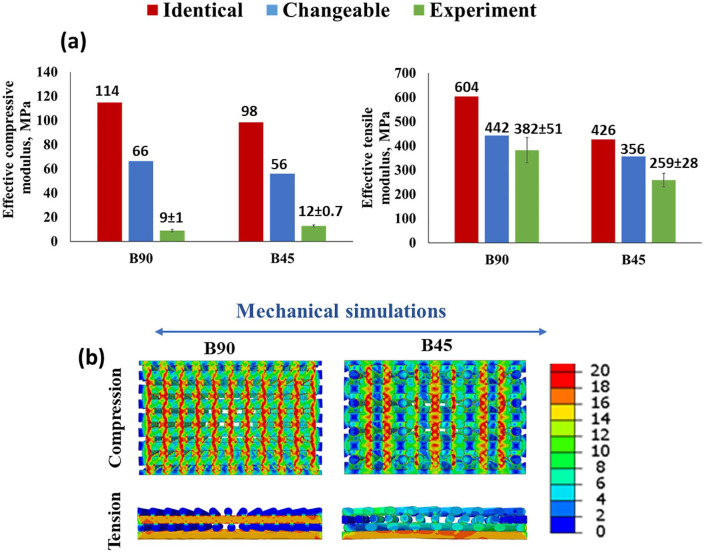
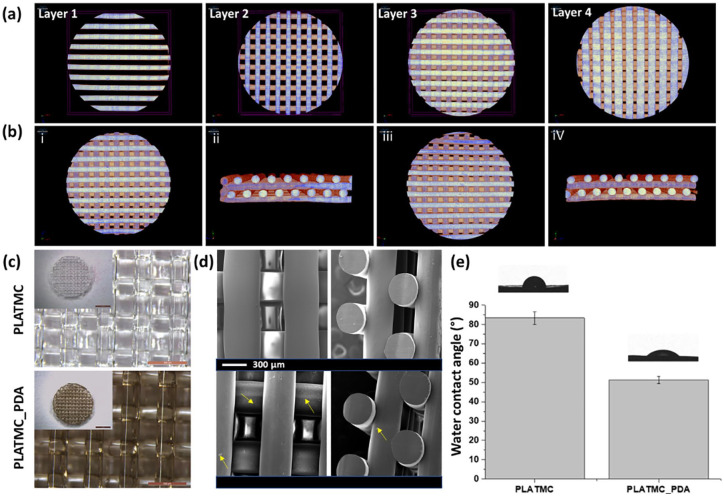
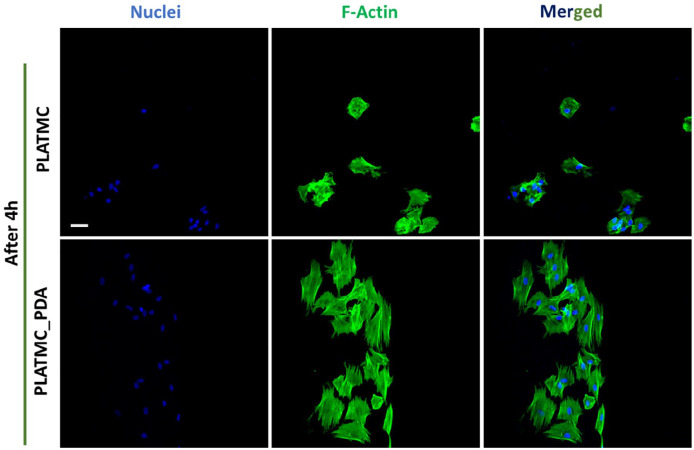
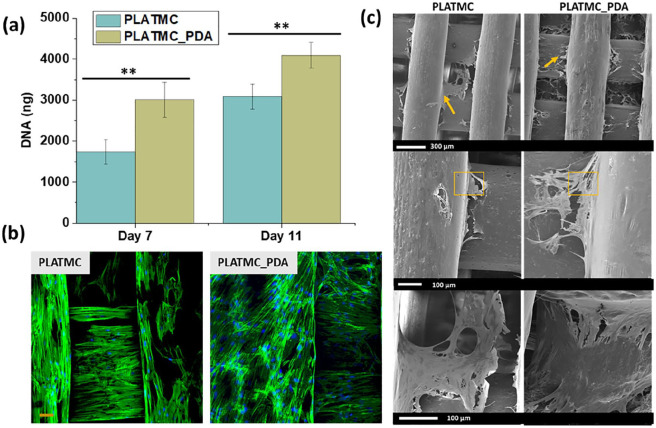
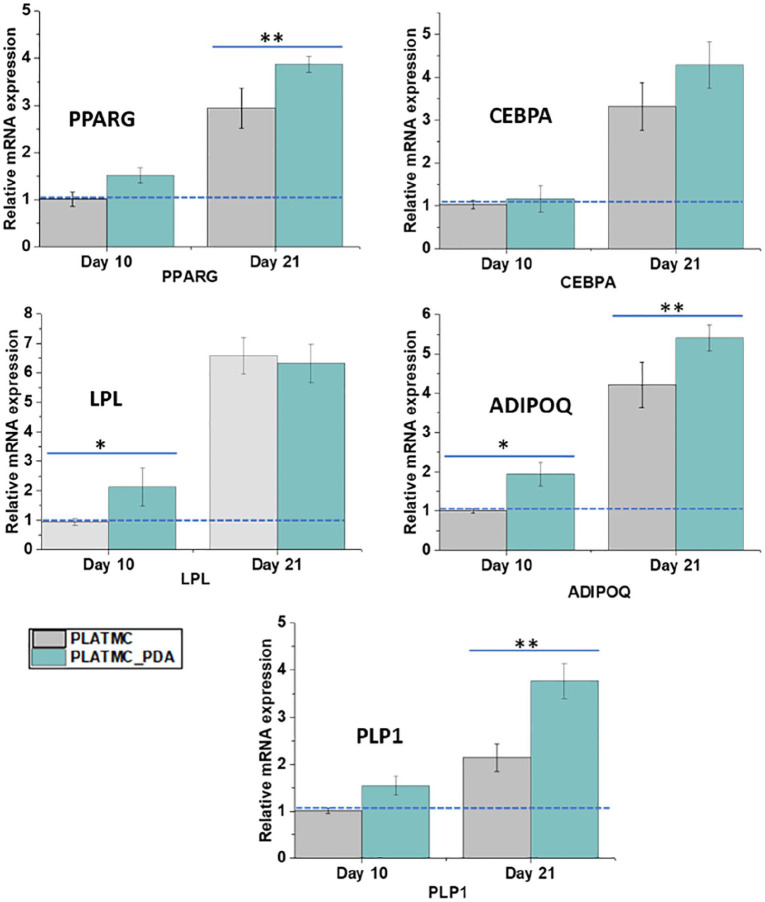
We present a solution to regenerate adipose tissue using degradable, soft, pliable 3D-printed scaffolds made of a medical-grade copolymer coated with polydopamine. The problem today is that while printing, the medical grade copolyesters degrade and the scaffolds become very stiff and brittle, being not optimal for adipose tissue defects. Herein, we have used high molar mass poly(L-lactide-co-trimethylene carbonate) (PLATMC) to engineer scaffolds using a direct extrusion-based 3D printer, the 3D Bioplotter. Our approach was first focused on how the printing influences the polymer and scaffold's mechanical properties, then on exploring different printing designs and, in the end, on assessing surface functionalization. Finite element analysis revealed that scaffold's mechanical properties vary according to the gradual degradation of the polymer as a consequence of the molar mass decrease during printing. Considering this, we defined optimal printing parameters to minimize material's degradation and printed scaffolds with different designs. We subsequently functionalized one scaffold design with polydopamine coating and conducted in vitro cell studies. Results showed that polydopamine augmented stem cell proliferation and adipogenic differentiation owing to increased surface hydrophilicity. Thus, the present research show that the medical grade PLATMC based scaffolds are a potential candidate towards the development of implantable, resorbable, medical devices for adipose tissue regeneration.
我们提出了一种利用由涂覆有聚多巴胺的医用级共聚物制成的可降解、柔软、柔韧的3D打印支架来再生脂肪组织的解决方案。如今的问题在于,在打印过程中,医用级共聚酯会降解,支架会变得非常坚硬且易碎,这对于脂肪组织缺损并非最佳选择。在此,我们使用了高摩尔质量的聚(L-丙交酯-共-三亚甲基碳酸酯)(PLATMC),通过基于直接挤出的3D打印机——3D生物绘图仪来制造支架。我们的方法首先聚焦于打印如何影响聚合物和支架的机械性能,接着探索不同的打印设计,最后评估表面功能化。有限元分析表明,由于打印过程中摩尔质量降低导致聚合物逐渐降解,支架的机械性能会有所不同。考虑到这一点,我们定义了最佳打印参数以最小化材料的降解,并打印了不同设计的支架。随后,我们用聚多巴胺涂层对一种支架设计进行了功能化处理,并开展了体外细胞研究。结果表明,聚多巴胺由于增加了表面亲水性,促进了干细胞增殖和成脂分化。因此,本研究表明,基于医用级PLATMC的支架是开发用于脂肪组织再生的可植入、可吸收医疗设备的潜在候选材料。