Macrophage Homeostasis, School of Biochemistry and Immunology, Trinity Biomedical Sciences Institute, Trinity College Dublin, Dublin, Ireland.
Front Cell Infect Microbiol. 2020 Aug 25;10:446. doi: 10.3389/fcimb.2020.00446. eCollection 2020.
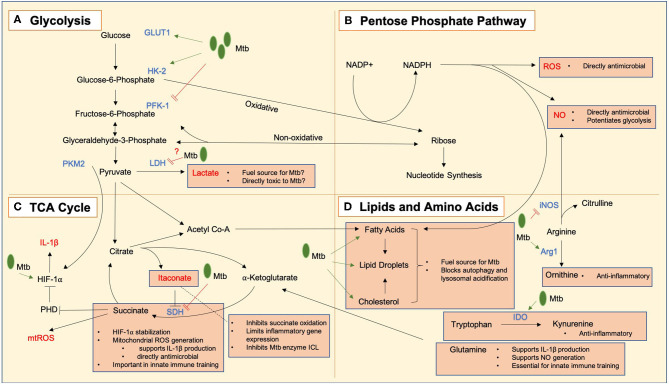
The cells of the immune system are reliant on their metabolic state to launch effective responses to combat mycobacterial infections. The bioenergetic profile of the cell determines the molecular fuels and metabolites available to the host, as well as to the bacterial invader. How cells utilize the nutrients in their microenvironment-including glucose, lipids and amino acids-to sustain their functions and produce antimicrobial metabolites, and how mycobacteria exploit this to evade the immune system is of great interest. Changes in flux through metabolic pathways alters the intermediate metabolites present. These intermediates are beginning to be recognized as key modulators of immune signaling as well as direct antimicrobial effectors, and their impact on tuberculosis infection is becoming apparent. A better understanding of how metabolism impacts immunity to Mycobacterium tuberculosis and how it is regulated and thus can be manipulated will open the potential for novel therapeutic interventions and vaccination strategies.
免疫系统的细胞依赖于其代谢状态来发起有效的反应,以对抗分枝杆菌感染。细胞的生物能量特征决定了宿主和细菌入侵物可用的分子燃料和代谢物。细胞如何利用其微环境中的营养物质(包括葡萄糖、脂质和氨基酸)来维持其功能并产生抗微生物代谢物,以及分枝杆菌如何利用这一点来逃避免疫系统,这是非常有趣的。代谢途径中通量的变化改变了存在的中间代谢物。这些中间代谢物开始被认为是免疫信号的关键调节剂,也是直接的抗微生物效应物,它们对结核病感染的影响变得明显。更好地了解代谢如何影响对结核分枝杆菌的免疫,以及它是如何被调节的,因此可以被操纵,这将为新的治疗干预和疫苗接种策略开辟潜力。