Institute of Inflammation and Ageing, College of Medical and Dental Sciences, University of Birmingham, Birmingham, U.K.
Translational Immunology Laboratory, Institut Pasteur, Paris, France.
Biochem J. 2021 Sep 17;478(17):3157-3178. doi: 10.1042/BCJ20210263.
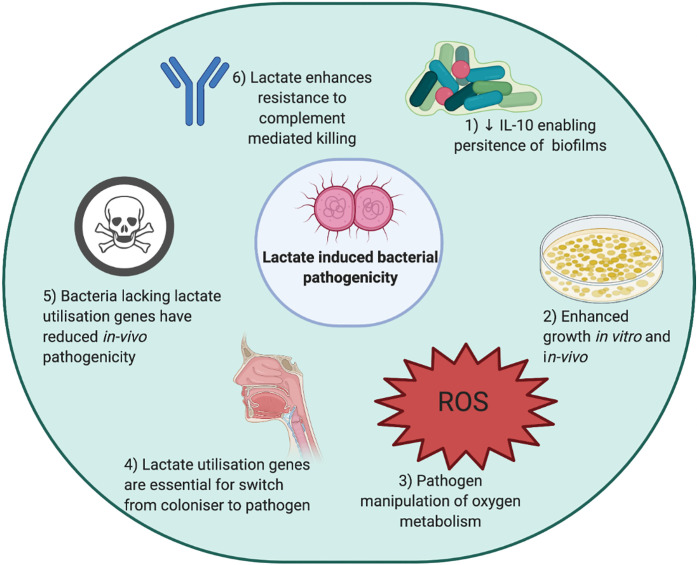
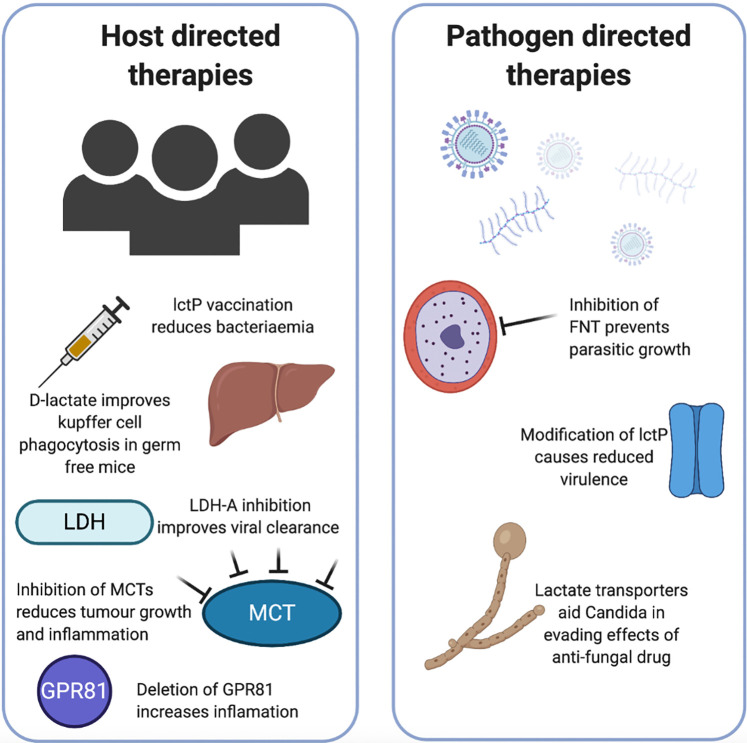
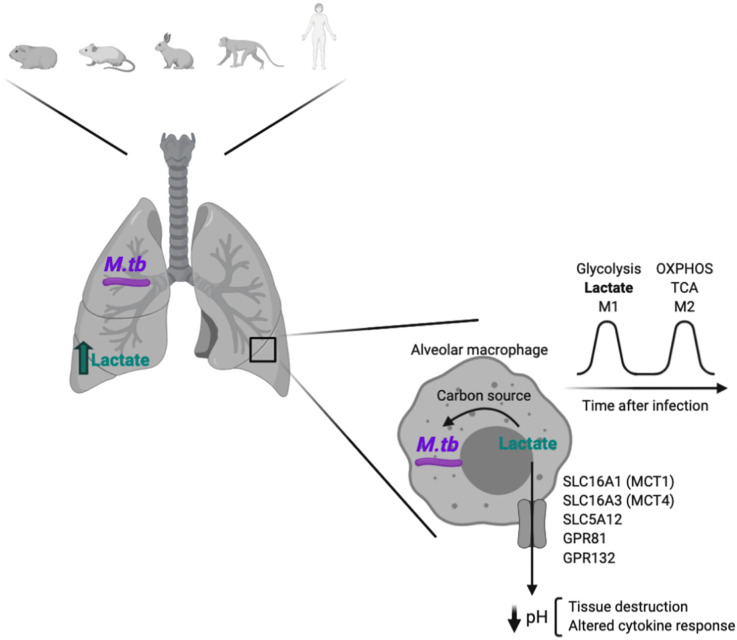
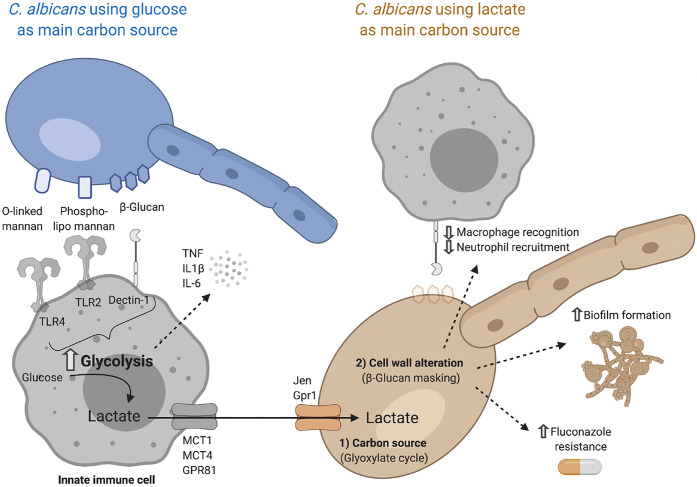
Lactate is the main product generated at the end of anaerobic glycolysis or during the Warburg effect and its role as an active signalling molecule is increasingly recognised. Lactate can be released and used by host cells, by pathogens and commensal organisms, thus being essential for the homeostasis of host-microbe interactions. Infection can alter this intricate balance, and the presence of lactate transporters in most human cells including immune cells, as well as in a variety of pathogens (including bacteria, fungi and complex parasites) demonstrates the importance of this metabolite in regulating host-pathogen interactions. This review will cover lactate secretion and sensing in humans and microbes, and will discuss the existing evidence supporting a role for lactate in pathogen growth and persistence, together with lactate's ability to impact the orchestration of effective immune responses. The ubiquitous presence of lactate in the context of infection and the ability of both host cells and pathogens to sense and respond to it, makes manipulation of lactate a potential novel therapeutic strategy. Here, we will discuss the preliminary research that has been carried out in the context of cancer, autoimmunity and inflammation.
乳酸是无氧糖酵解或瓦博格效应末期产生的主要产物,其作为一种活性信号分子的作用正日益得到认可。乳酸可以被宿主细胞、病原体和共生生物释放和利用,因此对宿主-微生物相互作用的动态平衡至关重要。感染可以改变这种复杂的平衡,而大多数人类细胞(包括免疫细胞)以及各种病原体(包括细菌、真菌和复杂寄生虫)中都存在乳酸转运蛋白,这表明这种代谢物在调节宿主-病原体相互作用方面的重要性。本文综述了人类和微生物中乳酸的分泌和感知,并讨论了现有证据支持乳酸在病原体生长和持续存在中的作用,以及乳酸影响有效免疫反应协调的能力。在感染的情况下,乳酸普遍存在,宿主细胞和病原体都能够感知和对其作出反应,这使得操纵乳酸成为一种潜在的新型治疗策略。在这里,我们将讨论在癌症、自身免疫和炎症背景下开展的初步研究。