Vector Biology Laboratory, Department of Entomology, Kansas State University, Manhattan, KS, United States.
Laboratory of Malaria and Vector Research, National Institute of Allergies and Infectious Diseases (NIAID/NIH), Rockville, MD, United States.
Front Cell Infect Microbiol. 2020 Aug 31;10:455. doi: 10.3389/fcimb.2020.00455. eCollection 2020.
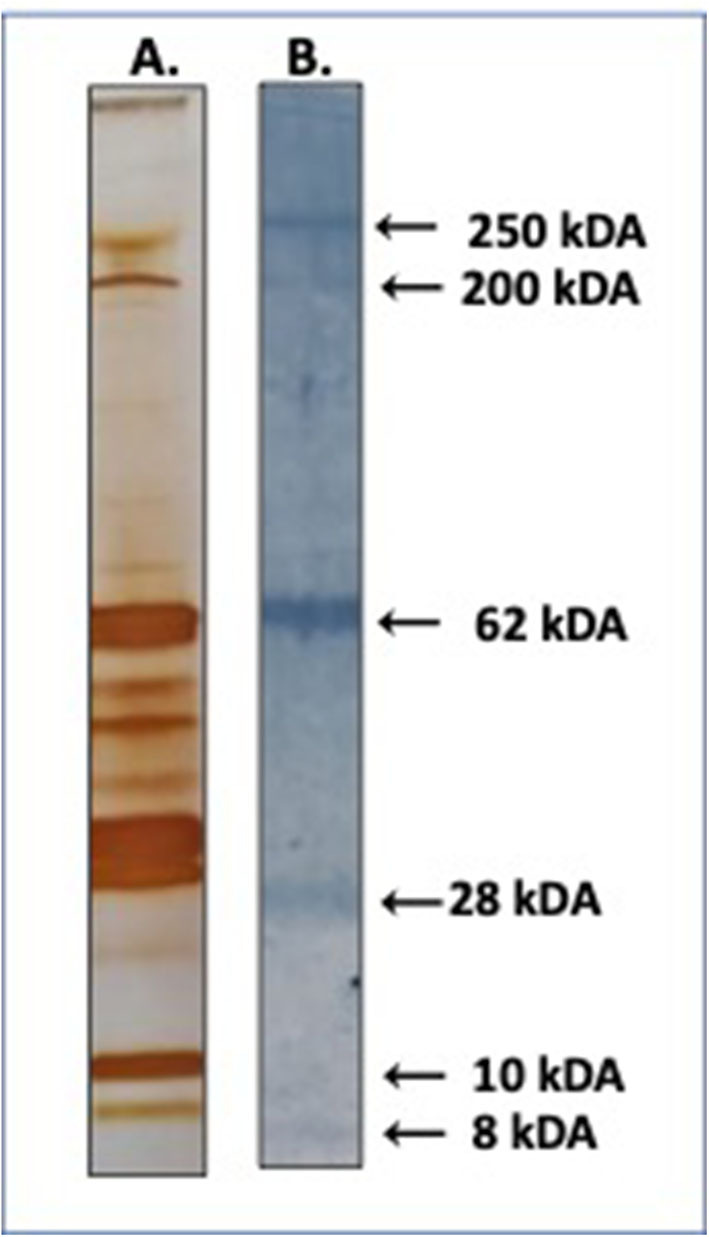
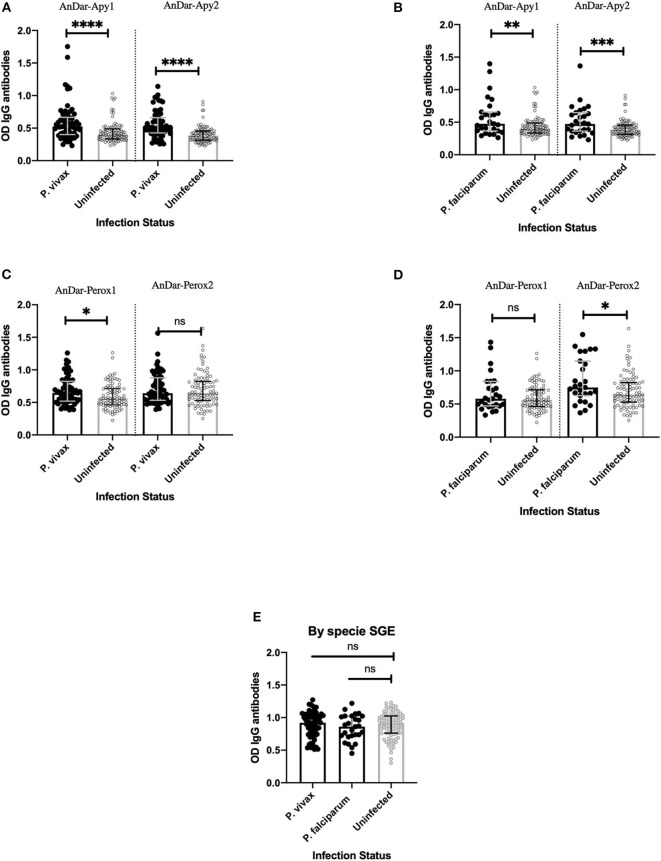
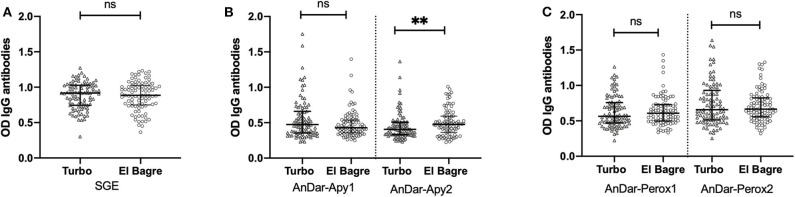
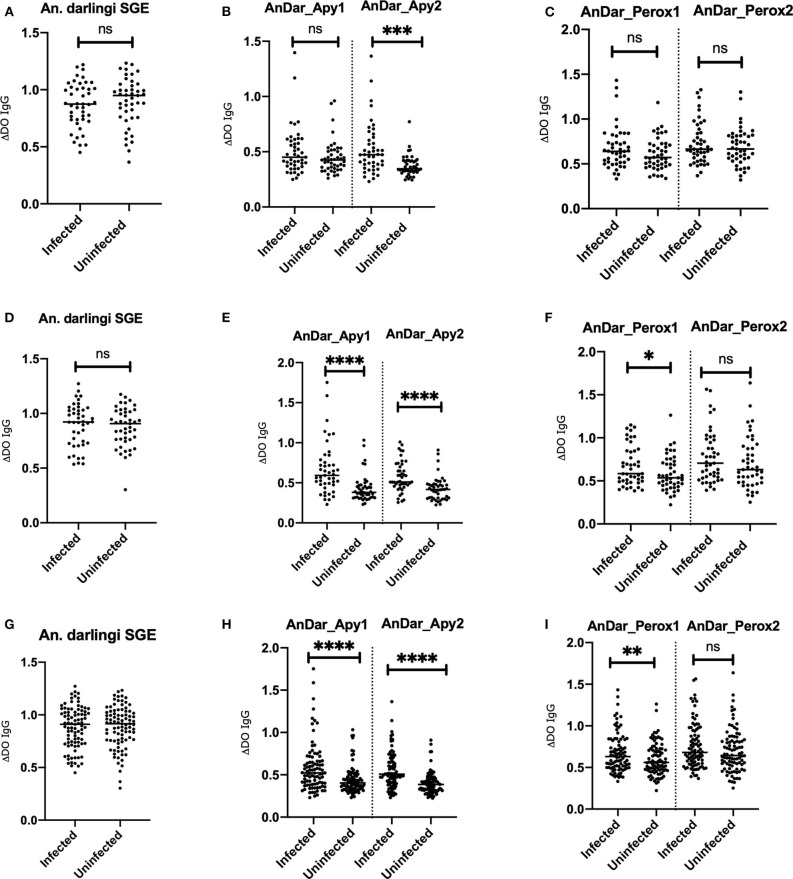
Malaria is still an important vector-borne disease in the New World tropics. Despite the recent decline in malaria due to infection in Africa, a rise in infections has been detected in several low malaria transmission areas in Latin America. One of the main obstacles in the battle against malaria is the lack of innovative tools to assess malaria transmission risk, and the behavioral plasticity of one of the main malaria vectors in Latin America, . We used human IgG antibodies against mosquito salivary gland proteins as a measure of disease risk. Whole salivary gland antigen (SGA) from mosquitoes was used as antigen in Western blot experiments, in which a ~65 kDa protein was visualized as the main immunogenic band and sent for sequencing by mass spectrometry. Apyrase and peroxidase peptides were designed and used as antigens in an ELISA-based test to measure human IgG antibody responses in people with different clinical presentations of malaria. Liquid chromatography-mass spectrometry revealed 17 proteins contained in the ~65 kDa band, with an apyrase and a peroxidase as the two most abundant proteins. Detection of IgG antibodies against salivary antigens by ELISA revealed a significant higher antibody levels in people with malaria infection when compared to uninfected volunteers using the AnDar_Apy1 and AnDar_Apy2 peptides. We also detected a significant positive correlation between the anti-peptides IgG levels and antibodies against the and antigens PvMSP1 and PfMSP1. Odd ratios suggest that people with higher IgG antibodies against the apyrase peptides were up to five times more likely to have a malaria infection. Antibodies against salivary peptides from salivary gland proteins may be used as biomarkers for malaria risk.
疟疾仍然是新世界热带地区一种重要的媒介传播疾病。尽管非洲疟疾感染导致疟疾发病率最近有所下降,但在拉丁美洲几个疟疾低传播地区,已检测到感染率上升。在抗击疟疾的斗争中,主要障碍之一是缺乏评估疟疾传播风险的创新工具,以及拉丁美洲主要疟疾传播媒介之一 的行为可塑性。 我们使用针对蚊子唾液腺蛋白的人 IgG 抗体作为疾病风险的衡量标准。使用 蚊子的全唾液腺抗原 (SGA) 作为 Western blot 实验中的抗原,其中约 65 kDa 的蛋白质被可视化作为主要免疫原性带,并通过质谱法进行测序。设计了 Apyrase 和过氧化物酶肽,并用作 ELISA 基于测试的抗原,以测量具有不同疟疾临床表现的人群中的人 IgG 抗体反应。 液相色谱-质谱法揭示了 ~65 kDa 带中包含的 17 种蛋白质,其中 Apyrase 和过氧化物酶是最丰富的两种蛋白质。通过 ELISA 检测针对唾液抗原的 IgG 抗体,与未感染志愿者相比,使用 AnDar_Apy1 和 AnDar_Apy2 肽,发现感染疟疾的人 IgG 抗体水平显著升高。我们还发现针对肽的 IgG 水平与针对 PvMSP1 和 PfMSP1 的 和 抗原之间存在显著正相关。比值比表明,针对 Apyrase 肽的 IgG 抗体水平较高的人感染疟疾的可能性高达五倍。 针对 唾液腺蛋白唾液肽的抗体可用作疟疾风险的生物标志物。