Department of Experimental Biology, Faculty of Science, Masaryk University, Brno, Czech Republic.
Department of Free Radical Pathophysiology, Institute of Biophysics, Academy of Sciences of the Czech Republic, Brno, Czech Republic.
Sci Rep. 2020 Sep 28;10(1):15922. doi: 10.1038/s41598-020-73074-4.
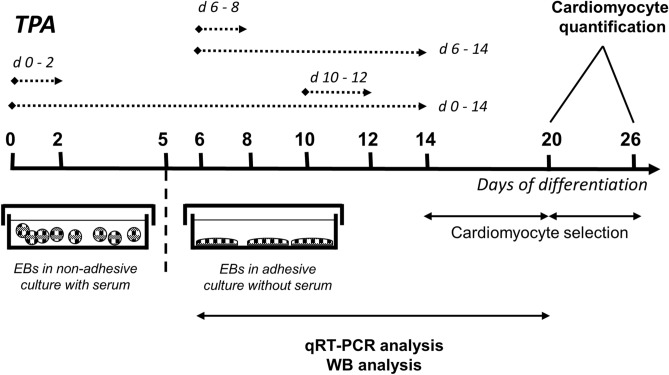
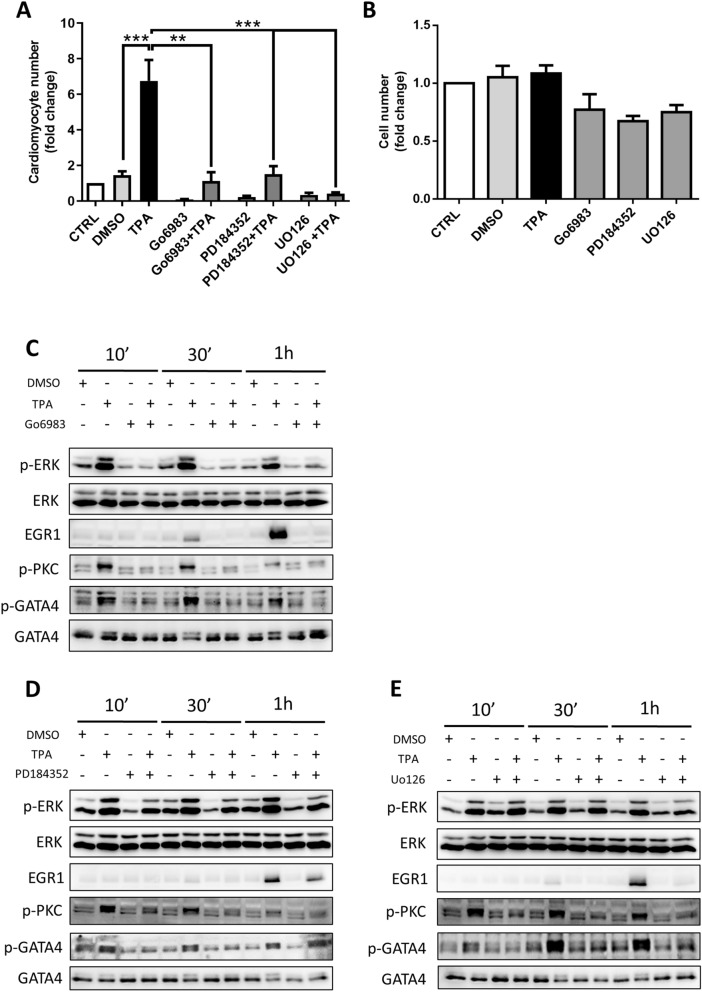
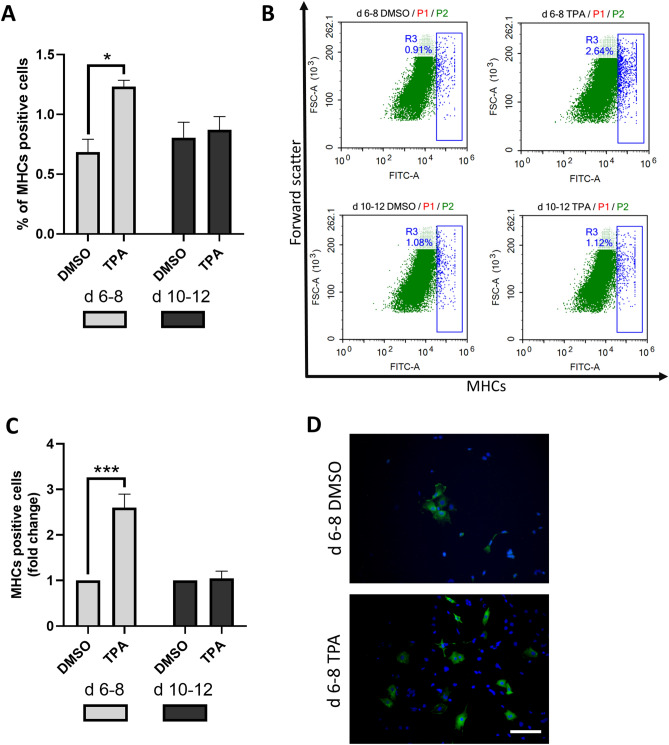
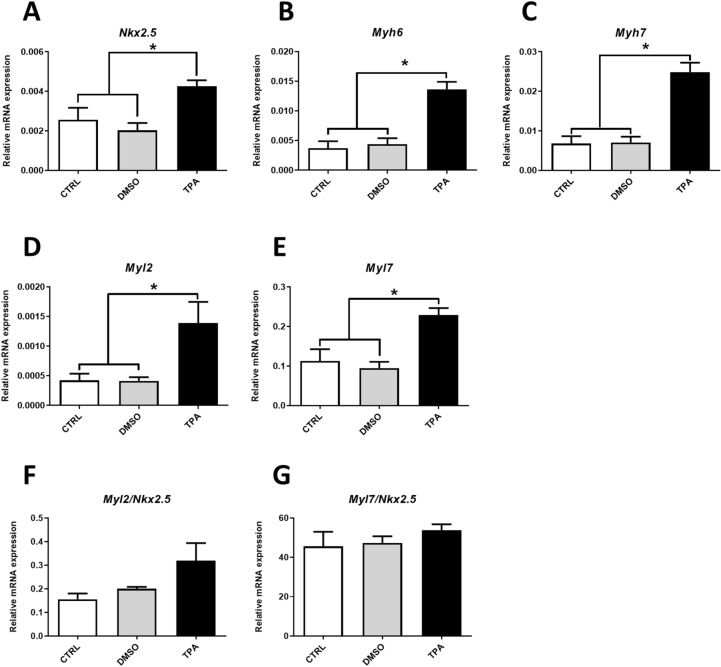
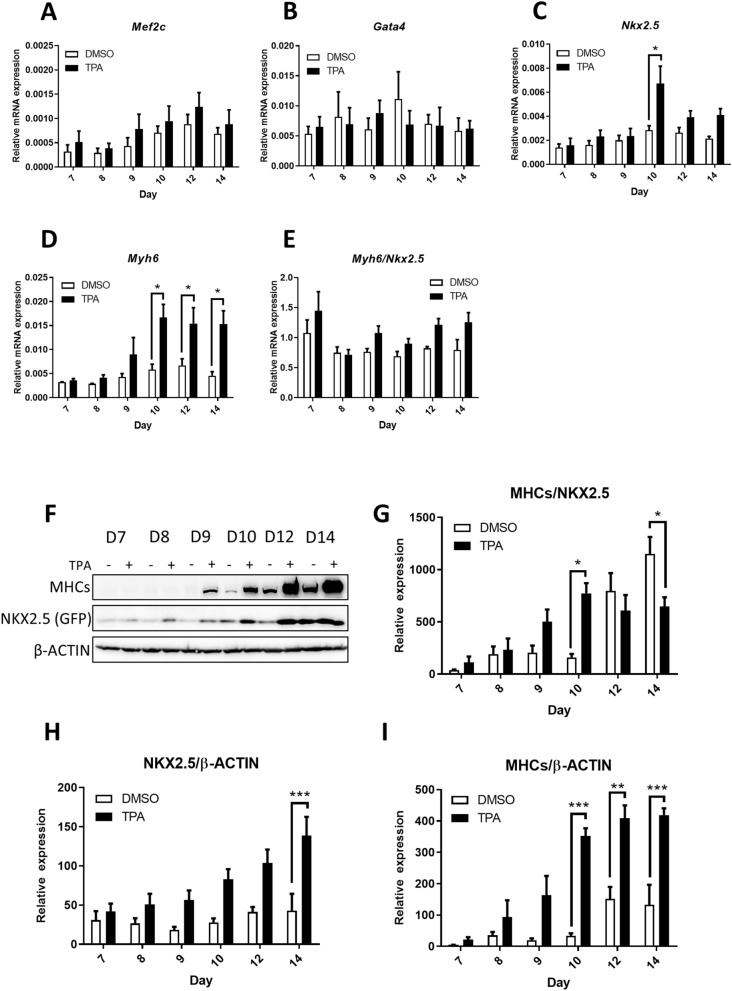
12-O-Tetradecanoylphorbol-13-acetate (TPA) is the most widely used diacylglycerol (DAG) mimetic agent and inducer of protein kinase C (PKC)-mediated cellular response in biomedical studies. TPA has been proposed as a pluripotent cell differentiation factor, but results obtained have been inconsistent. In the present study we show that TPA can be applied as a cardiomyogenesis-promoting factor for the differentiation of mouse embryonic stem (mES) cells in vitro. The mechanism of TPA action is mediated by the induction of extracellular signal-regulated kinase (ERK) activity and the subsequent phosphorylation of GATA4 transcription factor. Interestingly, general mitogens (FGF, EGF, VEGF and serum) or canonical WNT signalling did not mimic the effect of TPA. Moreover, on the basis of our results, we postulate that a TPA-sensitive population of cardiac progenitor cells exists at a certain time point (after days 6-8 of the differentiation protocol) and that the proposed treatment can be used to increase the multiplication of ES cell-derived cardiomyocytes.
12-O-十四烷酰佛波醇-13-醋酸酯(TPA)是生物医学研究中最广泛使用的二酰基甘油(DAG)模拟物和蛋白激酶 C(PKC)介导的细胞反应诱导剂。TPA 已被提议作为一种多能细胞分化因子,但得到的结果并不一致。在本研究中,我们表明 TPA 可作为体外诱导小鼠胚胎干细胞(mES)分化的心肌发生促进因子。TPA 的作用机制是通过诱导细胞外信号调节激酶(ERK)活性和随后的 GATA4 转录因子磷酸化来介导的。有趣的是,一般有丝分裂原(FGF、EGF、VEGF 和血清)或经典 WNT 信号不能模拟 TPA 的作用。此外,根据我们的结果,我们假设在特定时间点(分化方案的第 6-8 天)存在 TPA 敏感的心脏祖细胞群体,并且所提出的治疗方法可用于增加 ES 细胞衍生的心肌细胞的增殖。