Baoji Center Hospital, Baoji, People's Republic of China.
Key Laboratory of Etiology and Epidemiology of Emerging Infectious Diseases in Universities of Shandong, Shandong First Medical University & Shandong Academy of Medical Sciences, Taian, People's Republic of China.
Emerg Microbes Infect. 2020 Dec;9(1):2303-2314. doi: 10.1080/22221751.2020.1830717.
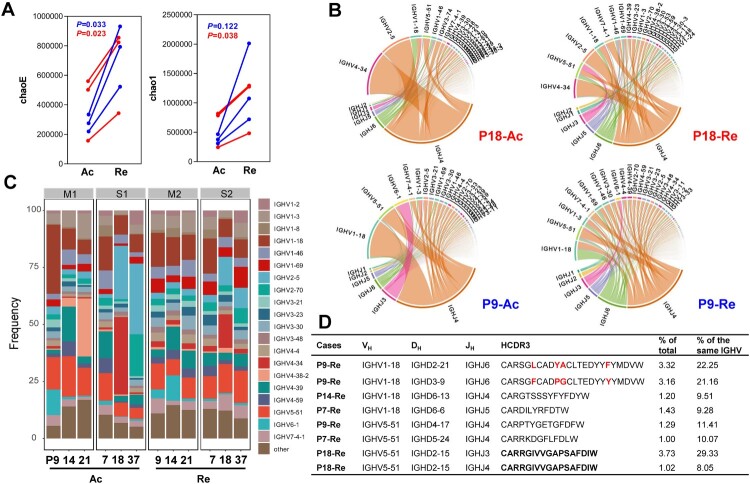
Haemorrhagic fever with renal syndrome (HFRS) following Hantaan virus (HTNV) infection displays variable clinical signs. Humoral responses elicited during HTNV infections are considered important, however, this process remains poorly understood. Herein, we have investigated the phenotype, temporal dynamics, and characteristics of B-cell receptor (BCR) repertoire in an HFRS cohort. The serological profiles were characterized by a lowered expression level of nucleoprotein (NP)-specific antibody in severe cases. Importantly, B-cell subsets were activated and proliferated within the first two weeks of symptom onset and moderate cases reacted more rapidly. BCR analysis in the recovery phase revealed a dramatic increase in the immunoglobulin gene diversity which was more significantly progressed in moderate infections. In severe cases, B-cell-related transcription was lower with inflammatory sets overactivated. Taken together, these data suggest the clinical signs and disease recovery in HFRS patients were positively impacted by rapid and efficacious humoral responses.
汉坦病毒(HTNV)感染引起的肾综合征出血热(HFRS)表现出不同的临床症状。体液免疫反应在 HTNV 感染中被认为很重要,但这一过程仍知之甚少。本研究调查了 HFRS 患者的 B 细胞受体(BCR)库的表型、时空调控和特征。血清学特征表现为严重病例中核蛋白(NP)特异性抗体的表达水平降低。重要的是,在症状出现的前两周内,B 细胞亚群被激活和增殖,中度病例的反应更快。恢复期的 BCR 分析显示,免疫球蛋白基因多样性显著增加,中度感染的进展更为显著。在严重病例中,B 细胞相关转录水平较低,炎症集过度激活。综上所述,这些数据表明 HFRS 患者的临床症状和疾病恢复受到快速有效的体液免疫反应的积极影响。