College of Veterinary Medicine, Nanjing Agricultural University, Nanjing 210095, China.
Int J Mol Sci. 2020 Sep 27;21(19):7129. doi: 10.3390/ijms21197129.
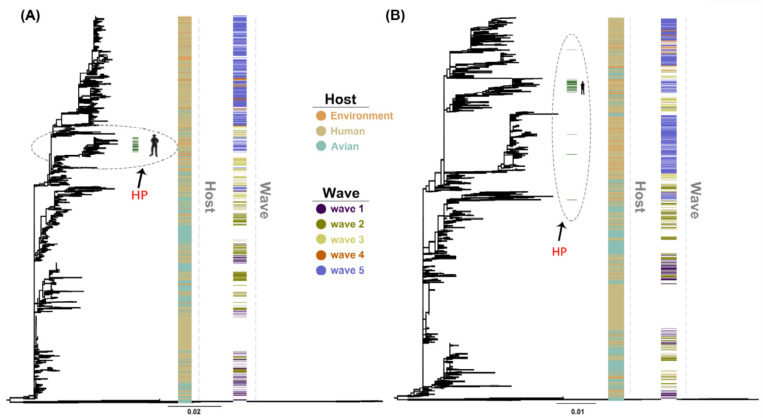
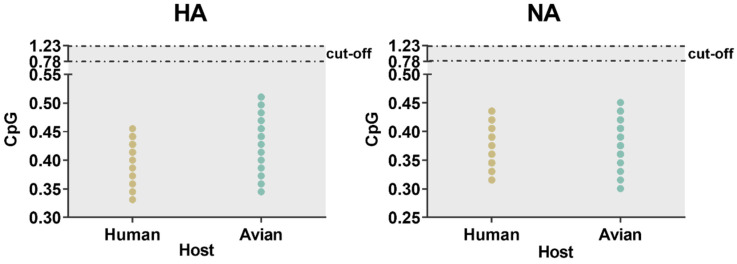
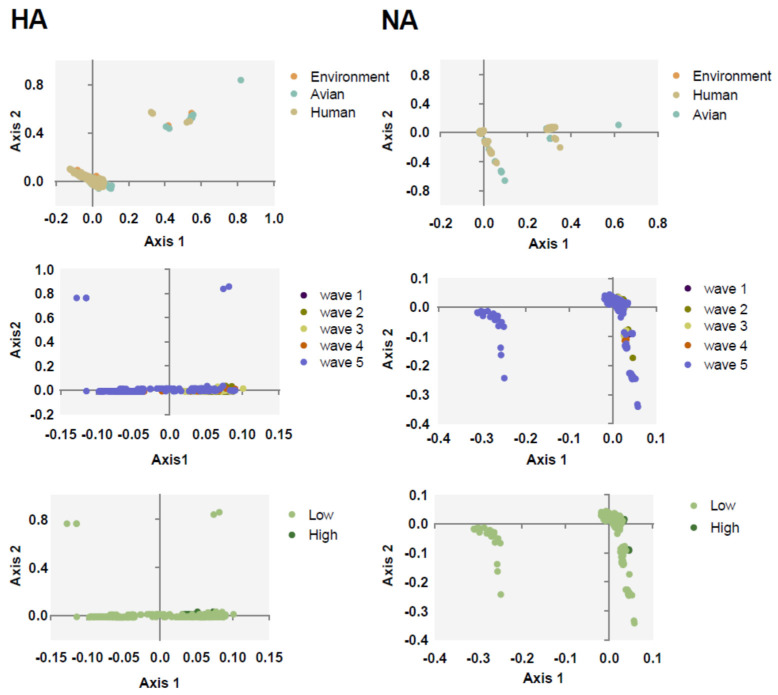
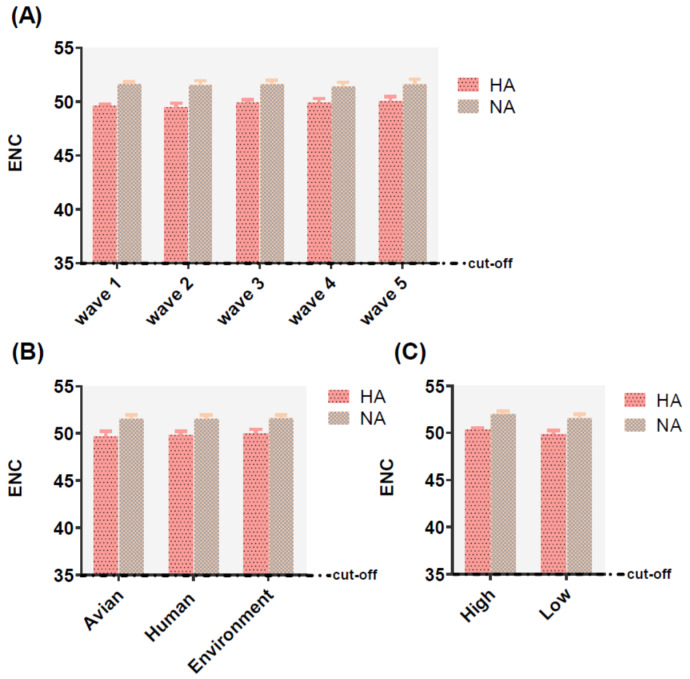
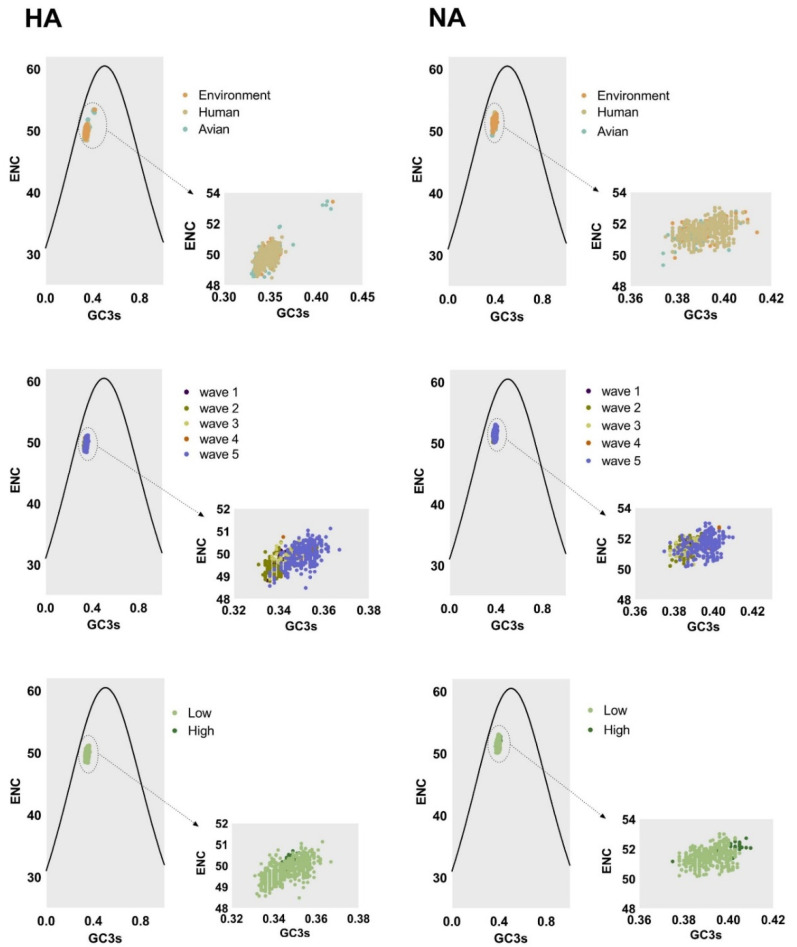
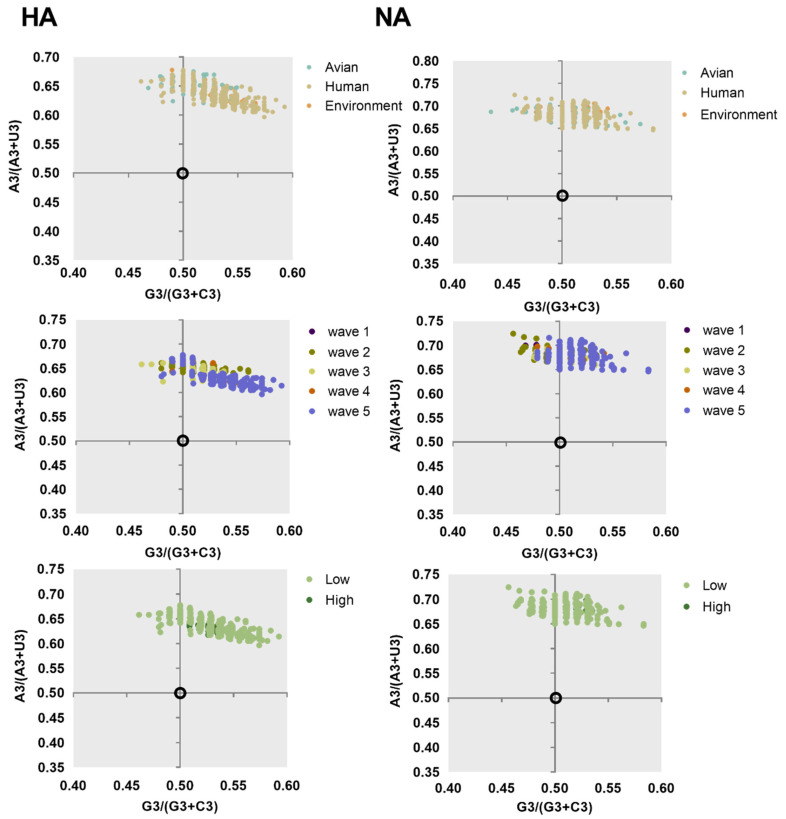
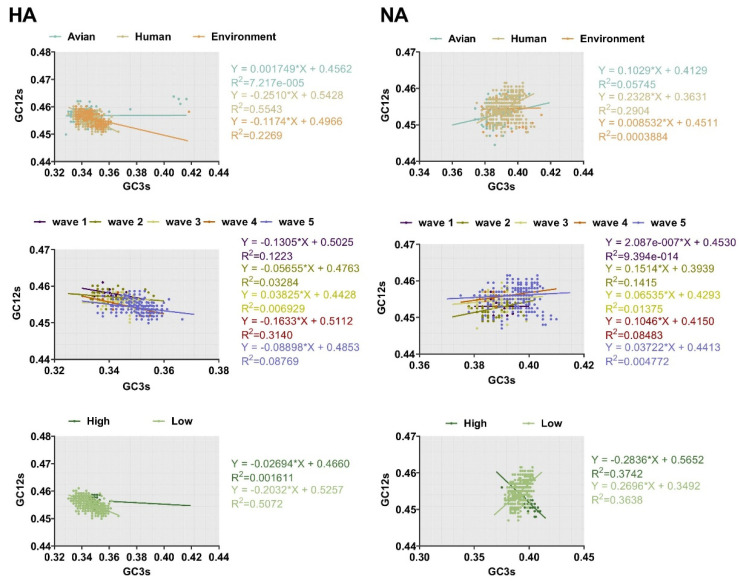
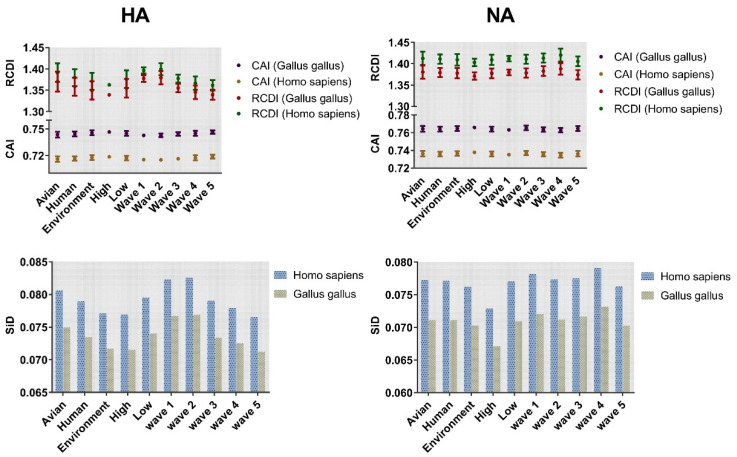
Novel H7N9 influenza virus transmitted from birds to human and, since March 2013, it has caused five epidemic waves in China. Although the evolution of H7N9 viruses has been investigated, the evolutionary changes associated with codon usage are still unclear. Herein, the codon usage pattern of two surface glycoproteins, hemagglutinin (HA) and neuraminidase (NA), was studied to understand the evolutionary changes in relation to host, epidemic wave, and pathogenicity. Both genes displayed a low codon usage bias, with HA higher than NA. The codon usage was driven by mutation pressure and natural selection, although the main contributing factor was natural selection. Additionally, the codon adaptation index (CAI) and deoptimization (RCDI) illustrated the strong adaptability of H7N9 to . Similarity index (SiD) analysis showed that posed a stronger selection pressure than . Thus, we assume that this may be related to the gradual adaptability of the virus to human. In addition, the host strong selection pressure was validated based on CpG dinucleotide content. In conclusion, this study analyzed the usage of codons of two genes of H7N9 and expanded our understanding of H7N9 host specificity. This aids into the development of control measures against H7N9 influenza virus.
新型 H7N9 流感病毒由禽类传播给人类,自 2013 年 3 月以来,已在中国引发了五波疫情。虽然已经对 H7N9 病毒的进化进行了研究,但与密码子使用相关的进化变化仍不清楚。在此,研究了两种表面糖蛋白(血凝素(HA)和神经氨酸酶(NA))的密码子使用模式,以了解与宿主、疫情波次和致病性相关的进化变化。这两个基因都显示出低的密码子使用偏向性,HA 比 NA 高。密码子使用受到突变压力和自然选择的驱动,尽管主要的影响因素是自然选择。此外,密码子适应指数(CAI)和去优化(RCDI)表明 H7N9 对 具有很强的适应性。相似指数(SiD)分析表明, 比 施加了更强的选择压力。因此,我们假设这可能与病毒逐渐适应人类有关。此外,基于 CpG 二核苷酸含量验证了宿主的强选择压力。总之,本研究分析了 H7N9 两个基因的密码子使用情况,扩展了我们对 H7N9 宿主特异性的认识。这有助于制定针对 H7N9 流感病毒的控制措施。