Vodošek Hojs Nina, Bevc Sebastjan, Ekart Robert, Hojs Radovan
Dept. of Nephrology, Clinic for Internal Medicine, University Medical Centre Maribor, Ljubljanska 5, 2000 Maribor, Slovenia.
Faculty of Medicine, University of Maribor, Taborska 8, 2000 Maribor, Slovenia.
Antioxidants (Basel). 2020 Sep 27;9(10):925. doi: 10.3390/antiox9100925.
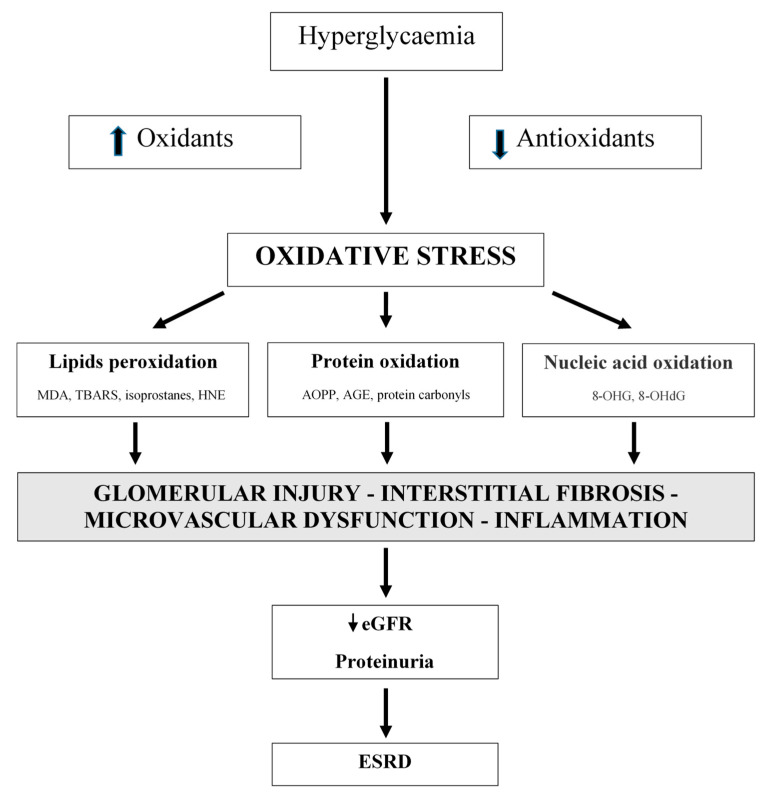
Diabetes prevalence is increasing worldwide, especially through the increase of type 2 diabetes. Diabetic nephropathy occurs in up to 40% of diabetic patients and is the leading cause of end-stage renal disease. Various factors affect the development and progression of diabetic nephropathy. Hyperglycaemia increases free radical production, resulting in oxidative stress, which plays an important role in the pathogenesis of diabetic nephropathy. Free radicals have a short half-life and are difficult to measure. In contrast, oxidation products, including lipid peroxidation, protein oxidation, and nucleic acid oxidation, have longer lifetimes and are used to evaluate oxidative stress. In recent years, different oxidative stress biomarkers associated with diabetic nephropathy have been found. This review summarises current evidence of oxidative stress biomarkers in patients with diabetic nephropathy. Although some of them are promising, they cannot replace currently used clinical biomarkers (eGFR, proteinuria) in the development and progression of diabetic nephropathy.
全球糖尿病患病率正在上升,尤其是2型糖尿病的增加。糖尿病肾病在高达40%的糖尿病患者中发生,是终末期肾病的主要原因。多种因素影响糖尿病肾病的发生和发展。高血糖会增加自由基的产生,导致氧化应激,这在糖尿病肾病的发病机制中起重要作用。自由基半衰期短,难以测量。相比之下,氧化产物,包括脂质过氧化、蛋白质氧化和核酸氧化,具有更长的寿命,可用于评估氧化应激。近年来,已发现与糖尿病肾病相关的不同氧化应激生物标志物。本综述总结了糖尿病肾病患者氧化应激生物标志物的当前证据。尽管其中一些很有前景,但它们不能替代目前用于评估糖尿病肾病发生和发展的临床生物标志物(估算肾小球滤过率、蛋白尿)。