Systems Engineering Department, King Fahd University of Petroleum and Minerals, Dhahran 31261, Saudi Arabia.
Faculty of Engineering, Helwan University, Helwan 11795, Egypt.
Int J Environ Res Public Health. 2020 Sep 27;17(19):7080. doi: 10.3390/ijerph17197080.
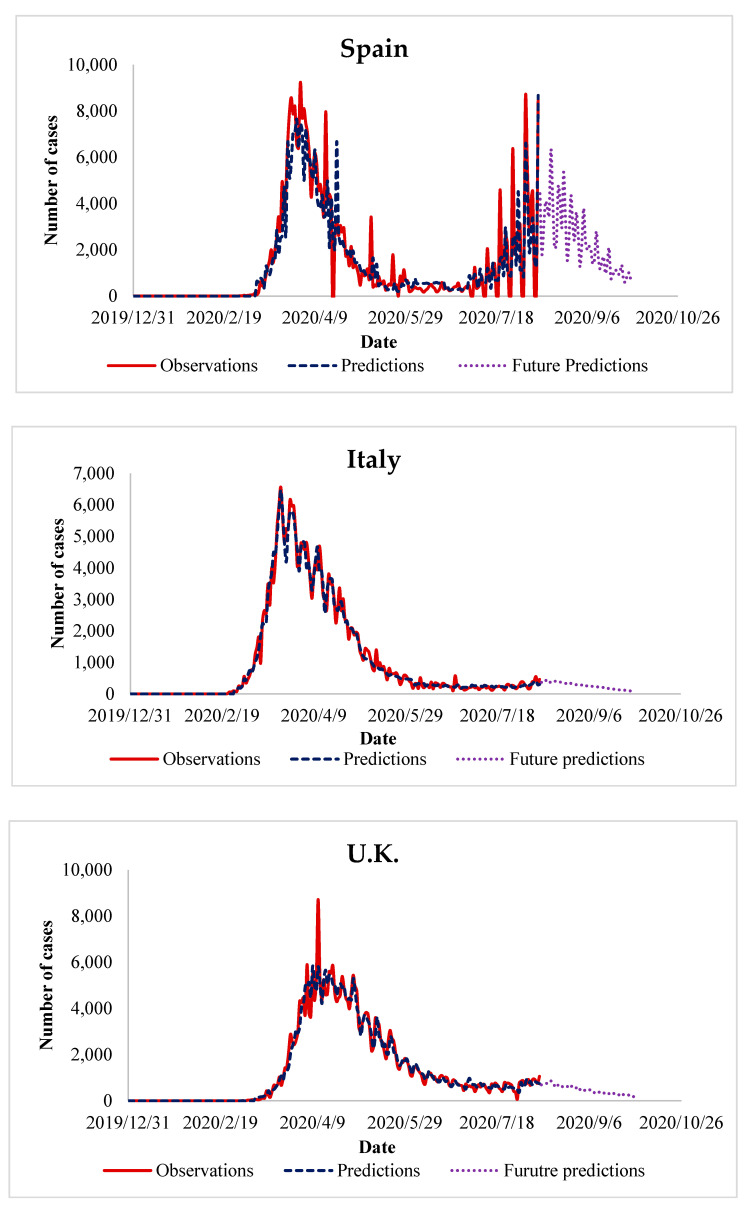
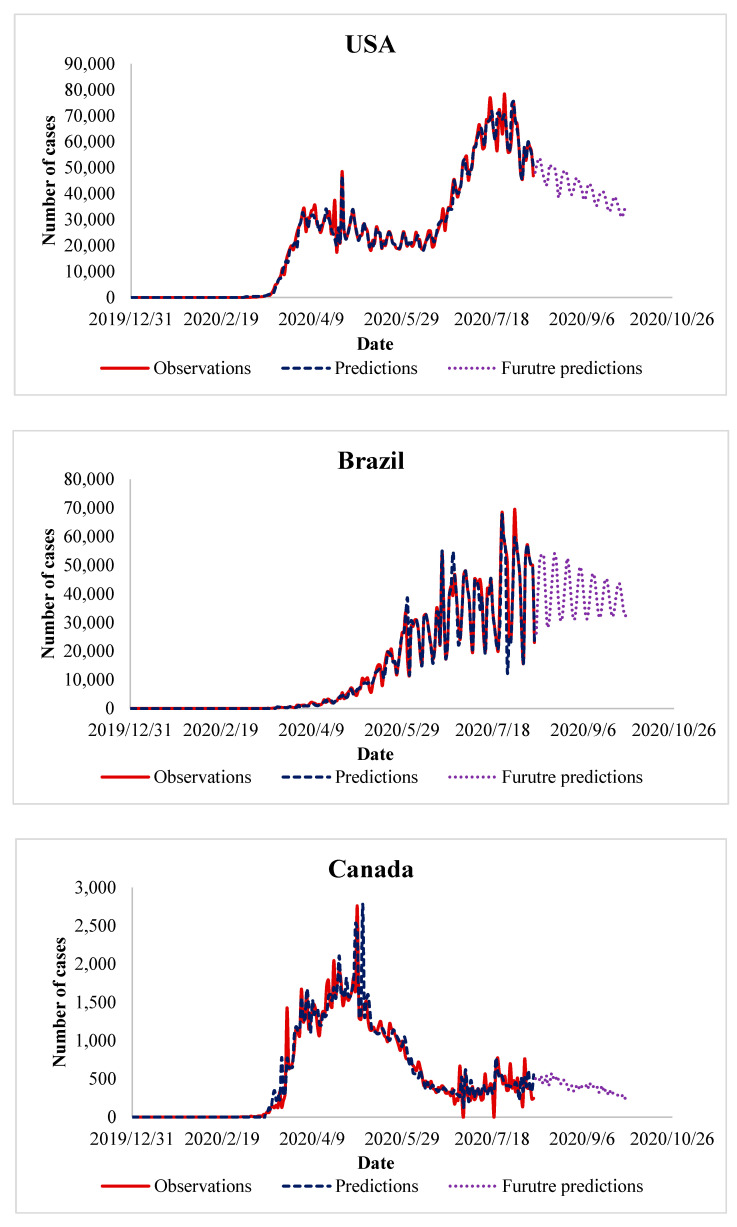
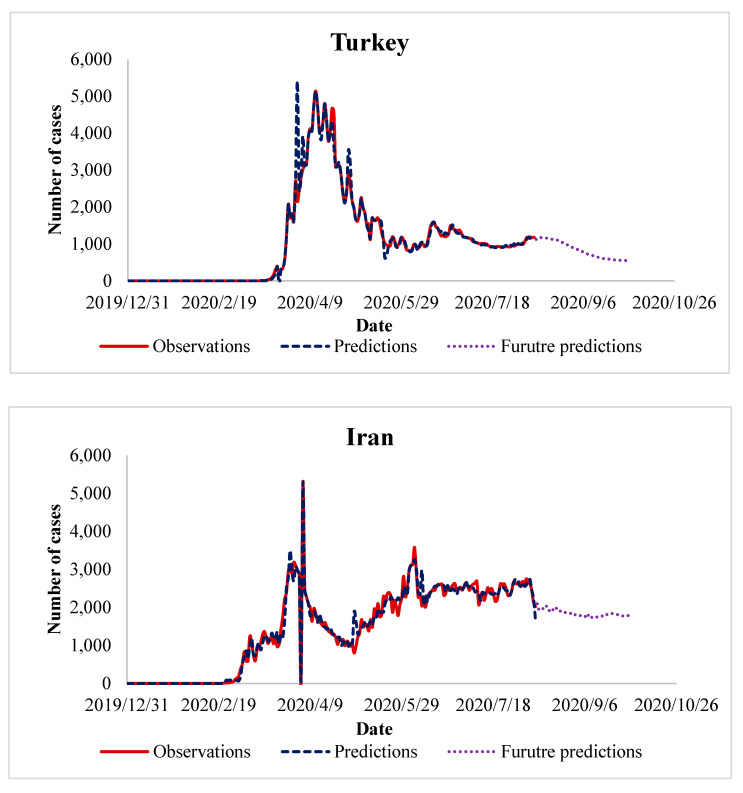
The outbreak of the 2019 novel coronavirus disease (COVID-19) has adversely affected many countries in the world. The unexpected large number of COVID-19 cases has disrupted the healthcare system in many countries and resulted in a shortage of bed spaces in the hospitals. Consequently, predicting the number of COVID-19 cases is imperative for governments to take appropriate actions. The number of COVID-19 cases can be accurately predicted by considering historical data of reported cases alongside some external factors that affect the spread of the virus. In the literature, most of the existing prediction methods focus only on the historical data and overlook most of the external factors. Hence, the number of COVID-19 cases is inaccurately predicted. Therefore, the main objective of this study is to simultaneously consider historical data and the external factors. This can be accomplished by adopting data analytics, which include developing a nonlinear autoregressive exogenous input (NARX) neural network-based algorithm. The viability and superiority of the developed algorithm are demonstrated by conducting experiments using data collected for top five affected countries in each continent. The results show an improved accuracy when compared with existing methods. Moreover, the experiments are extended to make future prediction for the number of patients afflicted with COVID-19 during the period from August 2020 until September 2020. By using such predictions, both the government and people in the affected countries can take appropriate measures to resume pre-epidemic activities.
2019 年新型冠状病毒病(COVID-19)的爆发对世界上许多国家造成了不利影响。出乎意料的大量 COVID-19 病例打乱了许多国家的医疗体系,导致医院床位短缺。因此,预测 COVID-19 病例数量对于政府采取适当措施至关重要。通过考虑报告病例的历史数据以及影响病毒传播的一些外部因素,可以准确预测 COVID-19 病例的数量。在文献中,大多数现有的预测方法仅关注历史数据,而忽略了大多数外部因素。因此,COVID-19 病例的数量预测不准确。因此,本研究的主要目的是同时考虑历史数据和外部因素。这可以通过采用数据分析来实现,包括开发基于非线性自回归外生输入(NARX)神经网络的算法。通过使用收集到的每个大陆前五名受影响国家的数据进行实验,验证了所开发算法的可行性和优越性。与现有方法相比,结果显示出了更高的准确性。此外,实验还扩展到对 2020 年 8 月至 9 月期间 COVID-19 患者数量进行未来预测。通过使用这些预测,受影响国家的政府和人民都可以采取适当的措施来恢复大流行前的活动。