Hojnik Podrepšek Gordana, Knez Željko, Leitgeb Maja
Laboratory for Separation Processes and Product Design, Faculty of Chemistry and Chemical Engineering, University of Maribor, Smetanova ul. 17, 2000 Maribor, Slovenia.
Faculty of Medicine, University of Maribor, Taborska ulica 8, 2000 Maribor, Slovenia.
Nanomaterials (Basel). 2020 Sep 25;10(10):1913. doi: 10.3390/nano10101913.
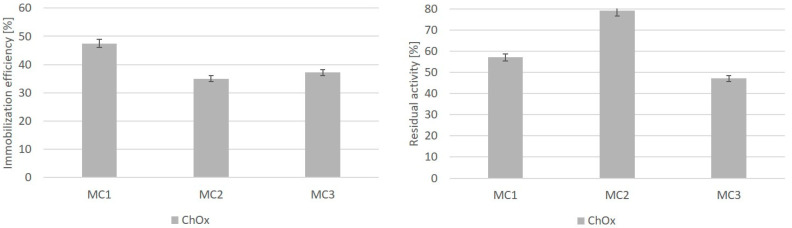
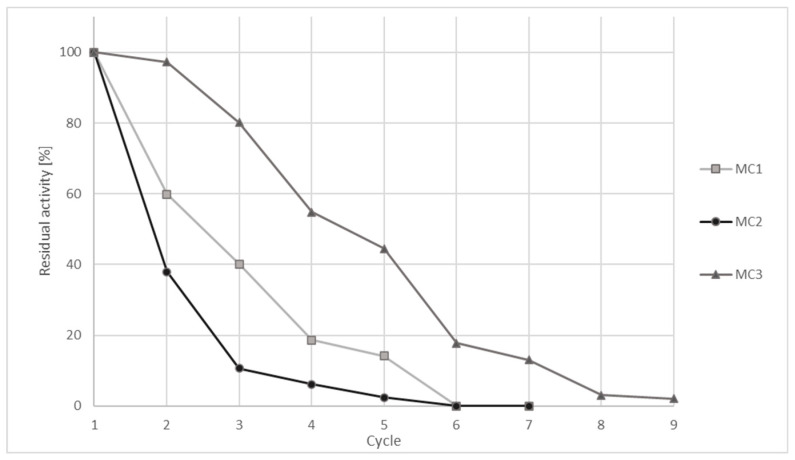
In this study, magnetic maghemite nanoparticles, which belong to the group of metal oxides, were functionalized with chitosan, a non-toxic, hydrophilic, biocompatible, biodegradable biopolymer with anti-bacterial effects. This was done using different synthesis methods, and a comparison of the properties of the synthesized chitosan functionalized maghemite nanoparticles was conducted. Characterization was performed using scanning electron microscopy (SEM) and vibrating sample magnetometry (VSM). Characterizations of size distribution were performed using dynamic light scattering (DLS) measurements and laser granulometry. A chitosan functionalization layer was confirmed using potentiometric titration on variously synthesized chitosan functionalized maghemite nanoparticles, which is important for further immobilization of bioactive compounds. Furthermore, after activation of chitosan functionalized maghemite nanoparticles with glutaraldehyde (GA) or pentaethylenehexamine (PEHA), immobilization studies of enzyme cholesterol oxidase (ChOx) and horseradish peroxidase (HRP) were conducted. Factors influencing the immobilization of enzymes, such as type and concentration of activating reagent, mass ratio between carrier and enzyme, immobilization time and enzyme concentration, were investigated. Briefly, microparticles made using the chitosan suspension cross-linking process (MC2) proved to be the most suitable for obtaining the highest activity of immobilized enzyme, and nanoparticles functionalized with chitosan using the covalent binding method (MC3) could compete with MC2 for their applications.
在本研究中,属于金属氧化物类的磁性磁赤铁矿纳米颗粒用壳聚糖进行了功能化处理,壳聚糖是一种无毒、亲水、生物相容、可生物降解且具有抗菌作用的生物聚合物。这是通过不同的合成方法完成的,并对合成的壳聚糖功能化磁赤铁矿纳米颗粒的性质进行了比较。使用扫描电子显微镜(SEM)和振动样品磁强计(VSM)进行了表征。使用动态光散射(DLS)测量和激光粒度分析对尺寸分布进行了表征。通过对各种合成的壳聚糖功能化磁赤铁矿纳米颗粒进行电位滴定,证实了壳聚糖功能化层的存在,这对于生物活性化合物的进一步固定化很重要。此外,在用戊二醛(GA)或五乙烯六胺(PEHA)对壳聚糖功能化磁赤铁矿纳米颗粒进行活化后,进行了酶胆固醇氧化酶(ChOx)和辣根过氧化物酶(HRP)的固定化研究。研究了影响酶固定化的因素,如活化试剂的类型和浓度、载体与酶的质量比、固定化时间和酶浓度。简而言之,使用壳聚糖悬浮交联工艺制备的微粒(MC2)被证明最适合获得固定化酶的最高活性,并且使用共价结合法用壳聚糖功能化的纳米颗粒(MC3)在其应用方面可以与MC2竞争。