Lutsch Daniel J, Camic Clayton L, Jagim Andrew R, Stefan Riley R, Cox Brandon J, Tauber Rachel N, Henert Shaine E
Department of Kinesiology and Physical Education, Northern Illinois University, DeKalb, IL 60115, USA.
Sports Medicine, Mayo Clinic Health System, Onalaska, WI 54650, USA.
Sports (Basel). 2020 Sep 25;8(10):132. doi: 10.3390/sports8100132.
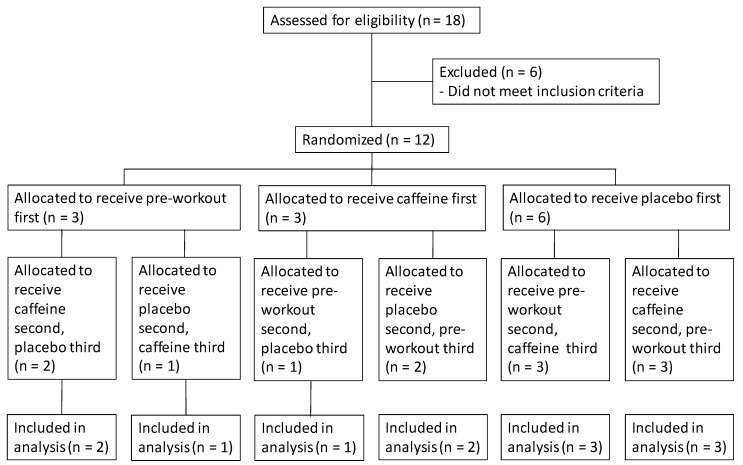
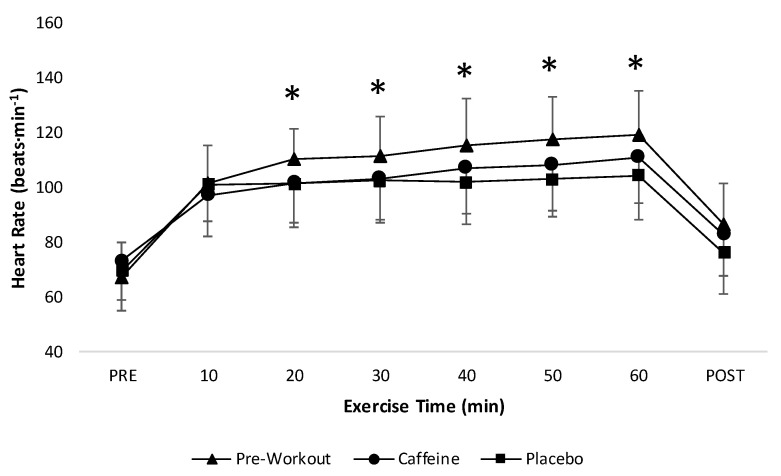
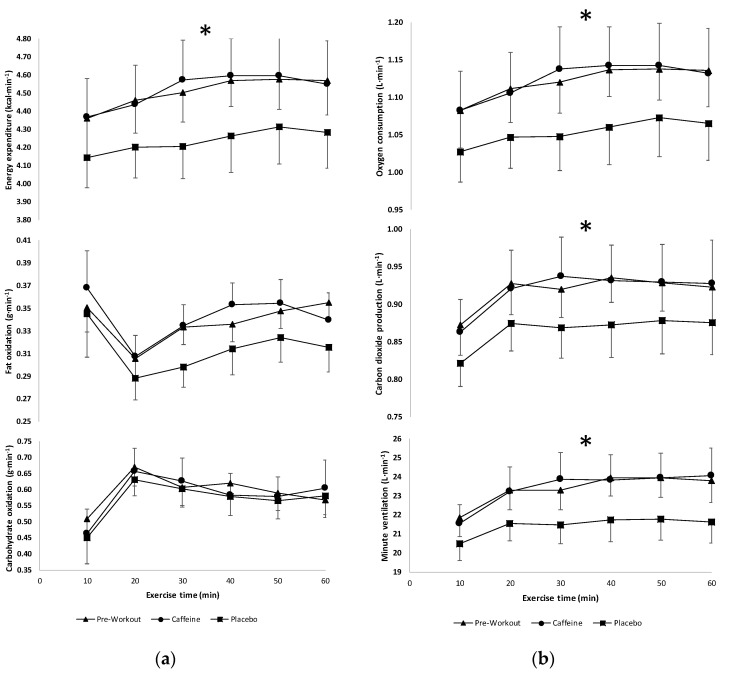
The primary purpose of this study was to examine the acute effects of a multi-ingredient (i.e., caffeine, green tea extract, Yohimbe extract, capsicum annum, coleus extract, L-carnitine, beta-alanine, tyrosine) preworkout supplement versus a dose of caffeine (6 mg·kg) on energy expenditure during low-intensity exercise. The effects of these treatments on substrate utilization, gas exchange, and psychological factors were also investigated. Twelve males (mean ± SD: age = 22.8 ± 2.4 years) completed three bouts of 60 min of treadmill exercise on separate days after consuming a preworkout supplement, 6 mg·kg of caffeine, or placebo in a randomized fashion. The preworkout and caffeine supplements resulted in significantly greater energy expenditure ( < 0.001, = 0.006, respectively), V˙O ( < 0.001, = 0.007, respectively), V˙CO ( = 0.006, = 0.049, respectively), and V˙ ( < 0.001, = 0.007, respectively) compared to placebo (collapsed across condition). There were no differences among conditions, however, for rates of fat or carbohydrate oxidation or respiratory exchange ratio. In addition, the preworkout supplement increased feelings of alertness ( = 0.015) and focus ( = 0.005) 30-min postingestion and decreased feelings of fatigue ( = 0.014) during exercise compared to placebo. Thus, the preworkout supplement increased energy expenditure and measures of gas exchange to the same extent as 6 mg·kg of caffeine with concomitant increased feelings of alertness and focus and decreased feelings of fatigue.
本研究的主要目的是考察一种多成分(即咖啡因、绿茶提取物、育亨宾提取物、辣椒、毛喉鞘蕊花提取物、左旋肉碱、β-丙氨酸、酪氨酸)的运动前补充剂与一剂咖啡因(6毫克/千克)对低强度运动期间能量消耗的急性影响。还研究了这些处理对底物利用、气体交换和心理因素的影响。12名男性(平均±标准差:年龄=22.8±2.4岁)在随机服用运动前补充剂、6毫克/千克咖啡因或安慰剂后的不同日期,完成了3次60分钟的跑步机运动。与安慰剂(合并所有情况)相比,运动前补充剂和咖啡因补充剂分别显著增加了能量消耗(分别为P<0.001,P = 0.006)、耗氧量(分别为P<0.001,P = 0.007)、二氧化碳排出量(分别为P = 0.006,P = 0.049)和通气量(分别为P<0.001,P = 0.007)。然而,不同处理之间在脂肪或碳水化合物氧化率或呼吸交换率方面没有差异。此外,与安慰剂相比,运动前补充剂在摄入后30分钟时增加了警觉感(P = 0.015)和注意力集中程度(P = 0.005),并在运动期间降低了疲劳感(P = 0.014)。因此,运动前补充剂增加能量消耗和气体交换指标的程度与6毫克/千克咖啡因相同,同时增加了警觉感和注意力集中程度,并降低了疲劳感。