• 文献检索
  • 文档翻译
  • 深度研究
  • 学术资讯
  • Suppr Zotero 插件Zotero 插件
  • 邀请有礼
  • 套餐&价格
  • 历史记录
应用&插件
Suppr Zotero 插件Zotero 插件浏览器插件Mac 客户端Windows 客户端微信小程序
定价
高级版会员购买积分包购买API积分包
服务
文献检索文档翻译深度研究API 文档MCP 服务
关于我们
关于 Suppr公司介绍联系我们用户协议隐私条款
关注我们

Suppr 超能文献

核心技术专利:CN118964589B侵权必究
粤ICP备2023148730 号-1Suppr @ 2026

文献检索

告别复杂PubMed语法,用中文像聊天一样搜索,搜遍4000万医学文献。AI智能推荐,让科研检索更轻松。

立即免费搜索

文件翻译

保留排版,准确专业,支持PDF/Word/PPT等文件格式,支持 12+语言互译。

免费翻译文档

深度研究

AI帮你快速写综述,25分钟生成高质量综述,智能提取关键信息,辅助科研写作。

立即免费体验

人工智能使用数字听诊器检测儿童病理性呼吸音的准确性。

Artificial intelligence accuracy in detecting pathological breath sounds in children using digital stethoscopes.

机构信息

Department of Paediatrics, Monash University, Melbourne, Australia.

Department of Respiratory Medicine, Monash Children's Hospital, 246 Clayton Road, Clayton, Melbourne, Victoria, 3168, Australia.

出版信息

Respir Res. 2020 Sep 29;21(1):253. doi: 10.1186/s12931-020-01523-9.

DOI:10.1186/s12931-020-01523-9
PMID:32993620
原文链接:https://pmc.ncbi.nlm.nih.gov/articles/PMC7526232/
Abstract

BACKGROUND

Manual auscultation to detect abnormal breath sounds has poor inter-observer reliability. Digital stethoscopes with artificial intelligence (AI) could improve reliable detection of these sounds. We aimed to independently test the abilities of AI developed for this purpose.

METHODS

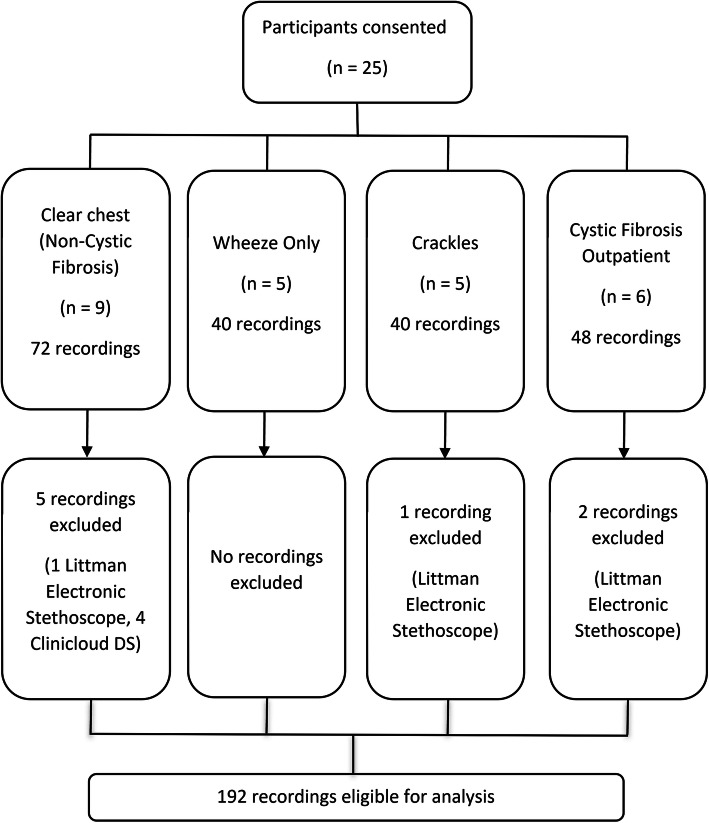
One hundred and ninety two auscultation recordings collected from children using two different digital stethoscopes (Clinicloud™ and Littman™) were each tagged as containing wheezes, crackles or neither by a pediatric respiratory physician, based on audio playback and careful spectrogram and waveform analysis, with a subset validated by a blinded second clinician. These recordings were submitted for analysis by a blinded AI algorithm (StethoMe AI) specifically trained to detect pathologic pediatric breath sounds.

RESULTS

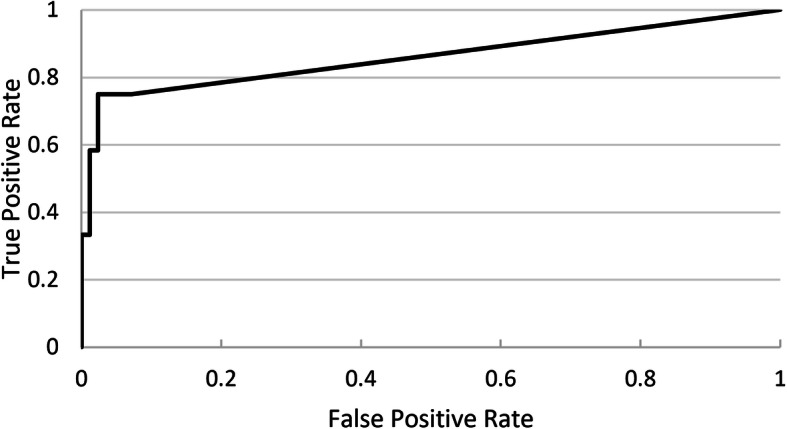
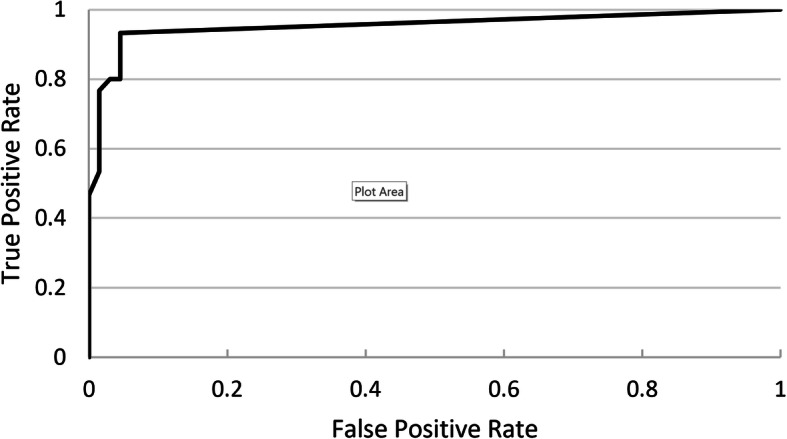
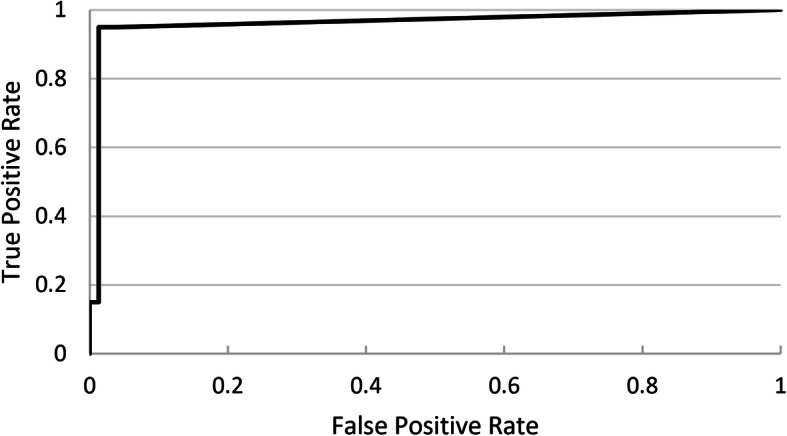
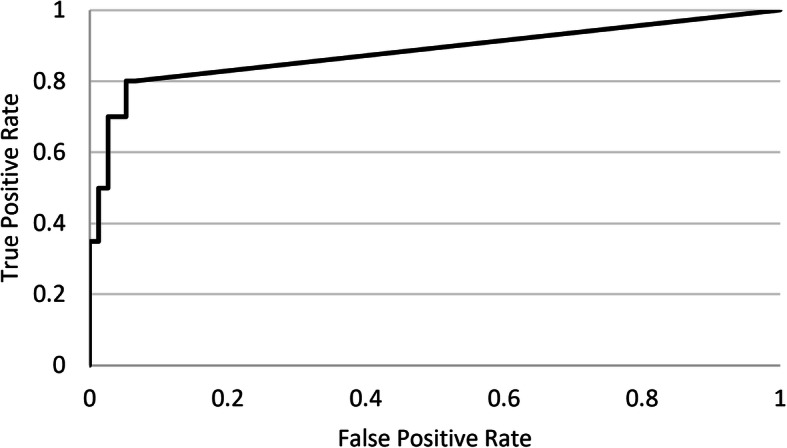
With optimized AI detection thresholds, crackle detection positive percent agreement (PPA) was 0.95 and negative percent agreement (NPA) was 0.99 for Clinicloud recordings; for Littman-collected sounds PPA was 0.82 and NPA was 0.96. Wheeze detection PPA and NPA were 0.90 and 0.97 respectively (Clinicloud auscultation), with PPA 0.80 and NPA 0.95 for Littman recordings.

CONCLUSIONS

AI can detect crackles and wheeze with a reasonably high degree of accuracy from breath sounds obtained from different digital stethoscope devices, although some device-dependent differences do exist.

摘要

背景

手动听诊检测异常呼吸音的观察者间可靠性较差。具有人工智能(AI)的数字听诊器可以提高这些声音的可靠检测能力。我们旨在独立测试为此目的开发的 AI 的能力。

方法

使用两种不同的数字听诊器(Clinicloud™ 和 Littman™)收集了 192 份来自儿童的听诊录音,由儿科呼吸医师根据音频播放以及仔细的频谱图和波形分析,将每份录音标记为包含喘鸣音、爆裂音或两者都不包含,其中一部分由盲法第二临床医生进行验证。这些录音被提交给一个盲法 AI 算法(StethoMe AI)进行分析,该算法专门用于检测病理性儿科呼吸音。

结果

在优化的 AI 检测阈值下,Clinicloud 记录的爆裂音检测阳性百分比一致率(PPA)为 0.95,阴性百分比一致率(NPA)为 0.99;Littman 采集的声音 PPA 为 0.82,NPA 为 0.96。喘鸣音检测的 PPA 和 NPA 分别为 0.90 和 0.97(Clinicloud 听诊),Littman 记录的 PPA 为 0.80,NPA 为 0.95。

结论

AI 可以从不同数字听诊器设备获得的呼吸音中以相当高的准确度检测爆裂音和喘鸣音,尽管存在一些与设备相关的差异。
https://cdn.ncbi.nlm.nih.gov/pmc/blobs/b902/7526232/618fedcb5989/12931_2020_1523_Fig5_HTML.jpg
https://cdn.ncbi.nlm.nih.gov/pmc/blobs/b902/7526232/1cb75feb7c17/12931_2020_1523_Fig1_HTML.jpg
https://cdn.ncbi.nlm.nih.gov/pmc/blobs/b902/7526232/9a6c5d30351f/12931_2020_1523_Fig2_HTML.jpg
https://cdn.ncbi.nlm.nih.gov/pmc/blobs/b902/7526232/d5745de463a9/12931_2020_1523_Fig3_HTML.jpg
https://cdn.ncbi.nlm.nih.gov/pmc/blobs/b902/7526232/057bf7b023e4/12931_2020_1523_Fig4_HTML.jpg
https://cdn.ncbi.nlm.nih.gov/pmc/blobs/b902/7526232/618fedcb5989/12931_2020_1523_Fig5_HTML.jpg
https://cdn.ncbi.nlm.nih.gov/pmc/blobs/b902/7526232/1cb75feb7c17/12931_2020_1523_Fig1_HTML.jpg
https://cdn.ncbi.nlm.nih.gov/pmc/blobs/b902/7526232/9a6c5d30351f/12931_2020_1523_Fig2_HTML.jpg
https://cdn.ncbi.nlm.nih.gov/pmc/blobs/b902/7526232/d5745de463a9/12931_2020_1523_Fig3_HTML.jpg
https://cdn.ncbi.nlm.nih.gov/pmc/blobs/b902/7526232/057bf7b023e4/12931_2020_1523_Fig4_HTML.jpg
https://cdn.ncbi.nlm.nih.gov/pmc/blobs/b902/7526232/618fedcb5989/12931_2020_1523_Fig5_HTML.jpg

相似文献

1
Artificial intelligence accuracy in detecting pathological breath sounds in children using digital stethoscopes.人工智能使用数字听诊器检测儿童病理性呼吸音的准确性。
Respir Res. 2020 Sep 29;21(1):253. doi: 10.1186/s12931-020-01523-9.
2
Digital stethoscopes compared to standard auscultation for detecting abnormal paediatric breath sounds.与标准听诊法相比,数字听诊器用于检测儿童异常呼吸音。
Eur J Pediatr. 2017 Jul;176(7):989-992. doi: 10.1007/s00431-017-2929-5. Epub 2017 May 16.
3
Assessing the accuracy of artificial intelligence enabled acoustic analytic technology on breath sounds in children.评估人工智能声学分析技术对儿童呼吸音的准确性。
J Med Eng Technol. 2022 Jan;46(1):78-84. doi: 10.1080/03091902.2021.1992520. Epub 2021 Nov 3.
4
StethAid: A Digital Auscultation Platform for Pediatrics.StethAid:儿科数字听诊平台。
Sensors (Basel). 2023 Jun 20;23(12):5750. doi: 10.3390/s23125750.
5
Practical implementation of artificial intelligence algorithms in pulmonary auscultation examination.人工智能算法在肺部听诊检查中的实际应用。
Eur J Pediatr. 2019 Jun;178(6):883-890. doi: 10.1007/s00431-019-03363-2. Epub 2019 Mar 29.
6
Real-World Verification of Artificial Intelligence Algorithm-Assisted Auscultation of Breath Sounds in Children.人工智能算法辅助儿童呼吸音听诊的真实世界验证
Front Pediatr. 2021 Mar 23;9:627337. doi: 10.3389/fped.2021.627337. eCollection 2021.
7
Digitally recorded and remotely classified lung auscultation compared with conventional stethoscope classifications among children aged 1-59 months enrolled in the Pneumonia Etiology Research for Child Health (PERCH) case-control study.数字记录和远程分类的肺部听诊与常规听诊器分类在年龄为 1-59 个月的肺炎病因研究儿童健康(PERCH)病例对照研究中的比较。
BMJ Open Respir Res. 2022 May;9(1). doi: 10.1136/bmjresp-2021-001144.
8
Technical characterisation of digital stethoscopes: towards scalable artificial intelligence-based auscultation.数字听诊器的技术特征:迈向可扩展的基于人工智能的听诊。
J Med Eng Technol. 2023 Apr;47(3):165-178. doi: 10.1080/03091902.2023.2174198. Epub 2023 Feb 15.
9
The coming era of a new auscultation system for analyzing respiratory sounds.呼晰分析系统:呼吸音分析的新时代即将到来。
BMC Pulm Med. 2022 Mar 31;22(1):119. doi: 10.1186/s12890-022-01896-1.
10
A Low-Cost AI-Empowered Stethoscope and a Lightweight Model for Detecting Cardiac and Respiratory Diseases from Lung and Heart Auscultation Sounds.一种低成本的人工智能听诊器和一个用于从肺部和心脏听诊声音中检测心脏和呼吸疾病的轻量级模型。
Sensors (Basel). 2023 Feb 26;23(5):2591. doi: 10.3390/s23052591.

引用本文的文献

1
An explainable and accurate transformer-based deep learning model for wheeze classification utilizing real-world pediatric data.一种基于可解释且准确的变压器的深度学习模型,用于利用真实世界儿科数据进行喘息分类。
Sci Rep. 2025 Feb 15;15(1):5656. doi: 10.1038/s41598-025-89533-9.
2
Artificial intelligence in respiratory care.呼吸护理中的人工智能
Front Digit Health. 2024 Dec 23;6:1502434. doi: 10.3389/fdgth.2024.1502434. eCollection 2024.
3
Artificial Intelligence in Medical Metaverse: Applications, Challenges, and Future Prospects.

本文引用的文献

1
Applications of artificial intelligence and machine learning in respiratory medicine.人工智能和机器学习在呼吸医学中的应用。
Thorax. 2020 Aug;75(8):695-701. doi: 10.1136/thoraxjnl-2020-214556. Epub 2020 May 14.
2
Practical implementation of artificial intelligence algorithms in pulmonary auscultation examination.人工智能算法在肺部听诊检查中的实际应用。
Eur J Pediatr. 2019 Jun;178(6):883-890. doi: 10.1007/s00431-019-03363-2. Epub 2019 Mar 29.
3
Stand-Alone Artificial Intelligence for Breast Cancer Detection in Mammography: Comparison With 101 Radiologists.
医学元宇宙中的人工智能:应用、挑战与未来前景
Curr Med Sci. 2024 Dec;44(6):1113-1122. doi: 10.1007/s11596-024-2960-5. Epub 2024 Dec 14.
4
Acute Respiratory Failure in Children: A Clinical Update on Diagnosis.儿童急性呼吸衰竭:诊断的临床最新进展
Children (Basel). 2024 Oct 12;11(10):1232. doi: 10.3390/children11101232.
5
Artificial intelligence and wheezing in children: where are we now?人工智能与儿童喘息:我们目前的进展如何?
Front Med (Lausanne). 2024 Aug 27;11:1460050. doi: 10.3389/fmed.2024.1460050. eCollection 2024.
6
Automated Interpretation of Lung Sounds by Deep Learning in Children With Asthma: Scoping Review and Strengths, Weaknesses, Opportunities, and Threats Analysis.深度学习在儿童哮喘肺部声音自动分析中的应用:范围综述及优势、劣势、机会和威胁分析。
J Med Internet Res. 2024 Aug 23;26:e53662. doi: 10.2196/53662.
7
Remote, automatic, digital preanesthetic evaluation - are we there yet?远程、自动、数字化的麻醉前评估——我们做到了吗?
Anaesthesiol Intensive Ther. 2024;56(2):91-97. doi: 10.5114/ait.2024.138959.
8
SonicGuard Sensor-A Multichannel Acoustic Sensor for Long-Term Monitoring of Abdominal Sounds Examined through a Qualification Study.SonicGuard 传感器——一种多通道声学传感器,用于通过资格研究对腹部声音进行长期监测。
Sensors (Basel). 2024 Mar 13;24(6):1843. doi: 10.3390/s24061843.
9
Home Monitoring of Asthma Exacerbations in Children and Adults With Use of an AI-Aided Stethoscope.家用人工智能听诊器监测儿童和成人哮喘恶化
Ann Fam Med. 2023 Nov-Dec;21(6):517-525. doi: 10.1370/afm.3039.
10
Deep learning-based lung sound analysis for intelligent stethoscope.基于深度学习的智能听诊器肺部声音分析。
Mil Med Res. 2023 Sep 26;10(1):44. doi: 10.1186/s40779-023-00479-3.
孤立人工智能在乳腺钼靶摄影中的乳腺癌检测:与 101 位放射科医生的比较。
J Natl Cancer Inst. 2019 Sep 1;111(9):916-922. doi: 10.1093/jnci/djy222.
4
Artificial intelligence, bias and clinical safety.人工智能、偏差与临床安全。
BMJ Qual Saf. 2019 Mar;28(3):231-237. doi: 10.1136/bmjqs-2018-008370. Epub 2019 Jan 12.
5
Digital stethoscopes in paediatric medicine.数字听诊器在儿科医学中的应用。
Acta Paediatr. 2019 May;108(5):814-822. doi: 10.1111/apa.14686. Epub 2019 Jan 15.
6
International perception of lung sounds: a comparison of classification across some European borders.国际上对肺部声音的认知:一些欧洲国家间分类的比较。
BMJ Open Respir Res. 2017 Dec 18;4(1):e000250. doi: 10.1136/bmjresp-2017-000250. eCollection 2017.
7
Artificial intelligence in health care: within touching distance.医疗保健领域的人工智能:近在咫尺。
Lancet. 2017 Dec 23;390(10114):2739. doi: 10.1016/S0140-6736(17)31540-4.
8
Digital stethoscopes compared to standard auscultation for detecting abnormal paediatric breath sounds.与标准听诊法相比,数字听诊器用于检测儿童异常呼吸音。
Eur J Pediatr. 2017 Jul;176(7):989-992. doi: 10.1007/s00431-017-2929-5. Epub 2017 May 16.
9
Dermatologist-level classification of skin cancer with deep neural networks.基于深度神经网络的皮肤癌皮肤科医生级分类。
Nature. 2017 Feb 2;542(7639):115-118. doi: 10.1038/nature21056. Epub 2017 Jan 25.
10
Auscultation of the respiratory system.呼吸系统的听诊。
Ann Thorac Med. 2015 Jul-Sep;10(3):158-68. doi: 10.4103/1817-1737.160831.