Department of Plant Pathology, University of California, Davis, Davis, California, USA.
Department of Plant Pathology, University of California, Davis, Davis, California, USA
mBio. 2020 Sep 29;11(5):e02209-20. doi: 10.1128/mBio.02209-20.
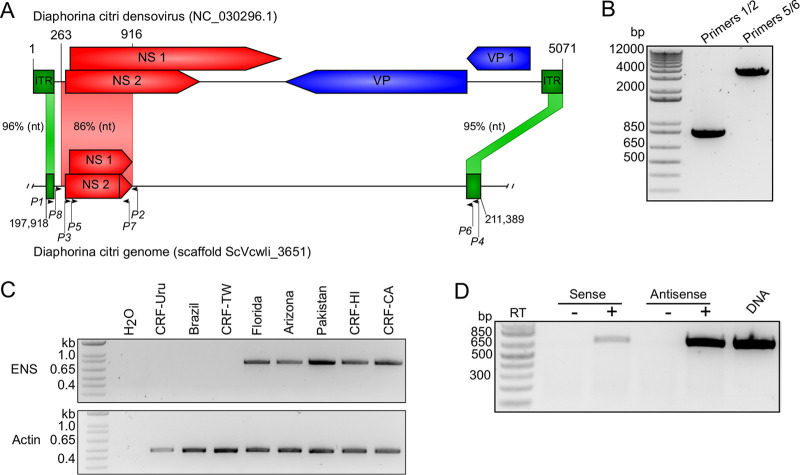
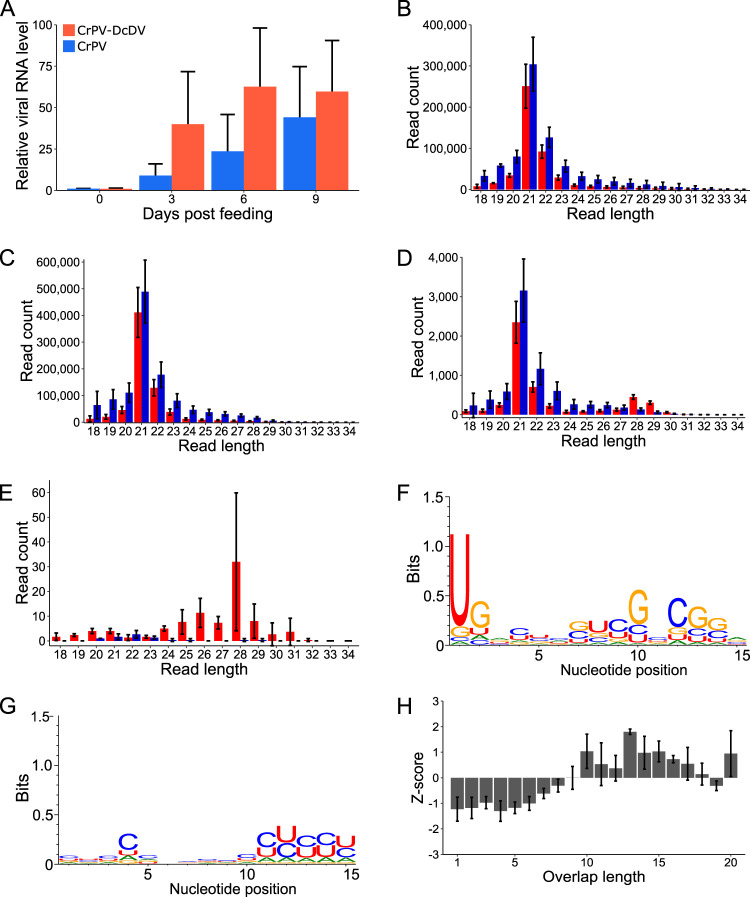
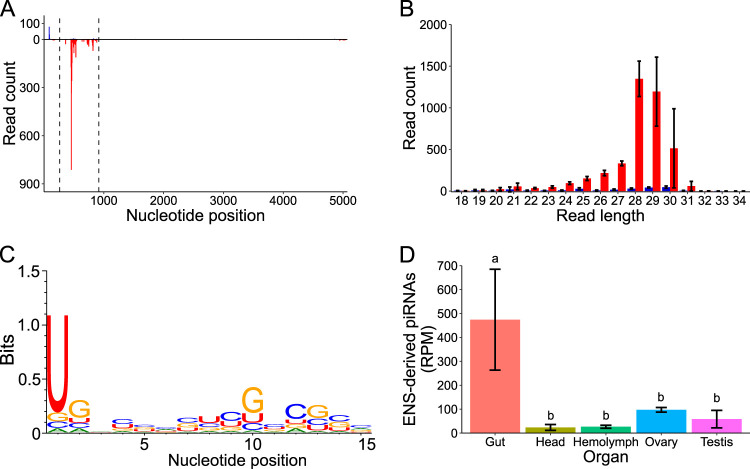
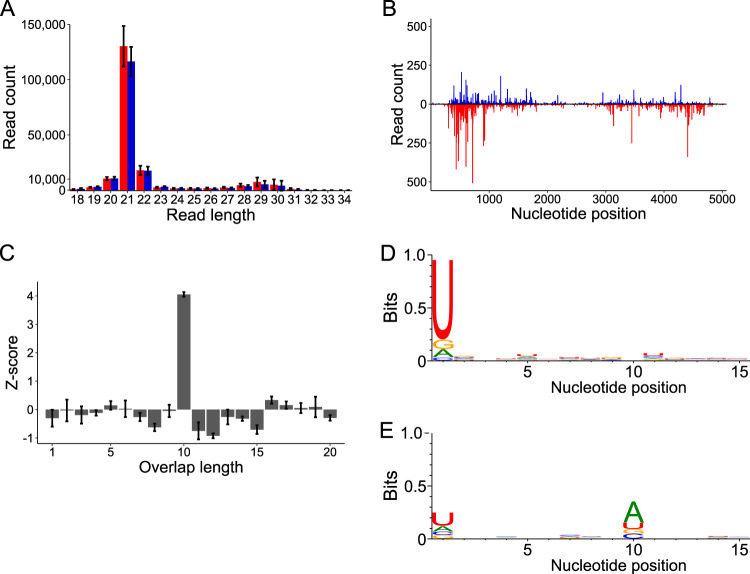
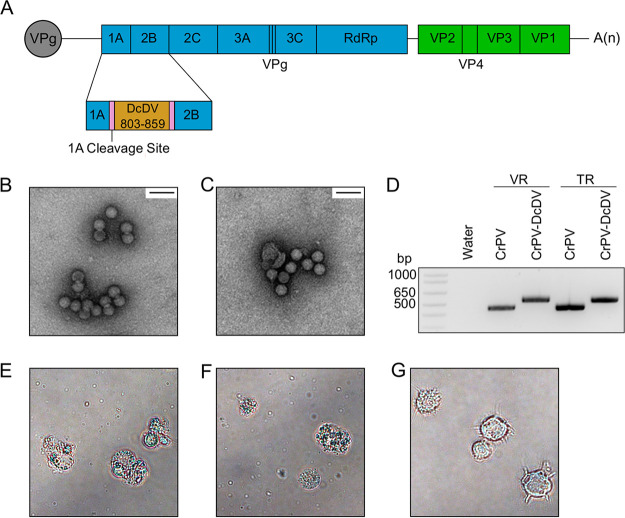
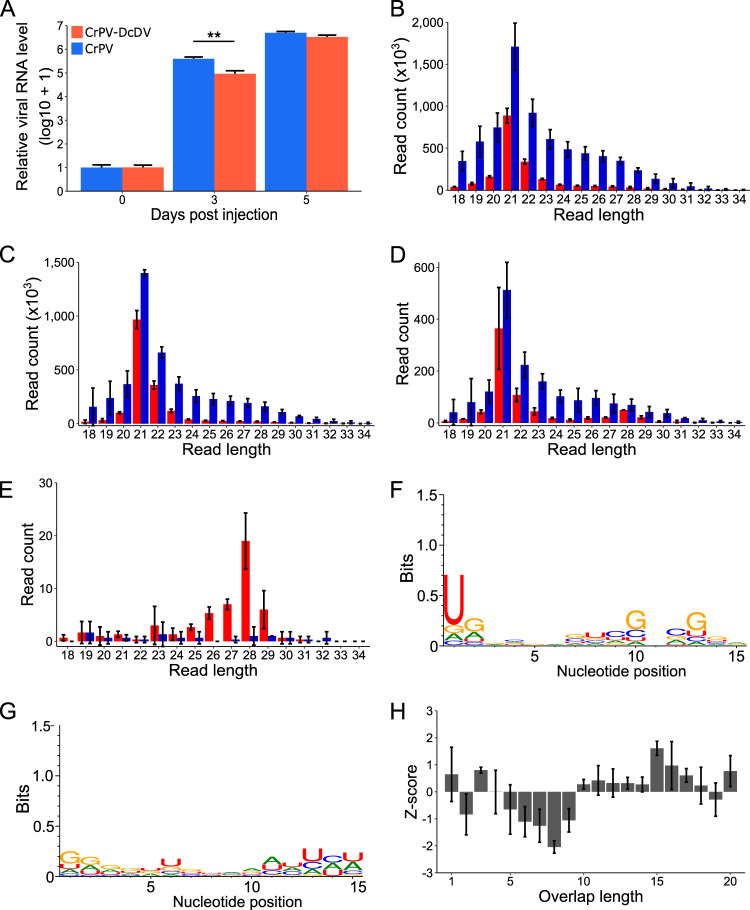
Piwi-interacting RNAs (piRNAs) are a class of small RNAs primarily responsible for silencing transposons in the animal germ line. The ping-pong cycle, the posttranscriptional silencing branch of the piRNA pathway, relies on piRNAs produced from endogenous transposon remnants to direct cleavage of transposon RNA via association with Piwi-family Argonaute proteins. In some mosquito species and mosquito-derived cell lines expressing a functionally expanded group of Piwi-family Argonaute proteins, both RNA and DNA viruses are targeted by piRNAs in a manner thought to involve direct processing of exogenous viral RNA into piRNAs. Whether viruses are targeted by piRNAs in nonmosquito species is unknown. Partial integrations of DNA and nonretroviral RNA virus genomes, termed endogenous viral elements (EVEs), are abundant in arthropod genomes and often produce piRNAs that are speculated to target cognate viruses through the ping-pong cycle. Here, we describe a Diaphorina citri densovirus (DcDV)-derived EVE in the genome of We found that this EVE gives rise to DcDV-specific primary piRNAs and is unevenly distributed among populations. Unexpectedly, we found that DcDV is targeted by ping-pong-dependent virus-derived piRNAs (vpiRNAs) in lacking the DcDV-derived EVE, while four naturally infecting RNA viruses of are not targeted by vpiRNAs. Furthermore, a recombinant Cricket paralysis virus containing a portion of the DcDV genome corresponding to the DcDV-derived EVE was not targeted by vpiRNAs during infection in harboring the EVE. These results demonstrate that viruses can be targeted by piRNAs in a nonmosquito species independently of endogenous piRNAs. Small RNAs serve as specificity determinants of antiviral responses in insects. Piwi-interacting RNAs (piRNAs) are a class of small RNAs found in animals, and their primary role is to direct antitransposon responses. These responses require endogenous piRNAs complementary to transposon RNA. Additionally, piRNAs have been shown to target RNA and DNA viruses in some mosquito species. In contrast to transposons, targeting of viruses by the piRNA pathway in these mosquito species does not require endogenous piRNAs. Here, we show that piRNAs target a DNA virus, but not RNA viruses, in an agricultural insect pest. We found that targeting of this DNA virus did not require endogenous piRNAs and that endogenous piRNAs did not mediate targeting of an RNA virus with which they shared complementary sequence. Our results highlight differences between mosquitoes and our experimental system and raise the possibility that DNA viruses may be targeted by piRNAs in other species.
Piwi 相互作用的 RNA (piRNAs) 是一类主要负责沉默动物生殖系中转座子的小 RNA。piRNA 通路的转录后沉默分支乒乓循环依赖于源自内源性转座子残余物的 piRNA,这些 piRNA 通过与 Piwi 家族 Argonaute 蛋白的结合来指导转座子 RNA 的切割。在一些蚊子物种和表达功能扩展的 Piwi 家族 Argonaute 蛋白群的蚊子来源细胞系中,RNA 和 DNA 病毒都被 piRNA 靶向,这种靶向被认为涉及外源性病毒 RNA 的直接加工成 piRNA。非蚊子物种的病毒是否被 piRNA 靶向尚不清楚。DNA 和非逆转录病毒 RNA 病毒基因组的部分整合,称为内源性病毒元件 (EVEs),在节肢动物基因组中大量存在,并且经常产生 piRNA,这些 piRNA 通过乒乓循环被推测靶向同源病毒。在这里,我们描述了柑橘木虱 densovirus (DcDV)衍生的 EVEs 在基因组中的存在。我们发现,这种 EVE 产生了 DcDV 特异性的初级 piRNAs,并且在 种群中分布不均匀。出乎意料的是,我们发现,在缺乏 DcDV 衍生 EVE 的 中,DcDV 是由依赖乒乓循环的病毒衍生 piRNAs (vpiRNAs) 靶向的,而 中的四种自然感染的 RNA 病毒则不受 vpiRNAs 靶向。此外,在含有 EVE 的 中感染时,含有与 DcDV 衍生 EVE 相对应的部分基因组的重组 Cricket paralysis virus 不受 vpiRNAs 靶向。这些结果表明,病毒可以在非蚊子物种中被 piRNA 靶向,而与内源性 piRNA 无关。小 RNA 是昆虫抗病毒反应的特异性决定因素。Piwi 相互作用的 RNA (piRNAs) 是在动物中发现的一类小 RNA,其主要作用是指导抗转座子反应。这些反应需要与转座子 RNA 互补的内源性 piRNAs。此外,已经表明 piRNAs 在一些蚊子物种中靶向 RNA 和 DNA 病毒。与转座子不同,在这些蚊子物种中,piRNA 通路对病毒的靶向不需要内源性 piRNAs。在这里,我们展示了在一种农业害虫中,piRNA 靶向一种 DNA 病毒,但不靶向 RNA 病毒。我们发现,这种 DNA 病毒的靶向不需要内源性 piRNAs,并且内源性 piRNAs 也没有介导与它们具有互补序列的 RNA 病毒的靶向。我们的结果突出了蚊子和我们的实验系统之间的差异,并提出了 DNA 病毒可能在其他物种中被 piRNA 靶向的可能性。