Balmori de la Miyar Jose Roberto, Hoehn-Velasco Lauren, Silverio-Murillo Adan
Business and Economics School, Universidad Anahuac Mexico, Av. de las Torres 131, Olivar de los Padres, Mexico City 01780, Mexico.
Andrew Young School of Policy Studies, Georgia State University, Mexico.
J Crim Justice. 2021 Jan-Feb;72:101745. doi: 10.1016/j.jcrimjus.2020.101745. Epub 2020 Sep 24.
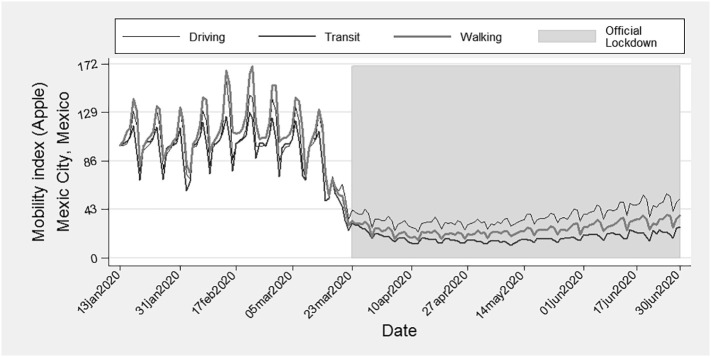
To investigate the effect of the COVID-19 pandemic on conventional crime and organized crime in Mexico City, Mexico.
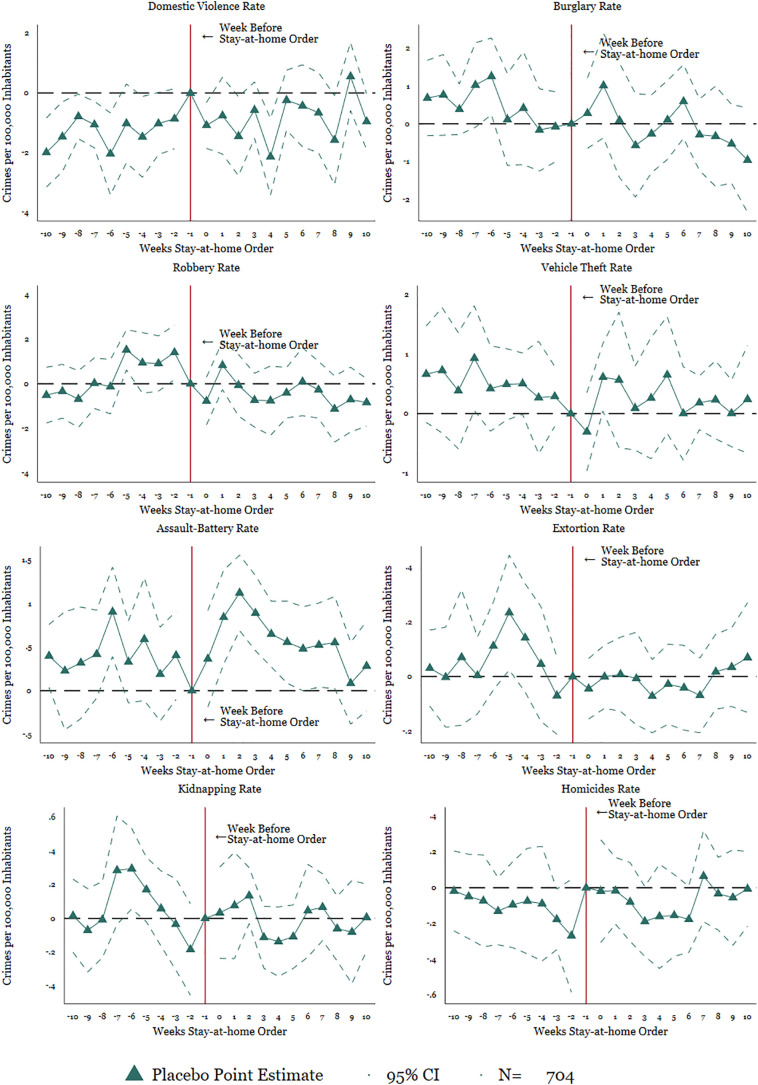
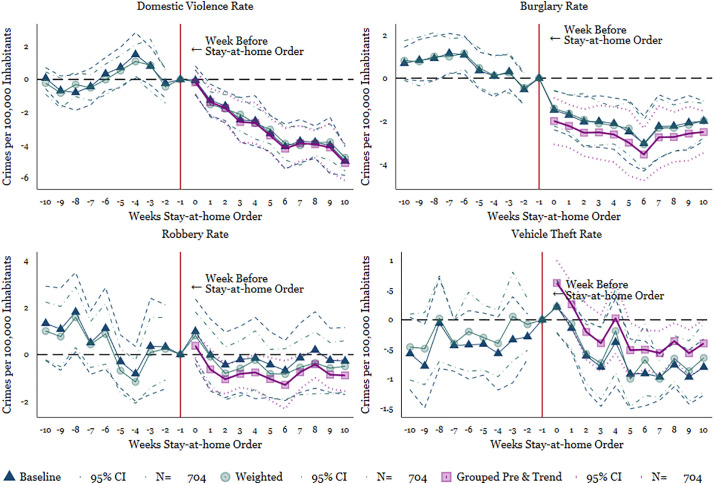
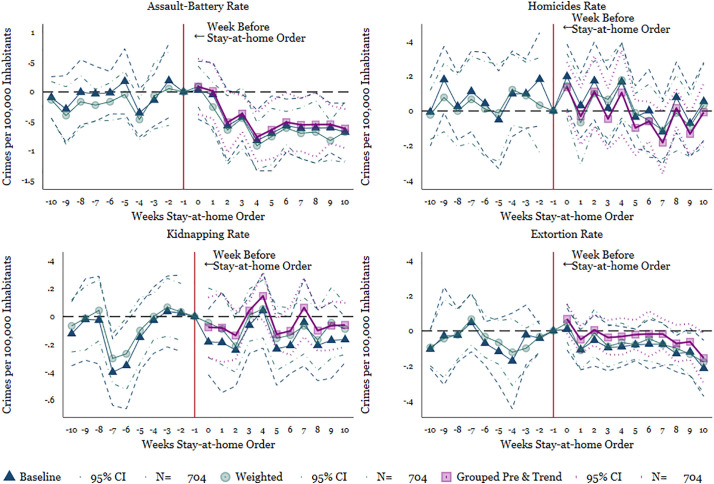
Mexico City's Attorney General's Office reported crime data, covering domestic violence, burglary, robbery, vehicle theft, assault-battery, homicides, kidnapping, and extortion. We use an event study for the intertemporal variation across the 16 districts (municipalities) in Mexico City for 2019 and 2020.
We find a sharp decrease on crimes related to domestic violence, burglary, and vehicle theft; a decrease during some weeks on crimes related to assault-battery and extortion, and no effects on crimes related to robbery, kidnapping, and homicides.
While our results show a decline in conventional crime during the COVID- 19 pandemic, organized crime remains steady. These findings have policy implications for catastrophic events around the world, as well as possible national security issues in Mexico.
调查新冠疫情对墨西哥墨西哥城传统犯罪和有组织犯罪的影响。
墨西哥城总检察长办公室报告了犯罪数据,涵盖家庭暴力、入室盗窃、抢劫、车辆盗窃、殴打、凶杀、绑架和敲诈勒索。我们对墨西哥城2019年和2020年16个区(市)的跨期变化进行了事件研究。
我们发现与家庭暴力、入室盗窃和车辆盗窃相关的犯罪大幅下降;与殴打和敲诈勒索相关的犯罪在某些周有所下降,而与抢劫、绑架和凶杀相关的犯罪没有受到影响。
虽然我们的结果显示新冠疫情期间传统犯罪有所下降,但有组织犯罪保持稳定。这些发现对全球灾难性事件具有政策意义,对墨西哥的国家安全问题也可能有影响。